
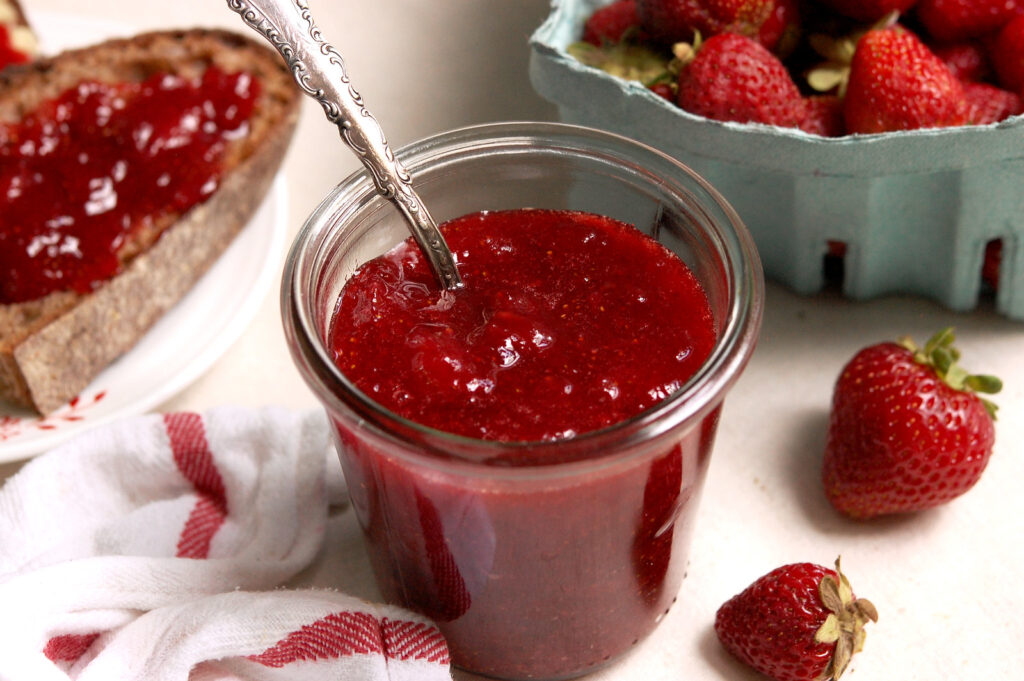
This homemade strawberry preserves recipe uses just three ingredients — fresh strawberries, sugar, and lemon juice (no pectin) — and takes just 20 minutes to make. The ingredients cook down into a simple, bright spread with deeply-concentrated strawberry flavor. (Bonus: a quick video recipe and pro pastry chef tips for choosing good strawberries and testing for doneness.)
Jump To:
A Pastry Chef’s Secrets for Perfect No-Pectin Strawberry Preserves
When the Washington Post asked me to organize and lead a panel of D.C. pastry chefs in evaluating and taste-testing Meghan Markle’s As Ever fruit spread and then write a feature article about it last year, of course I said yes. (Verdict: Her jam actually won.) And as a professional pastry chef trained at the Culinary Institute of America, I’ve made preserves and jams professionally for years — small-batch, large-batch, in bakeries, and at home. I’ve tasted more jars of jams and preserves than I can count. I’ve hulled cases of strawberries at hours no one should ever have to hull strawberries (not the most fun, but oddly meditative).
All of which is to say: When I tell you this simple, three-ingredient strawberry preserves recipe is the best, I really can vouch for it. I am extremely particular about strawberry preserves recipes. Good strawberry preserves should be sweet but not cloying, chunky but spreadable, and taste fresh and bright. This recipe checks every box.
Why You’ll Love This Recipe
This recipe boils down all my professional preserve-making and tasting experience to a simple home recipe. It takes 20 minutes. It uses no pectin. And it tastes better than anything in a jar from the store — even the expensive brands. These strawberry preserves are:
- Easy to Make: this requires only 20 minutes and 3 ingredients to make
- Taste Sweet and Fresh: fresh strawberries, brightened by lemon juice and sweetened with the correct amount of sugar, gives this a lovely flavor
- You Can Make It Your Own: Simply made is perfect, but you can also vary the flavor with bonus ingredients like ginger, vanilla, and balsamic. I show you how.
- No Pectin: This matters. Rather than fuss with thickening agents, this naturally reduces into a jammy preserve with more concentrated flavor
The Ingredients (Just Three)
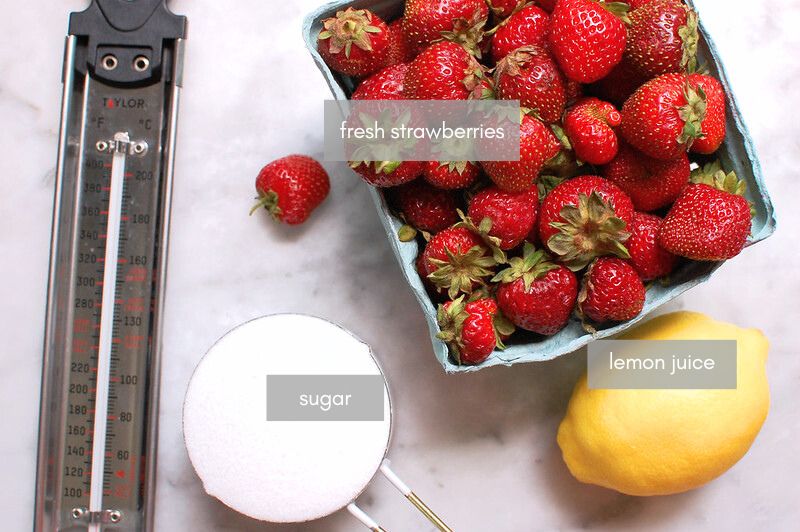
Making strawberry preserves from scratch takes minutes and requires only three ingredients, plus a little water to kick off the cooking process:
- Fresh Strawberries: 1 1/2 pounds, hulled and roughly chopped. Fresh is ideal during spring and early summer peak season; frozen works beautifully the rest of the year. Choose ripe, red, preferably small berries for the most flavor. (More on choosing the best strawberries, below.)
- Granulated Sugar: 1 1/8 cup, maybe a little more or less depending on the sweetness of your berries and taste preference
- Fresh Lemon Juice: 1 1/2 tablespoons (half a lemon); lemon juice brightens the flavor of the strawberries and helps extract the bit of natural pectin in strawberries
That’s it. No boxed, added pectin. No preservatives. The simplicity is the point and lets the fresh, natural flavor of the strawberries really shine.
Variations and Additions
The basic three-ingredient recipe is excellent on its own. But if you want to experiment or get creative, you have good options:
- Vanilla bean paste or vanilla extract: A teaspoon stirred in adds warmth and depth, and makes the aroma sweeter
- Balsamic vinegar: 1/2 teaspoon makes the strawberry flavor more complex and tangy; particularly good alongside a cheese board because the acid complements the salty cheese
- Fresh ginger: 1 teaspoon of finely-grated fresh ginger (or 1/2 teaspoon of powdered) adds zip and gentle heat. If you love that combination, also try this strawberry rhubarb jam: same easy method, with ginger and vanilla bean paired against rhubarb’s gorgeous tartness
- Lemon zest: If you want the lemon flavor to really come forward, add the zest of one lemon along with the juice
How to Make Strawberry Preserves: Step by Step
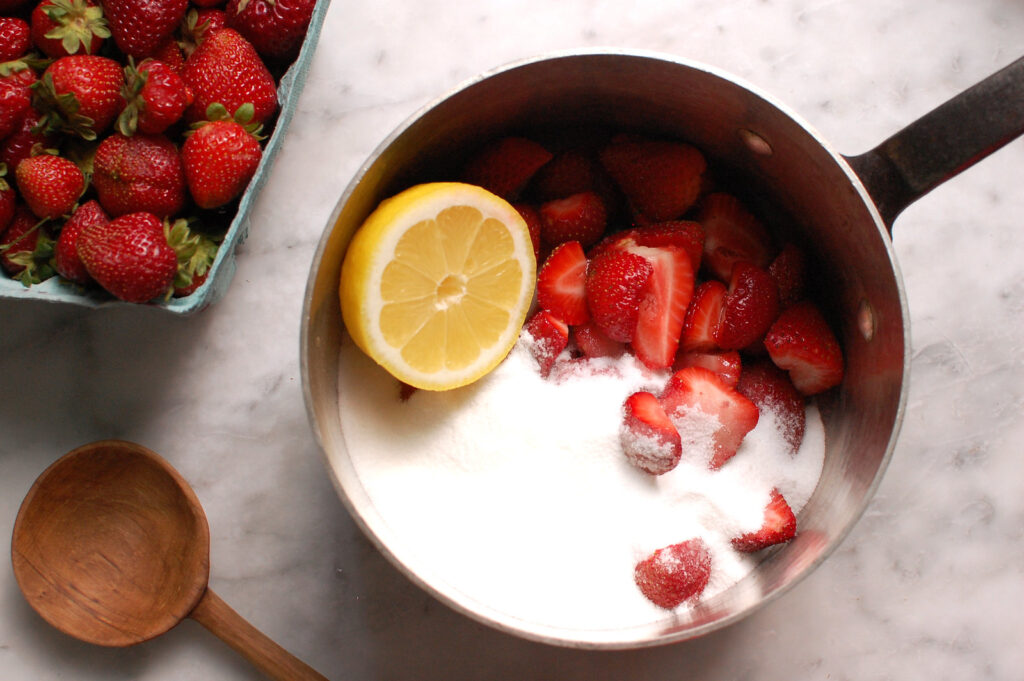
This is one of the easiest strawberry preserve recipes you’ll ever make. Three ingredients get added to a pot and simmered until it forms a jammy spread. That’s it. (You do not need pectin because much of the liquid in the berries evaporates with simmering, naturally reducing the mixture into a jammy, concentrated texture.)
Here’s how to make these strawberry preserves:
Step 1: Prep and hull your strawberries. Wash, dry, and hull the strawberries (slice off the green tops, keeping as much fruit as possible) and roughly chop them into pieces.
Step 2: Combine in a pot. Add the strawberries, sugar, lemon juice, and about 2 tablespoons of water to a medium pot. Stir everything together.
Step 3: Cook. Bring to a boil, stirring frequently. It will foam at first. Reduce to medium heat and simmer, uncovered, for about 15 to 20 minutes, or until you have thick, heavy bubbles and the temperature reaches 220°F (104°C) on a candy thermometer.
Step 4: Test for doneness. In addition to the temperature test, you can test the thickness of the strawberry preserves by running a spoon through a dollop of jam on a plate to make sure it holds a line. It will also thicken a little more once cooled.
Step 5: Cool and store. Remove from heat. Transfer to a clean, heatproof jar or airtight container. Store for up to 3 weeks. Note: The preserves will thicken further as they cool.

Video: How to Make Strawberry Preserves
In this quick video recipe below, I’ll walk you through the entire process of making the preserves, from the initial maceration to boiling the ingredients down until jammy. I also demonstrate testing for doneness with both a candy thermometer and a plate test, so you can see exactly what a proper jam set set looks like.
Pro Tip: How to Choose the Best Strawberries
This recipe for strawberry preserves is a true example of “the simpler the better.” With so few ingredients, it’s important to make sure the strawberries are the best quality you can find.
The strawberries will determine the depth of flavor, as well as both the amount of sugar you will need, and how long it needs to cook. My pro pastry chef advice: the smaller and redder the strawberry, the better. Smaller, deep-red berries have more natural sugar concentration (Brix), and more concentrated flavor. Also, the skins and seeds are often more delicate, which contribute to a better final texture.
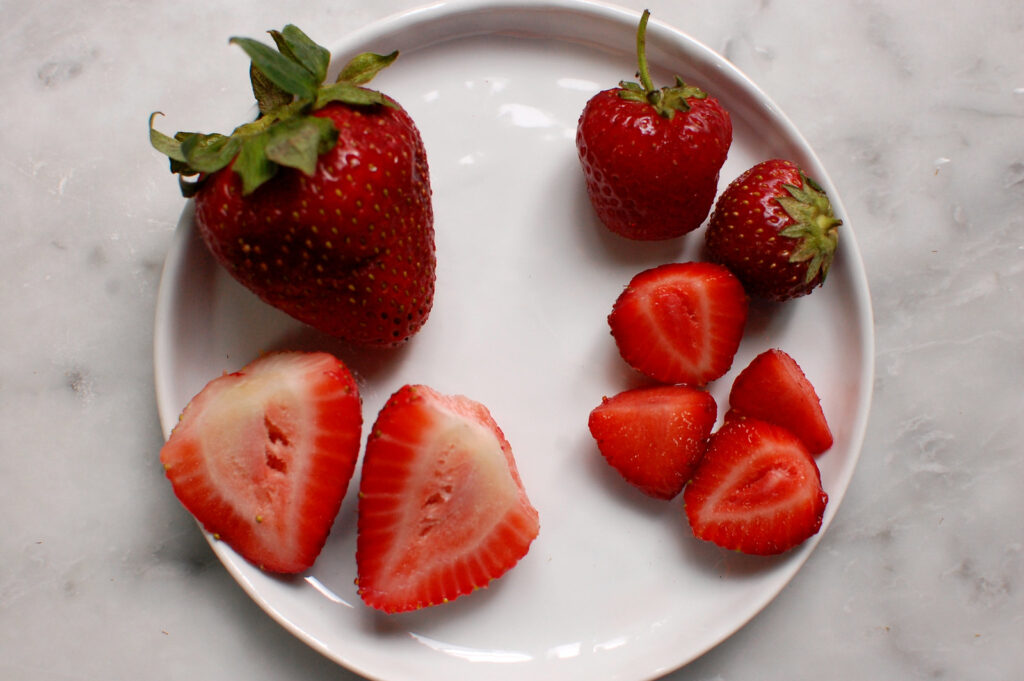
If you can get to a farmers market during strawberry season, look for little varietals like Tri-Star (amazing and sweet; this is what we used at my bakery job), Seascape, Hood, and Chandler.
Big commercial strawberries (like you see at the supermarket) are often pumped with water and bred for quick growth and shipping durability, not flavor. A pale interior and white top around the leaves are due to too much water and picking the berry when underripe. It may look big and juicy on the outside, but the flavor and color will be muted.
It is important to note that the finished consistency of the strawberry preserves will be naturally a little more loose than if pectin was used (more on that below). It will be more jammy than gelled. This is a good thing, and perfect as a spread.
How to Store Strawberry Preserves
Since this recipe skips the full sterilized water-bath, and vacuum-sealed canning process, these preserves are designed for short-term storage. The recipe only makes about 1 cup of jam, so I go through it quickly. I particularly love these Weck jars (the logo is even strawberries), but a standard 8-ounce Mason jar or airtight container will do.
- Refrigerator Storage: Transfer to a clean, airtight jar or container and refrigerate for up to 3 weeks.
- Freezer: Strawberry preserves freeze very well, thanks to the low water and high sugar content. Pour into freezer-safe containers or jars, leaving a little headspace for expansion. Freeze for up to 6 months. Thaw overnight in the refrigerator and give the them a good stir before using.
- If You Want to Do Sterilized Canning: This is absolutely an option and extends shelf life to about a year. If you want to go that route, follow the National Center for Home Food Preservation’s guidelines for canning strawberry preserves. It’s a good resource for the water-bath process.
Why You Don’t Need Pectin
Pectin is often used to make preserves, but is not necessary. Here’s why: Pectin is a thickening agent common in preserves, jams, and especially jellies. Adding this citrus-based powder helps liquids gel. With fruit preserves, the combination of liquid, sugar, and fruit gels or “sets” more quickly. This is why jams and jellies often hold their shape when scooped with a spoon.
But there is no pectin in this strawberry preserves recipe. We are letting the preserves reduce on the stove, boiling out more of the water than would otherwise be necessary. This thickens the preserves naturally. This serves two purposes: 1) You don’t have to fuss with pectin, which can be tricky to balance between thin and too-thick jam, and 2) The strawberry preserves will have a more concentrated strawberry flavor because it had to cook down so much to get to the jammy consistency. I always prefer no-pectin preserves to jam. The flavor and texture tend to be better.
How to Enjoy These Strawberry Preserves
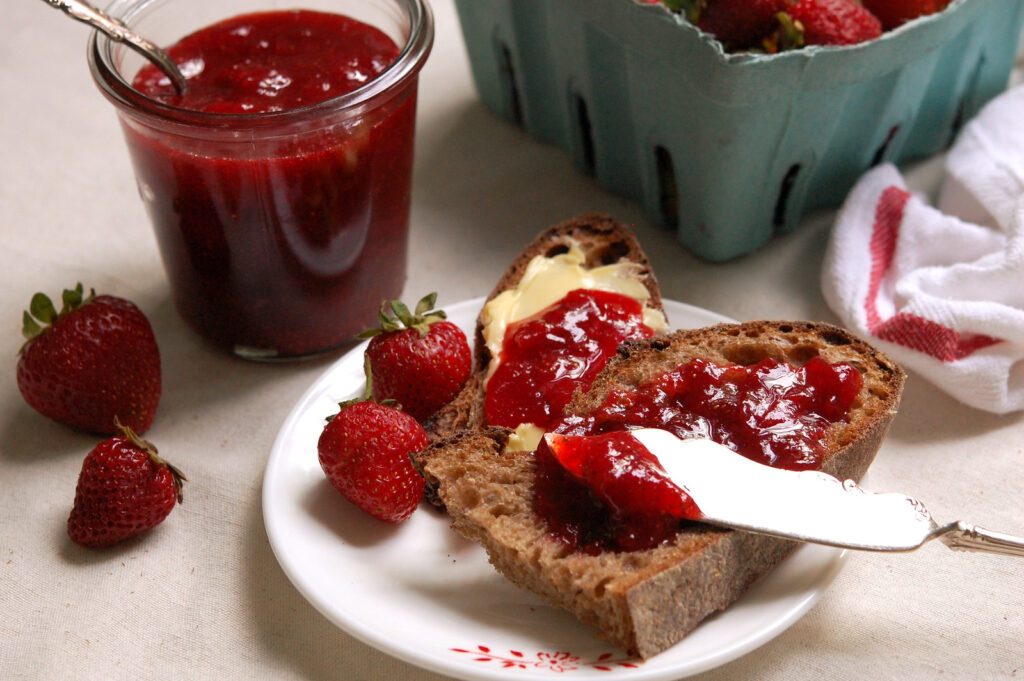
The obvious answer is to spread a nice spoonful on toast, but strawberry preserves can do so much more. For breakfast, spoon over a stack of sheet pan pancakes (the oven does all the work). These JFK buttermilk waffles topped with a generous spoonful are also a top weekend breakfast.
Strawberry preserves are the perfect spread for flaky buttermilk biscuits warm from the oven. And if you want to be a little fancy: serve these alongside royal English scones (the official Buckingham Palace recipe) with clotted cream.
For dessert, swirl a few spoonfuls into this no-churn strawberry ice cream before freezing; it creates beautiful jammy ribbons throughout. Spoon the preserves over slices of fresh strawberry cheesecake for a concentrated hit of berry flavor against the cool, creamy filling. Or use them alongside a simple strawberry shortcake: sweet cream biscuits, fresh berries, whipped cream, and a generous pool of preserves on the plate.

A few other favorite uses: swirl preserves into yogurt , use as a thumbprint cookie filling, or spread on a grilled cheese (trust me on that one).
F.A.Q.s, Expert Tips & Troubleshooting
Here are answers to some common questions about making homemade strawberry preserves, and pro troubleshooting tips for best results.
Preserves contain whole or large pieces of fruit suspended in a thickened, syrupy base from cooking it down in a pot, with a chunky, rustic result. Jam is made from crushed or puréed fruit cooked down until smooth and uniform, with no visible fruit pieces. And while we’re at it, jelly has no fruit; it’s made with strained fruit juice. All are delicious; the choice comes down to texture preference. This recipe makes preserves: jammy, glossy, with identifiable bits of strawberry in each spoonful.
No. Pectin is a thickening agent that helps jam set quickly into a firm, gelled consistency. Skipping it means cooking the preserves a little longer to reduce the liquid naturally. The result is softer and jammier than a pectin-set jam, but the payoff is worth it: more concentrated, intensely strawberry flavor.
Lemon is a very common ingredient in fruit desserts and sweets. This small amount of acidity balances the sweetness and keeps the flavor bright, without tasting like lemon. Lemon juice also lowers the pH of the preserves, which discourages bacteria and extends shelf life.
It probably needed more cook time and hasn’t reduced enough yet. Return the pot to medium heat and continue simmering until the mixture reaches 220°F on a candy thermometer. No thermometer? Use the cold plate test: spoon a small amount onto a chilled plate, wait 30 seconds, then draw a line with a spoon. If it holds its shape, it’s ready. Keep in mind that preserves also thicken further as they cool; give them a full 30 minutes before making a final call.
Because this recipe is a small-batch “refrigerator preserve” and does not use a pressurized water-bath canning process, it has a shorter shelf life than commercial jars. Store your preserves in a clean, airtight glass jar in the refrigerator for up to 3 weeks. For longer storage, these preserves freeze beautifully for up to 6 months. If freezing, ensure you leave at least half an inch of “headspace” at the top of the jar to allow for expansion so the glass does not crack when the jam expands.
Yes, you can absolutely use frozen strawberries for this recipe. In fact, frozen berries are often superior to out-of-season supermarket berries because they are picked and flash-frozen at peak ripeness, and are more affordable. You do not need to thaw them before cooking; simply add the frozen strawberries to the pot with the sugar and lemon juice. Note that frozen berries release more moisture, so the initial maceration may happen faster. The total cook time on the stove may increase by several minutes to reach the proper thickness.

More Strawberry Recipes to Try
If you’re on a strawberry kick (and why wouldn’t you be?), here are a few more worth making:
- Strawberry Rhubarb Jam: same easy no-pectin method, with vanilla bean and ginger
- Strawberry Shortcake on Cream Biscuits: tender sweet biscuits and whipped cream
- Homemade Strawberry Ice Cream (No Churn): no machine required, swirled with jam
- Fresh Strawberry Cheesecake: New York-style, with fresh berries and a graham cracker crust
- Strawberry Rhubarb Crumb Bars: jammy strawberry-rhubarb filling between layers of oat crumble
- Old-Fashioned Strawberry Rhubarb Pie: sweet, tart, with a buttery homemade crust
And if you love having homemade spreads in the house year-round: the spiced pumpkin butter is the fall equivalent of this recipe.

Fresh Strawberry Preserves Recipe (No Pectin)
Essential Equipment
- Candy thermometer optional, but helpful for the most accurate results
- Heavy-bottomed sauce pot for cooking the preserves
- Small dish for testing thickness/doneness
Ingredients
- 1 1/2 pounds fresh or fresh-frozen strawberries (680 grams; about 4 1/2 cups chopped)
- 1 1/8 cup sugar (225 grams), plus more to taste
- 1 1/2 tablespoons lemon juice (about 1/2 lemon)
Instructions
- Prepare the strawberries. Wash and cut the green tops off the strawberries, keeping as much of the fruit as possible. Roughly chop the strawberries.
- Combine the ingredients in a pot. Put the chopped strawberries, most of the sugar, and lemon juice in a wide, heavy-bottomed pot. Add two tablespoons of water. Stir to coat.PRO TIP: Make sure the berries do not fill the pot to the brim because they will foam and bubble a lot as they start cooking. They should fill the pot no more than halfway.
- Cook the preserves. Heat the ingredients over medium-high heat and bring to a boil, stirring frequently. Reduce the heat to medium and simmer, uncovered and stirring frequently, for about 20 minutes, or until the temperature reaches 220° Fahrenheit on a candy thermometer. Taste for sweetness (careful, it's hot!). You may want to add up to 1/4 cup more sugar, depending on the sweetness of the berries.PRO TIP: The liquids will foam at first, then gradually cook down with bigger, heavy bubbles as water evaporates.
- Test for doneness. Remove the pot from the heat to prevent further cooking. Test the thickness of the strawberry preserves by running a spoon through a cooled dollop of jam on a plate to make sure it holds a line. It will also thicken a little more once cooled. If needed, cook a little longer. Test again.
- Serve or store. Store in an airtight container. Refrigerate for up to 3 weeks, or freeze for up to 6 months.
Video
Notes
Nutrition
Disclaimer: Nutrition information is provided for courtesy purposes only, and is an estimate not verified by medical or nutrition experts. Read the full nutrition disclaimer.
Why You Can Trust This Recipe: These recipes were developed and tested from scratch by Lisa Ruland, a Culinary Institute of America graduate (baking & pastry valedictorian, with special coursework in chocolate and confections), Level 2 WSET-Certified Wine Professional (With Honors), and professional pastry chef and food writer/recipe developer who has worked for some of NYC’s top bakeries(where she used to hull strawberries by the case), and written for national food publications, including Bon Appétit, Saveur, Taste, Eater, Food52, and the Washington Post, where she judged and wrote a feature on the best fruit preserves. She is committed to providing accurate, trustworthy culinary guidance based on years of hands-on experience in professional and home kitchens. Learn more about Lisa’s background and expertise.





18 comments
PB
First time making jam or preserves and I am so glad I did. Thanks for the recipe.
Thomas Sanquini i
Going to try it tomorrow.
Lisa Ruland
Hope it goes well!
Britt
This is delicious and so easy to make!
Lisa Ruland
So glad you liked it, Britt! This is one of my favorite springtime treats.
E. Granger
I did not know that making jam could be this simple and like that this does not call for pectin, which in my experience can make homemade jam too thick and gelled. This was fresh and sweet.
Courtney
Approximately how many ounces of jam does this recipe make? I’d like to make this during a camp that I’m hosting for kids and need to make sure they can all go home with some. Thank you!
Lisa Ruland
Hi, Courtney! This makes about 6 ounces of jam, or 3/4 cup. It’s not a huge recipe, but you can very easily double it. Hope you enjoy!
Joanna
This was such an easy recipe and tasted DELICIOUS. Thanks for the info about testing the thickness with the spoon.
Lorrie
Is it possible to use bottled lemon juice? I know fresh is better.
Lisa Ruland
Yes, definitely. But if possible, try to buy the freshest you can find in the refrigerated aisle, and not the shelf-stable kind.
R.D.
This was very easy to make and I like that there is no pectin because I did try making jam with pectin once and it became much too thick!
Christine
Can you use this recipe with other fruit like plums or blueberries or apple?
Lisa Ruland
Good question. The answer is…kind-of. The problem with substituting fruits that are too different from strawberries lies in the different sugar and water content levels. I think you would be able to generally substitute other berries, like blueberries and raspberries, though the cook time will probably be slightly lower because there is so much water in strawberries. Stay in the same “family” of fruit, and you should be ok.
Sue Church
turned out perfectly. will make again.
Mark R
Throw out all of your store-bought jam. This is seriously the best. I’d say just make sure you’re stirring and pay attention to time because I almost scorched the bottom of the pot, but it came out great. Thanks for the new recipe.