
Think pink.
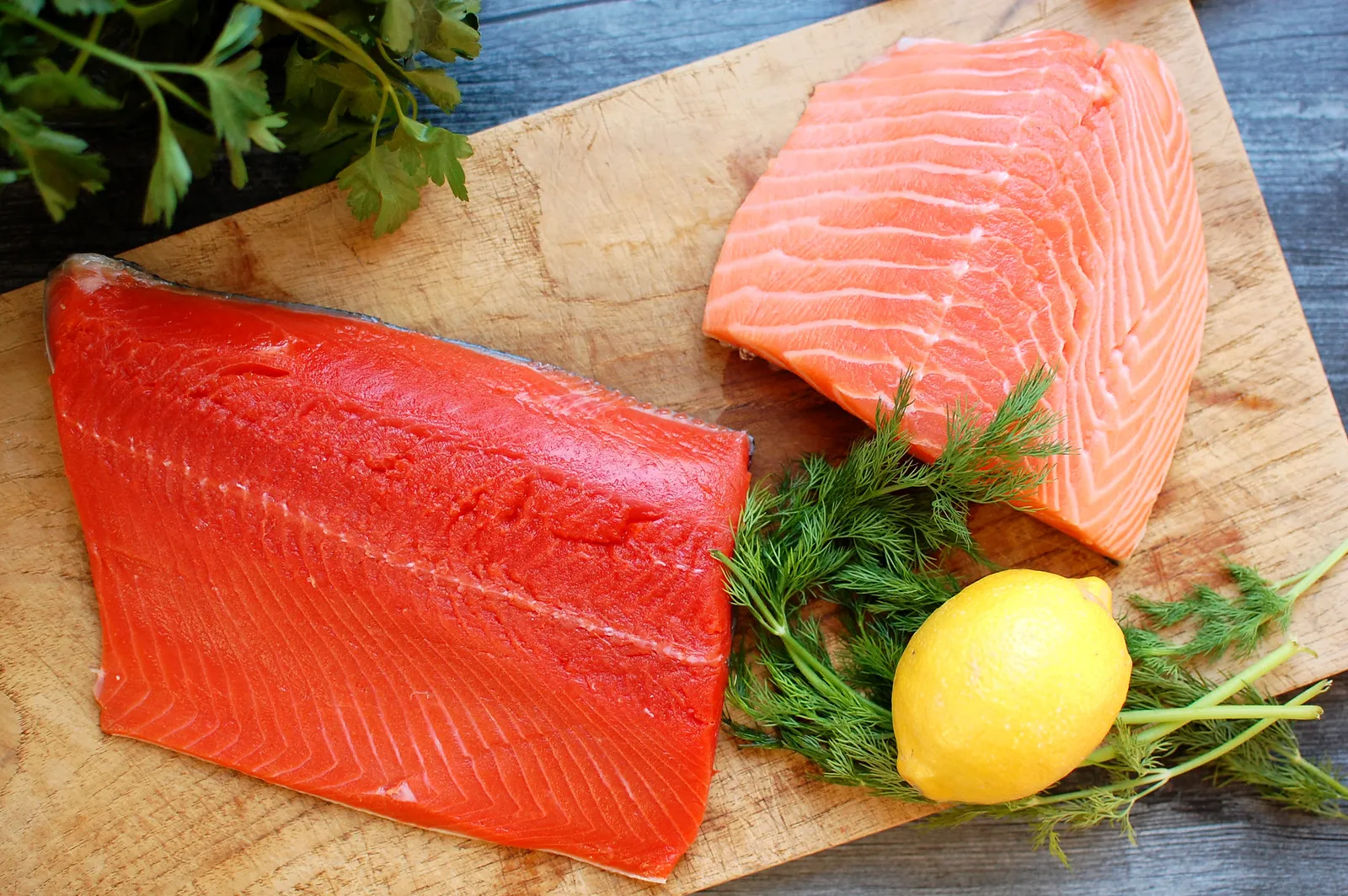
Shopping for fish can be complicated — especially when it comes to salmon. Wild, king, farm-raised, sockeye, Alaskan, Atlantic . . . it is hard to know which salmon to choose, and why. Debating farmed vs. wild salmon is one of the most common questions, with a range of nutritional and environmental differences. Get your answers, below.

Farmed vs. Wild Salmon: Farmed Salmon
What Is Farmed Salmon? More common — and often less expensive — than wild salmon, farmed salmon are raised in large, underwater pens, usually with antibiotics and specially-designed commercial fish food. There are some salmon farms that practice careful, responsible practices. For that reason, sweeping generalizations are not fully accurate. The following is more of a broad overview.
Nutrition. Both farmed and wild salmon are good sources of healthy omega-3 fatty acids. Both salmon contain low levels of contaminants like mercury and PCBs, though farmed salmon’s levels are five to 10 times higher than wild.
As with humans, farm-raised fish “are what they eat.” In other words, their nutritional profile depends largely on their feed. Farmed salmon eat a processed, high-fat, high-protein feed that produces larger, fattier fish. This may taste good, but is less healthy than wild salmon.
Environmental Concerns. Farmed salmon raises several environmental issues, especially when farming is not done responsibly. These concerns include:
- Transfer of disease: close quarters means easier spread
- Escapes: Farmed fish that escape into the wild may bring disease, compete with native species, and affect breeding
- Sea lice: About as gross as it sounds
- Pollution of surrounding waters from fish excrement and uneaten fish food
- Pollution (fish excrement and uneaten feed) in the areas immediately surrounding the pens
Flavor and cooking. Many people prefer the silky, buttery texture of farm-raised salmon. Farm-raised salmon contains more fat and less collagen in the connective tissue. This results in a tender fish that can be cooked through without getting tough.
Looking to cook with smoked salmon? This smoked salmon pasta is the best place to start.

Farmed vs. Wild Salmon: Wild Salmon
Wild salmon may offer more health benefits than farm-raised. Both farmed and wild salmon contain valuable omega-3 fatty acids and similar amounts of other important nutrients like zinc, magnesium, and potassium. However, wild salmon has been active in its natural habitat for its entire life, making a leaner fish much lower in saturated fat. Wild salmon also contains more collagen.
The appearance of the two fish varies wildly. Wild salmon — like flamingos — get their deep pink color from crustaceans in their diet, which contain astaxanthin. Wild salmon store this compound in their muscles, turning the flesh bright pink. Farm-raised salmon tends to look far more pale. These salmon are fed synthetic astaxanthin and the related canthaxanthin, a carotenoid pigment.
Cooking and flavor. Some people enjoy the lean, flaky texture of wild salmon. But wild salmon generally gets lower marks than farm-raised on the taste front; it is less forgiving when it comes to ensuring a tender texture when cooked. Best techniques here are a quick broil or cooking the fish slowly over very low heat, ensuring it does not overcook.

Summary: So Which Type of Salmon Should You Choose?
The farmed vs. wild salmon debate largely comes down to price, flavor, and preference. Both contain good amounts of healthy Omega-3 fatty acids. Many people prefer the tender, silky texture of a farmed salmon fillet to leaner wild salmon. Farmed salmon generally costs less money as well.
Farmed salmon comes with a nutritional price, however: about 20 percent more saturated fat than wild salmon. This makes sense. Farmed salmon are sedentary in their pens, and therefore develop less lean mass and more fat.
Wild salmon has a leaner, less buttery texture, and often costs more than farm-raised salmon. That said, wild salmon contains fewer contaminants and has more nutrition than its farm-raised counterpoints. Some people also consider the well-being of a fish that lived in the wild until its death vs. one trapped in a pen until grown.
Choose whichever salmon is best for you. Now, you can ensure that your choice is an informed one.
For more information about choosing your seafood in a responsible way, use the Monterey Bay Aquarium’s indispensable Seafood Watch guide.

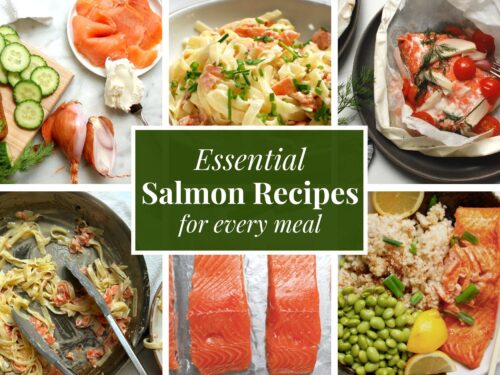
Salmon Recipes You’ll Love:
- Fresh Salmon Burgers With Tzatziki Special Sauce
- Japanese Salmon Grain Bowls
- Creamy Smoked Salmon Linguine
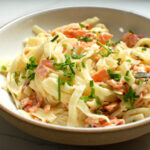
Easy Smoked Salmon Pasta (20-Minute Recipe)
Essential Equipment
- Microplane or lemon zester
- Pasta tongs (if using long noodles, like linguine or tagliatelle)
Ingredients
- 1 pound pasta, such linguine, tagliatelle, penne, or rigatoni
- 6 ounces smoked salmon, cut into pieces
- 6 tablespoons (3 ounces) unsalted butter
- 2 lemons, zested and juiced
- 3/4 cup heavy cream
- 3 tablespoons minced chives, divided (can substitute 2 tablespoons thinly-sliced scallions)
- Kosher salt and fresh-ground black pepper, to taste
- 1 tablespoon capers, drained and rinsed (optional)
- Freshly-grated Parmesan cheese (optional)
Instructions
- Cook the pasta. Bring a large pot of salted water to a boil. Cook the pasta until just shy of al dente, stirring a few times during cooking. Drain the pasta, reserving about 1/4 cup of pasta water.
- Make the salmon cream sauce. While the water and pasta are boiling, melt the butter in a large skillet over medium heat. Add the smoked salmon pieces, lemon juice, half of the lemon zest, and half of the chives. Cook for 1 to 2 minutes, stirring occasionally. (Optional ingredient: If you'd like to use capers for extra tang, add them now.)
- Reduce the heat to low. Stir in the cream and cook at a gentle simmer for 4 to 5 minutes. PRO TIP: Do not boil the sauce; just gently simmer. Boiling the sauce will cause it to over-reduce, and risk separating.
- Add the pasta with the sauce. Add the drained pasta to the cream mixture. Cook for a few minutes, tossing to coat. If the pasta looks a little dry, add pasta water a tablespoon or two at a time until it's tossed in a glossy, creamy, emulsified sauce. Taste for seasoning.
- Garnish and serve. Transfer the pasta to serving plates. Top with the remaining chives and lemon zest, and a light dusting of Parmesan cheese if you'd like (optional; I personally do not use Parm, but some people like it). Serve immediately.
Video
Notes
- Pasta: The sauce works equally well with long pasta like spaghetti or fettuccine as tube pasta like penne or rigatoni. Avoid very small pasta, like orzo.
- Herbs: Chives have a lovely, delicate flavor that perfectly complements the smoked salmon flavor, but you can also substitute or add thinly-sliced scallions, minced parsley, or minced fresh dill
- Adding vegetables: Peas, diced asparagus, or spinach make a colorful, seasonal spring twist. Add peas or asparagus with the salmon; spinach can be added to the sauce just before the pasta, since it wilts quickly.
- Cream: You can substitute half-and-half for the heavy cream, but you will lose a little bit of richness. Do not use milk, which is too thin.
- Storage: Like all creamy pastas, this dish is best served immediately. If you have leftovers, store them in an airtight container in the refrigerator for up to two days.
- Reheating: Reheat leftover salmon pasta slowly in a pan on low- to medium-low heat with a few tablespoons of water or extra cream to help reconstitute a sauce. Stir frequently. I do not recommend reheating in the microwave, which inevitably leads to a dry, clumpy result.
- Keep the sauce gently simmering -- never at a boil -- when cooking to prevent over-reducing the sauce and possible separation and curdling
- Use freshly squeezed lemon juice to brighten the sauce and balance the cream.
- Reserve a bit of pasta water to adjust sauce consistency; this keeps the sauce glossy and light
Nutrition
Disclaimer: Nutrition information is provided for courtesy purposes only, and is an estimate not verified by medical or nutrition experts. Read the full nutrition disclaimer.
Sources:
- https://health.clevelandclinic.org/fish-faceoff-wild-salmon-vs-farmed-salmon/
- Cook’s Illustrated, Cook’s Science (2016).
- https://www.healthline.com/nutrition/wild-vs-farmed-salmon#their-environments
- https://www.doh.wa.gov/communityandenvironment/food/fish/farmedsalmon





3 comments
PR
This is a helpful article. Thanks.
lowandslow
Thanks for the informative article,there are some high end farms in New Zealand that are really good.ORA KING comes to mind and is given a green rating by Seafood Watch (Monterey Bay Aquarium`s Seafood Watch Program) .Before covid hit we would order Nigiri at our local sushi place with ORA KING,so good we would get 2 orders. We try to follow S/F Watch as best we can when purchasing our S/F. BTW we get this newsletter via Once Upon A Chef, you guys are great.Keep up the good work!
Unpeeled
Such a good point that some farms are actually quite responsible and use careful practices. It would be great if everyone did! Seafood watch is a wonderful resource. I am going to add that in to the article! Thanks for thoughtful comment.