
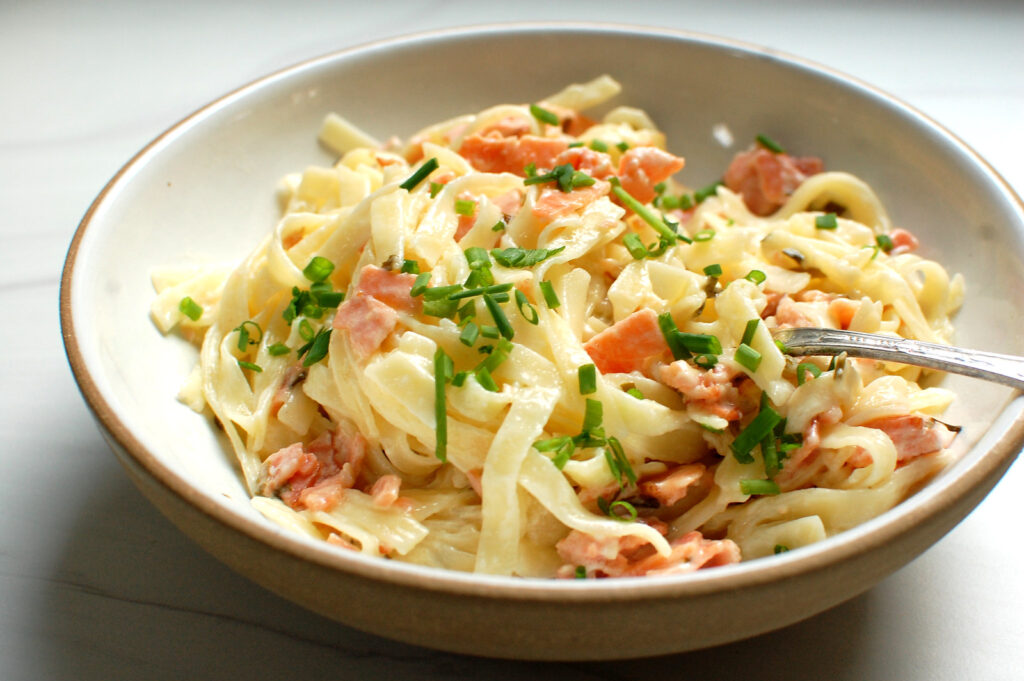
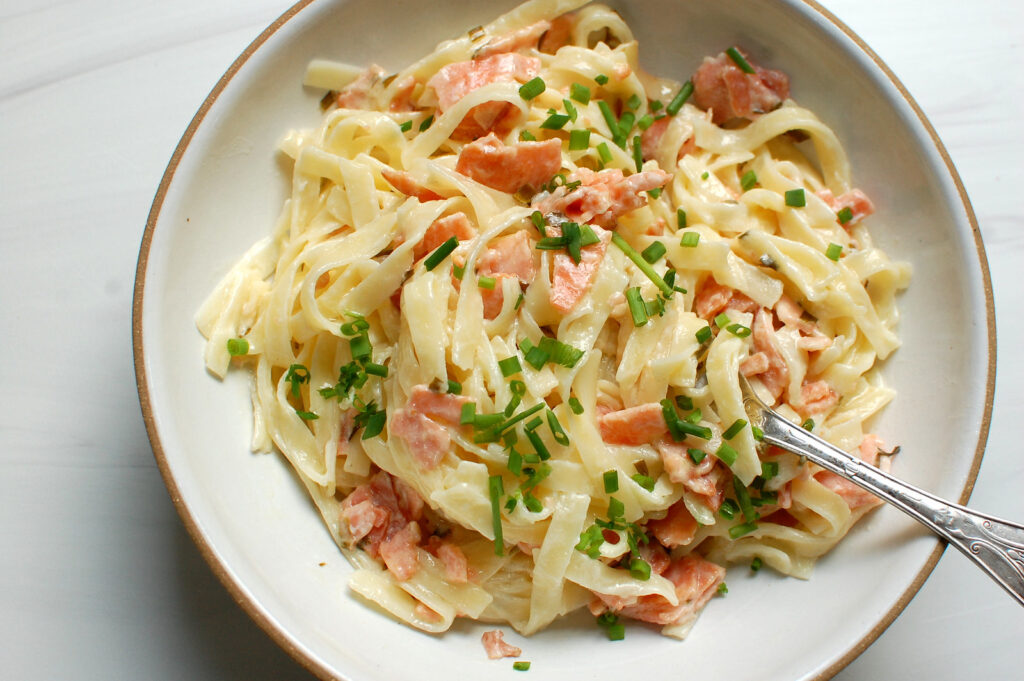
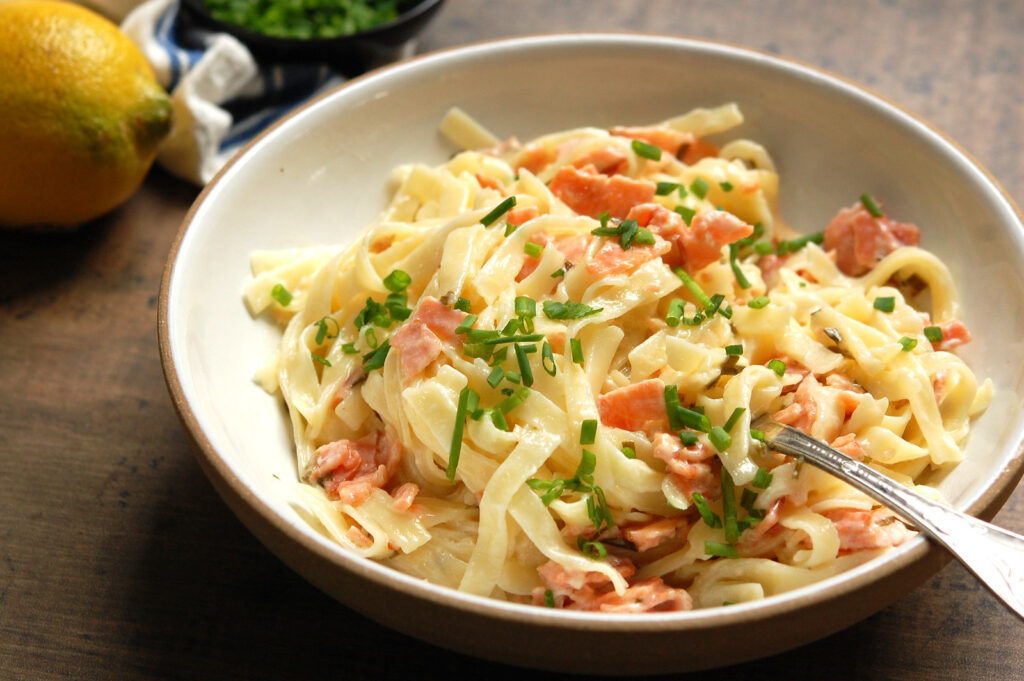
This smoked salmon pasta recipe, or pasta al salmone, comes straight from Italy’s home-cooking bible, The Silver Spoon cookbook, to your kitchen. This simple combination of smoked salmon, pasta, butter, cream, and fresh chives hits satisfying notes of creamy, salty, and bright from lemon, and takes just 20 minutes to make. Here’s the recipe, pro tips, video, wine pairings, and serving suggestions.
Jump To:
Why You’ll Love This Recipe
This recipe for creamy smoked salmon pasta is easy, deeply satisfying, and ready in 20 minutes. It’s an authentic Italian recipe that’s become one of my favorite smoked salmon dishes of all time.
I used to think that the only thing you could do with smoked salmon was pile it onto a bagel, like in a smoked salmon cream cheese spread. I was wrong. Smoked salmon pasta may not sound as natural as a bagel and lox, but it is no less delicious–and authentically Italian.
This dish is called pasta al salmone in Italy, where smoked salmon has been part of the culinary tradition going back to ancient Rome. Italians love salmon. In fact, I was recently in Rome, where I stumbled upon a store that sold salmon products only.
I adapted this recipe from The Silver Spoon, the Italian home-cooking bible (think Joy of Cooking), and have cooked this many times. (By the way, The Silver Spoon is one of the best cookbooks any home cook can own.
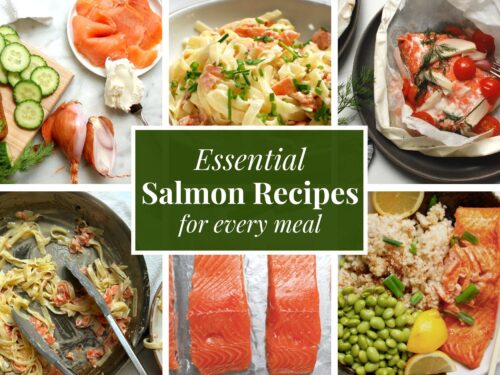
This is one of my favorite quick dinners, but you can explore my full collection of 8 essential salmon recipes for more fresh and smoked salmon ideas.
Ingredients You’ll Need
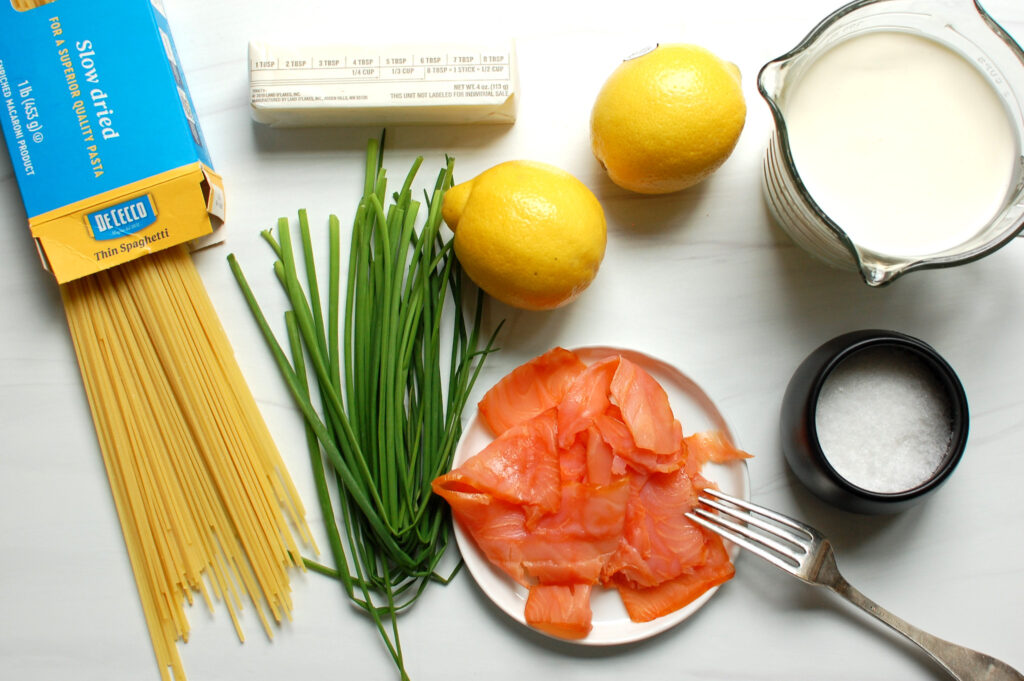
Here’s what you’ll need to make this pasta with smoked salmon recipe. This recipe relies on simple, easily-available ingredients:
- Pasta: long, flat pasta like tagliatelle, fettuccine, or linguine hold the creamy sauce well and are classic for creamy pastas. A medium-sized tube pasta like penne or rigatoni would also work.
- Smoked salmon: you’ll need cold-smoked salmon. I like wild-caught smoked salmon because it has a bright pink color, but any will do.
- Dairy: butter and heavy cream
- Lemon: both juice and zest for brightness. The acid balances the salt.
- Fresh chives: for finishing and adding a delicate onion fragrance, flavor, and pop of color
- Salt and freshly cracked black pepper
Substitutions and Variations
Want to riff on this recipe a bit and make it your own? Here are some ideas.
- Plain yogurt, thinned with water or milk to cream consistency, for the heavy cream. Eliminate the lemon since yogurt is acidic.
- Substitute dill, thinly-sliced scallions, or parsley for the chives. As with salmon cream cheese, scallion and smoked salmon make a great flavor combination; the mellow allium flavor is a great counterpoint to the salty salmon. I use chives for their more delicate flavor and look.
- Green peas or chopped asparagus can be gently cooked with the salmon to add a vegetable component.
- Capers: Capers are a common pairing with smoked salmon. This recipe doesn’t call for capers, but you could add a tablespoon of drained capers with the salmon. Rinse them first; they can be salty.
A note on grated cheese: You may be thinking, “pasta, therefore grated cheese on top.” No! Topping seafood with grated cheese is not common in Italian cooking, lest it overpower the delicate flavor of the fish. With smoked salmon pasta, Parmesan will both clash with and overpower the flavor of the salmon and lemon. Let’s save that grated cheese for another day.
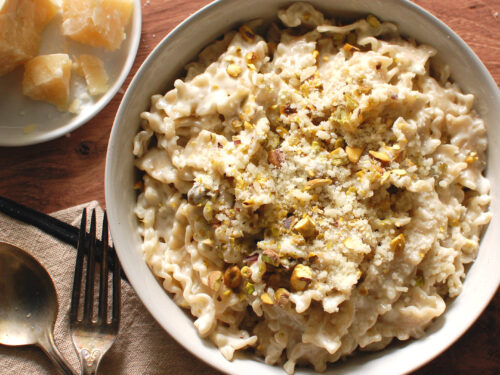
Another creamy pasta from The Silver Spoon you’ll love is this silky Pasta With Gorgonzola Sauce. If you want a rich, slow-cooked pasta sauce, ragù bianco is the ultimate Italian meat sauce without any tomato, the most traditional pasta in Bologna.
Step-by-Step Instructions
Here’s how to make this smoked salmon pasta step by step, along with a short video to show the key technique: folding the al dente pasta into the cream sauce for a silky finish.
Step 1: Cook the Pasta
Cook the pasta in a pot of well-salted boiling water until just shy of al dente (fully cooked, but slightly firm), stirring a few times. Drain, reserving about ¼ cup of pasta water.
Step 2: Sauté the Salmon Base
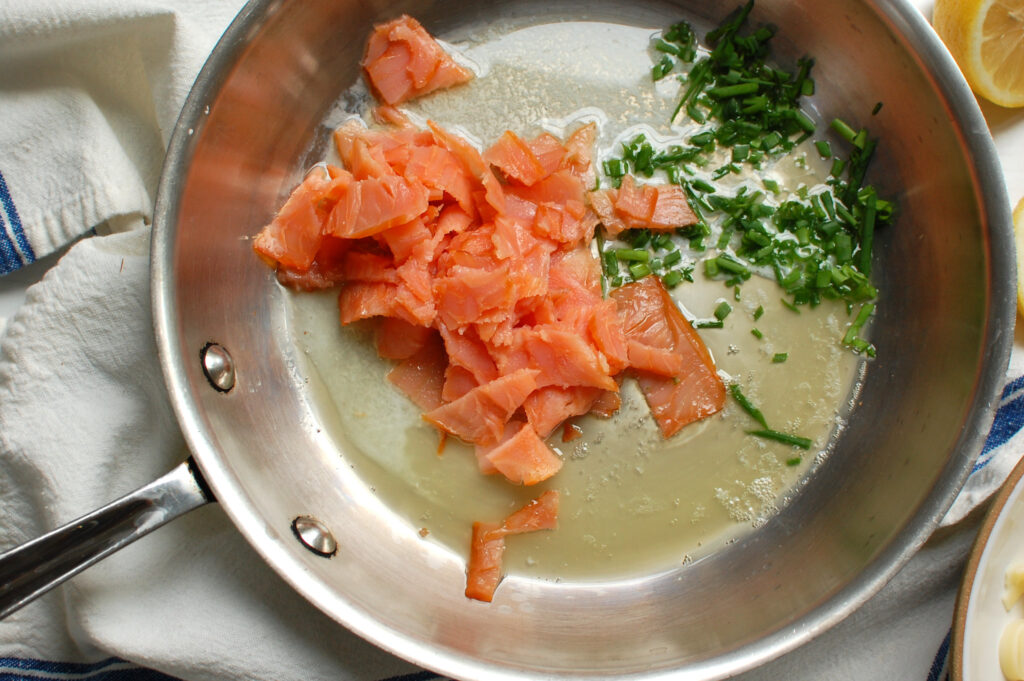
While the pasta is cooking, melt the butter in a large skillet over medium heat. Add the smoked salmon pieces, lemon juice, half of the lemon zest, and half of the chives. Cook for 1 to 2 minutes, stirring occasionally.
Step 3: Simmer the Cream Sauce
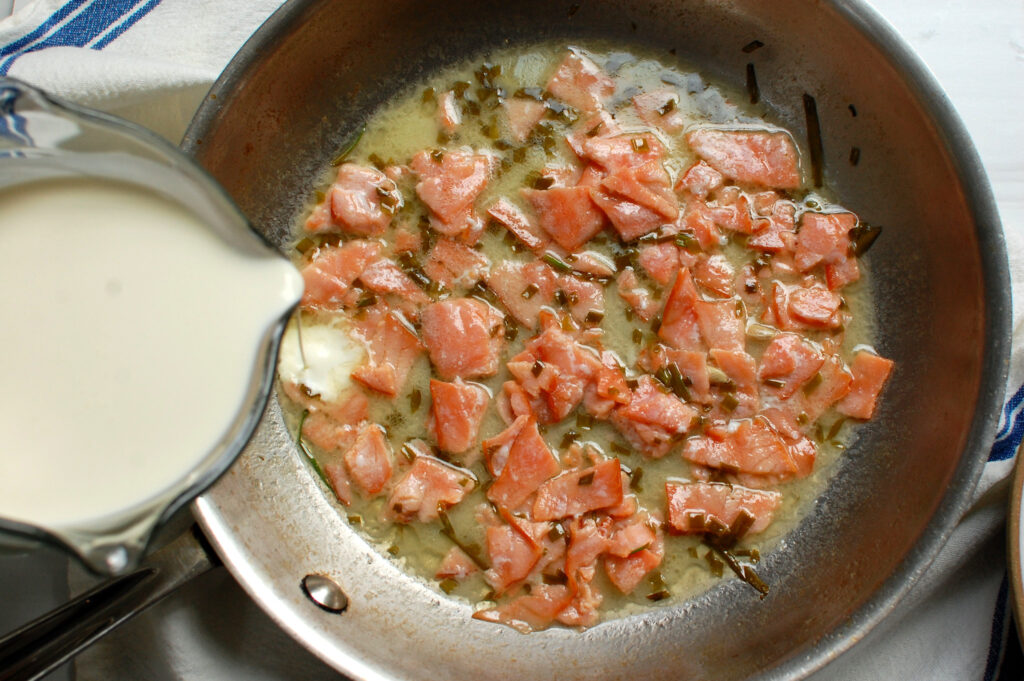
Stir in the cream and simmer over low heat for about 5 minutes, until silky and lightly thickened. Do not let the sauce boil; a gentle simmer prevents over-reducing and keeps the sauce from separating.
Step 4: Add the Pasta to the Sauce (With Video)
Add the drained pasta to the skillet of salmon cream sauce. Cook for a minute or two, tossing until the pasta is fully coated in a glossy, emulsified sauce. (Above, watch the video on this folding step.) If the sauce looks tight or dry, add reserved pasta water a tablespoon at a time until the pasta is the right creamy consistency. Taste for seasoning and add salt and black pepper as needed.
Step 5: Finish and Serve
Divide the pasta into serving plates and top with the remaining chives and lemon zest. Serve immediately.
Food + Wine Pairings
Food pairings: This salty, slightly-rich dish needs the complement of a bright salad or fresh vegetable side dish, especially something green like asparagus or sautéed spinach.This asparagus salad with peas and feta is a particularly good match; the lemon and mint echo the flavors already in the pasta.
Wine pairings: I have a WSET Level 2 certification in wine, so I love to do food and wine pairings. Here, this creamy, salt-forward pasta dish deserves a bright, acidic wine with strong minerality (avoid notes like peach or oak).
- Whites and Rosé: Champagne or sparkling wine makes a top choice for smoked salmon. I’d also drink a dry Riesling here, or a white Burgundy. A Provençal rosé is another balanced option.
- Red wine: Something light and berry-forward with minimal tannins like a California Pinot Noir or French Beaujolais (not nouveau!) are my top picks. Garnacha could work as well.
Why You Can Trust This Recipe: These recipes were developed and tested from scratch by Lisa Ruland, a Culinary Institute of America graduate (valedictorian), Level 2 WSET-Certified Wine Professional (With Honors), and professional chef and food writer/recipe developer. I am committed to providing accurate, trustworthy culinary guidance based on years of hands-on experience in professional and home kitchens. Learn more about Lisa’s background and expertise.
F.A.Q.s and Expert Tips
Be sure to check the salt. Different brands and types of smoked salmon (lox, nova, and so on) differ in sodium content, but all do have a lot of salt. Thus, this recipe does not call for added salt — you are also boiling the pasta in salted water — but check for seasoning anyway.
And if you want a fresh salmon recipe, this salmon en papillote, baked in parchment with tomatoes and dill, is a beautiful dinner.
How to Store and Reheat This Pasta
- Storage: Store in an airtight container in the refrigerator for up to two days.
- Reheating: Reheat leftover pasta with smoked salmon slowly in a pan on low- to medium-low heat with a few tablespoons of water or extra cream to help reconstitute a sauce. Stir gently until warmed through. I do not recommend reheating in the microwave, which always makes the pasta dry.
- Freezing: I do not recommend freezing smoked salmon pasta. The texture of the pasta and salmon will change.
Yes, although the flavor will be different. Fresh, flaked raw salmon can be added into the sauce and simmered until cooked through. Smoked salmon adds a deeper savory flavor and gentle smokiness, while fresh salmon creates a milder, lighter pasta dish. You will need to add extra salt if you use fresh salmon.
Cold-smoked salmon is the traditional choice for smoked salmon pasta. It has a silky texture and delicate smoke flavor that blends beautifully into the warm cream sauce. You may also be wondering about lox. While often found in the same corner of the grocery store, lox and smoked salmon aren’t quite the same. Lox is salt-cured but not smoked, resulting in a sharp, purely briny flavor. Smoked salmon undergoes a smoking process (either hot or cold). For this recipe, I recommend cold-smoked salmon. Its buttery, soft texture melts into the warm cream and has a richer flavor. But that said, lox will also work. Avoid hot smoked salmon.
This is the most common pitfall. Smoked salmon is salt-cured, and its salinity can vary wildly between brands. To keep the dish balanced, never salt your cream sauce until the very end, after you’ve tasted it, and go lighter than usual on the pasta water salt. Taste a small piece of your salmon first. If it’s particularly salty, skip the added salt in the sauce entirely. If it’s still too salty, try adding some additional lemon juice.
A “broken” sauce usually comes down to heat. If you boil the cream or add the acidic lemon juice while the pan is over high heat, the fat can separate. To ensure a glossy, emulsified sauce, simmer the cream gently. A splash of starchy pasta water can also stabilize the sauce to keep it smooth.
Lots of pasta shapes work here. Short pasta shapes such as penne, rigatoni, or fusilli work well because they hold onto the creamy sauce. Long noodles like fettuccine or linguine are also good choices for smoked salmon pasta, since the sauce coats the strands evenly.
Yes! This is actually a traditional Italian pasta dish, called pasta alla salmone. The Italians have been smoking salmon since the ancient Roman era.
More Easy Smoked Salmon Recipes and Creamy Pastas:
- Fettuccine Alfredo
- Smoked Salmon Sandwiches
- The Best Salmon Burgers
- Smoked Salmon English Tea Sandwiches
Did you make this smoked salmon pasta recipe? What did you think? Share below.
Creamy Smoked Salmon Pasta
Essential Equipment
- Microplane or lemon zester
- Pasta tongs (if using long noodles, like linguine or tagliatelle)
Ingredients
- 1 pound pasta, such linguine, tagliatelle, penne, or rigatoni
- 6 ounces smoked salmon, cut into pieces
- 6 tablespoons (3 ounces) unsalted butter
- 2 lemons, zested and juiced
- 3/4 cup heavy cream
- 3 tablespoons minced chives, divided (can substitute 2 tablespoons thinly-sliced scallions)
- Kosher salt and fresh-ground black pepper, to taste
- Optional add-ins: 1 tablespoon capers, drained and rinsed
Instructions
- Boil the pasta. Bring a large pot of salted water to a boil. Add the pasta to the pot and cook until just shy of al dente (fully cooked but still slightly firm), stirring a few times during cooking. Drain the pasta, reserving about 1/4 cup of pasta water.
- Cook the smoked salmon base. While pasta is boiling, melt the butter in a large skillet over medium heat. Add the smoked salmon pieces, lemon juice, half of the lemon zest, and half of the chives. Cook for 1 to 2 minutes, stirring occasionally. (If you're using rinsed capers, add them now.)
- Add the cream and simmer. Reduce the heat to low. Stir in the cream and cook at a gentle simmer for 4 to 5 minutes, stirring once or twice. PRO TIP: Do not boil the sauce; just gently simmer. Boiling the sauce will cause it to over-reduce, and risk separating.
- Fold the pasta into the sauce. Add the drained pasta to the skillet of salmon-cream sauce. Cook for a few minutes, tossing to coat. If the pasta looks a little dry, add pasta water a tablespoon or two at a time until it's tossed in a glossy, creamy sauce. Taste for seasoning.
- Garnish and serve. Divide the finished pasta among pasta bowls. Top with the remaining chives and lemon zest. Serve immediately.
Video
Notes
- Grated cheese (or lack thereof): Do not use grated cheese, such as Parmigiano-Reggiano. It’s not common in Italian seafood pastas — including this — to keep the spotlight on the fish.
- Herbs: Chives complement the smoked salmon perfectly, but you can also substitute or add thinly-sliced scallions, minced parsley, or minced fresh dill
- Adding vegetables: Peas, diced asparagus, or spinach make a good vegetable addition. Add peas or asparagus with the salmon; spinach can be added to the sauce just before the pasta, since it wilts quickly.
- Cream: You can substitute half-and-half for the heavy cream. Do not use milk, which is too thin.
- Storage: Like all creamy pastas, this dish is best served immediately. If you have leftovers, store them in an airtight container in the refrigerator for up to two days.
- Reheating: Reheat leftover salmon pasta slowly in a pan on low- to medium-low heat with a few tablespoons of water or extra cream to help reconstitute a sauce. Stir frequently.
Nutrition
Disclaimer: Nutrition information is provided for courtesy purposes only, and is an estimate not verified by medical or nutrition experts. Read the full nutrition disclaimer.




54 comments
Kim
Thanks for another delicious pasta recipe, Lisa!
JJ
awesome recipe. This is very, very easy. Added a little dill on top but otherwise made as-is.
norah
A simple, fast recipe that’s perfect if you need to use up a package of smoked salmon, which I did. Added scallions instead of chives because I had them in the fridge, but otherwise done as-is. So glad I tried this!
J.E.H.
This came out great, but I have a question about herbs: If I wanted to use dill instead, should I cook that into the sauce as well like the chives, or add at another point? Thanks. I love your recipes.
Lisa Ruland
Great question. I’m glad you liked the recipe! Dill has a more delicate leaf, but a stronger flavor than chives. That’s why you’d want to add chopped dill at the end, fresh, when you combine the pasta and the sauce. It doesn’t really need or want to cook. Then top with a few extra dill fronds for a pretty garnish on top.
CB
Bookmarked this from your newsletter last weekend and finally made it for dinner. This was so good!! New Italian pasta meal for us.
Paul
chose this recipe because it’s fewer ingredients/easier than a lot of other ones and it was great. made it without any changes.
Tom&Jackie
very easy to make and delicious. it seemed slightly dry but I know I over-reduced the cream.
Lisa Ruland
Ah. That makes sense. I am glad you liked the recipe. If it looks a little too dry, “dose” it with a little pasta water or an additional tablespoon or so of cream, then toss before serving.
Susan
Great recipe. Had not made salmon pasta before but will make this again.