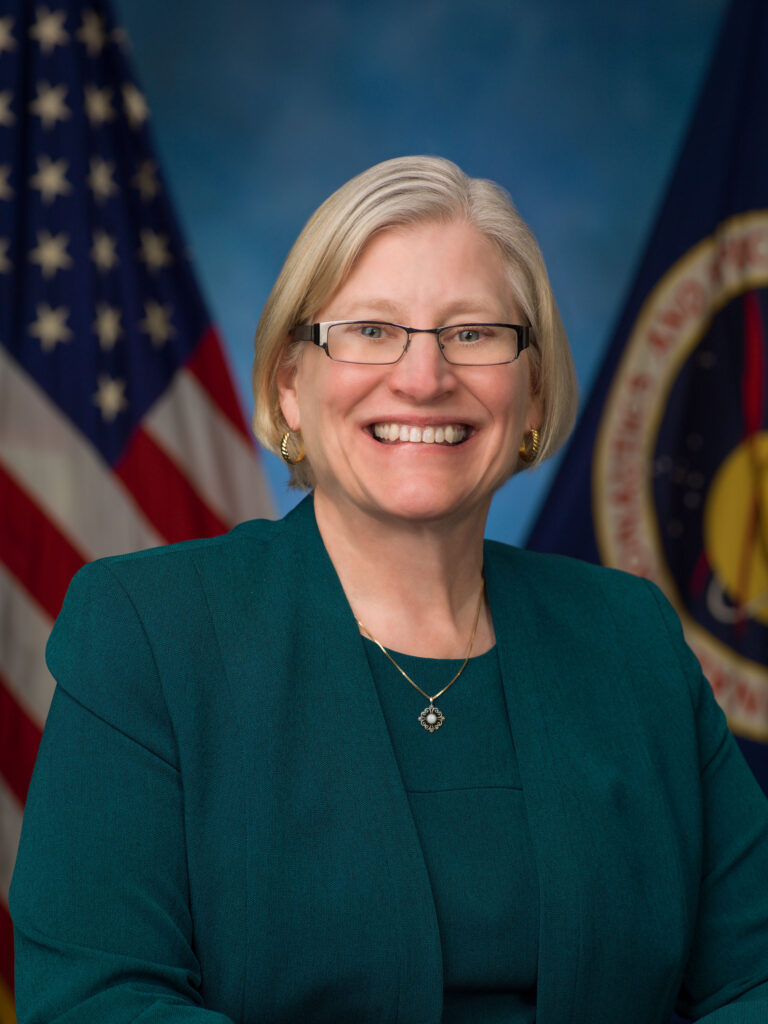
Few people can say that their career has been out of this world and mean it literally. Food scientist Vickie Kloeris is one. Until her retirement, Ms. Kloeris managed NASA’s Shuttle and International Space Station food systems for decades. While keeping the astronauts well fed and nourished in space, she earned NASA’s highest honor, the Distinguished Service Medal, and multiple other awards. This incredible woman occupies a food “space” all her own. We got to talk all about it.
Jump To:
Meet Food Scientist Vickie Kloeris, M.S., C.F.S.
I have the good fortune of living in Washington, D.C., a city that plays regular host to experts and speakers in just about any topic. Over the years, I’ve attended talks by ambassadors, Cabinet secretaries, famous authors, historians, entertainers, politicians. But of all these talks, one captivated me more than any other: that of food scientist Vickie Kloeris in April 2025, as part of the Kennedy Center’s Earth to Space Festival. The title of her talk: “Space Food: The Final Frontier.”
Vickie Kloeris opens her memoir, Space Bites, with the lines, “Often, we do not realize the significance of a decision that directs us toward our ultimate path until long after the moment has come and gone.”
Ms. Kloeris’s “impulsive decision” to take a four-hour food microbiology class during her senior year of college led to graduate work in food science, which led to her joining the Institute of Food Technologists (IFT), a professional organization for food scientists — mainly to get a discount hotel rate at the annual conference. (Who among us doesn’t like a good deal?)
Through this, Vickie Kloeris began to attend local IFT meetings in Houston, Texas, where she meet two NASA food scientists. And so launched her accomplished and deeply fascinating career with NASA.
Not every career path leads straight to the cosmos, and not everyone gets to develop food for astronauts, test food packaging while floating in the Vomit Comet, and even meet a few movie stars along the way. That’s what makes Vickie’s career is one worth knowing. Her experience, stories, expertise, and perspectives on the Space Program make this one of my favorite interviews, ever.
After retiring in 2018, she was awarded NASA’s highest honor, the NASA Distinguished Service Medal in 2019. Ms. Kloeris was twice awarded the NASA Exceptional Service Medal, and received the Johnson Space Center Director’s Commendation Award. She’s worked with hundreds of astronauts, fed a space breakfast to the Apollo 13 cast, developed a space meal with Emeril Lagasse, so much more.
Working “in food” takes many forms. We may think mostly of chefs, but food scientists play a key role in shaping our food systems here on Earth, and as we see here, even well beyond. Below, get to know this remarkable woman in food, Vickie Kloeris.
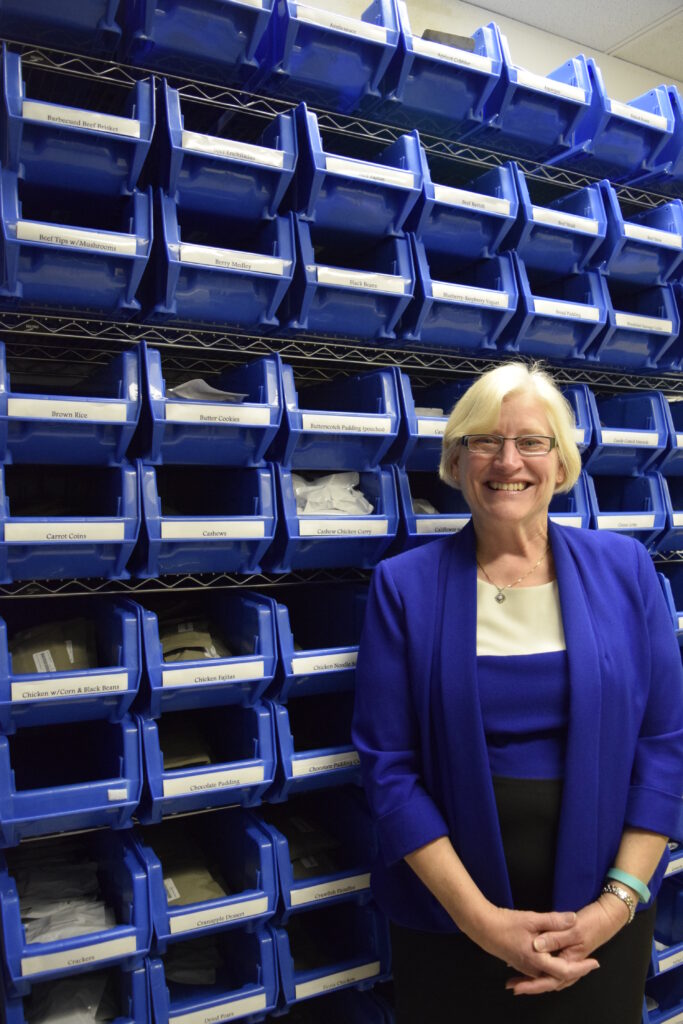
The Interview: Food Scientist Vickie Kloeris
[Editor’s note: The first question was asked and answered via email in April 2026. The rest of this interview took place in April 2025. This article has been edited and condensed for space.]
I would love to know your thoughts about Artemis II: How and where did you view the launch? What are you feeling about the mission? What is it like to see these astronauts eating and drinking food that you had a role in developing for the space program?
I watched the launch from the comfort of my own living room in Pearland [Texas]. I am a little sad at not being directly involved in the mission, but am extremely proud of NASA and especially my food lab coworkers who are supporting ISS [International Space Station], a year-long CHAPEA analogue mission at JSC [Johnson Space Center] and also Artemis II. It makes me proud to see, for instance, the crew drinking beverages from the beverage package that was developed during my career, so I had a part in developing it.
Can you give some background on your journey into a career as a food scientist?
I stumbled into it when I was a senior in college. I went to Texas A&M as a pre-med major. I really liked biological sciences, so I declared pre-med as my major, and joined the pre-med society. I started attending meetings, and they would have speakers, like doctors, come and speak. And I quickly realized I really didn’t have the passion for practicing medicine.
I was really interested in microbiology, and really thought that I would go into clinical microbiology when I graduated, maybe work at a hospital or something. But then, when I was a senior, I was one hour short for a microbiology elective. And there was a food microbiology course in the College of Agriculture. My advisor tried to talk me out of it. He said, “You don’t need a four-hour course with a lab and all that stuff. Just go do a white paper for one of your professors.” But I insisted.
When I took the course, I got very interested in the application of microbiology to the processing and preservation of food. And I learned about food science as a degree, which I had no knowledge of it before that at all. The gentleman who ended up being one of my professors ran the seafood technology lab at A&M. When he finished his last lecture, he said he was looking for graduate students. And so, I went and applied to be one of his graduate students. And that’s how I got into food science.
When I left A&M, I got married. My husband was in residency at the University of Texas Medical Branch in Galveston. He’s a family physician, and had two years of residency left. So, I got a job in a research lab and worked down there for two years. And then when I left there, I got a job in Houston at a hospital. I was doing quality assurance for them — food safety.
While I was there, I started going to the local Houston IFT [Institute of Food Technologists] chapter meetings. There, I met some of the food scientists working at NASA. And I thought, “That has got to be the coolest job a food scientist could have.” I told them, “If you guys ever have an opening, call me.”
And about 18 months to two years later, I got a call that there was an opening. And the thing was, I’m not really sure they called for me specifically. They just called people that they knew from the local section to kind of get the word out about the opening. But I thought, “Oh no, I’m going to interview.”
And so you applied at NASA?
I interviewed, then went to work as a contractor in the food lab at the Johnson Space Center. And worked as a contractor for four years. And then transitioned over to manage the shuttle food system in 1989. And at that point, I became a civil servant. And I managed the shuttle food system for years, and then the International Space Station food system before I retired.
What was it like stepping onto NASA’s campus at the Johnson Space Lab for the first time?
It was kind-of awe inspiring. I had grown up just down the road, really, from the Johnson Space Center in Texas City, Texas. This is where I was born and raised. But I never dreamed about working at the Johnson Space Center. It was a little bit intimidating, to be honest.
At that time, was it very male dominated? Did you experience sexism? How did you navigate that?
Yeah, the sexism was there. I can’t say it was blatant or horrible, but it definitely was there. I mean, NASA definitely was a male-dominated community from the beginning. And yeah, it took a while for things to change. But gradually, it did. I can remember what a big deal it was when we had our first woman director at Johnson Space Center, Carolyn Huntoon. I knew Carolyn and it was quite a milestone when she became the first female center director [in 1994].
I think almost all of us over a certain age have personal memories of the 1986 Challenger disaster and the 2003 Columbia tragedies. For you, it was personal. And I wonder if you could talk about knowing the astronauts experiencing that loss from a NASA standpoint, and your personal standpoint.
Challenger was very early in my time at NASA. I’d only been there about seven or eight months when Challenger happened. One of my duties was to support Rita Rapp, who was the manager of the shuttle food system. Part of what she did was conduct food sessions where the shuttle crew would come in, usually at lunchtime, and try the products and score them so that they could help them choose their menus and get familiar with the food.
About a month after I came to work there, I supported [Rita] in a food session. My job was to prepare the food, then she presented it to the crew members. The first session I supported was a food session for Christa McAuliffe and her backup, Barbara Morgan. So I got to meet Krista. When Challenger happened, she was so excited and, you know, so sweet and so dedicated to the idea of teaching from space and being able to excite students about science and about space. And so when she was killed, it hurt. It really did.
And then Columbia. At that point, you had been at NASA for a while.
The Columbia mission was special for us in the food lab because it was a life sciences mission, so they had a lot of medical experiments. And some of those experiments required the crew members to keep diet logs of exactly what they ate. Prior to the flight, we were tasked with feeding them. We did the food preparation and tracked it for them. So we’re talking breakfast, lunch, and dinner for about a week or more before they went into crew quarters, and then for the week prior to the flight, when they were in quarantine. So we had about two weeks-ish, maybe a little more, where we had worked one-on-one with the payload crew members. We were delivering food to their offices. We were, in some cases, taking meals to their houses in the evening. So we worked very closely with those crew members. The whole team was really adversely affected; it was very sad when Columbia happened.
And yet you still had a job to do, because there was concern about the International Space Station (ISS) food resupply at that point. And so you even even even in your grief, you had to work to do.
Yes, because we had been using the space shuttle to deliver a lot of the food to the space station. So we had to come up with an alternative pathway, which meant the Progress [unmanned Russian cargo supply spacecraft], because that was basically the only other option we had at the time.
On the topic of Russia, I was particularly fascinated by your experience working in Russia in 1994 as part of NASA’s partnership with the cosmonauts for the ISS. Can you talk about how you realized that you were all being surveilled by the government while you were in Moscow?
So when we first got to the hotel, I had had a discussion with one of the other American folks that there were no hangers in the hotel room closet. And then we go out to dinner and we come back and there’s hangers in the closet. Could that have been just a coincidence? I’m thinking no.
Then there was another time when I’m about to get on one of the trains. We had learned to at least read Russian before we went over there, but I took a wrong turn and I was going to get on the wrong subway train. And all of a sudden there’s someone at my elbow pointing, telling me which way to go. So they were looking out for us; they didn’t want bad things to happen. But it was a little creepy.
One thing that struck me over and over again, as I read the book, was the psychological importance of the food to the astronauts. Could you talk about the ways you saw the importance of food to the psychological health and the mood of the astronauts?
When I came to work, it was still early in the shuttle program and most people didn’t care that much about food. Shuttle flights were relatively short. And most of the crew members said it’s like a camping trip. We could find some food; that was not a problem.
But when we partnered with the Russians to build the International Space Station, NASA wanted their crew members to go stay on Mir [Russian space station] so that they could get some long-duration experience in space, which we didn’t have yet; all we had were the shuttle flights.
And how long were the astronauts going to be on Mir?
About four-and-a-half months, roughly, was the plan. So it was significantly different from a two-week shuttle flight. I can remember one of those first crew members, in particular, telling me that he was too busy learning Russian and learning the logistics of the Mir vehicle, so to just pick some food that he had selected for the shuttle, it’ll be fine.
Well, after a couple of them had been up in Mir that long, they came back saying, “Oh, I should have paid more attention to the food.” The menu, when you’re up there for four months or more, becomes a lot more important, especially from a psychological perspective. Food is one of the few creature comforts you have when you’re up there. And so, yeah, food became a lot more important. And word got around the astronaut office pretty quickly: If you’re going to be up there for any length of time, you need to pay attention to your food. So it became a lot more important.
“Food is one of the few creature comforts you have when you’re up there. And so, yeah, food became a lot more important. And word got around the astronaut office pretty quickly: If you’re going to be up there for any length of time, you need to pay attention to your food.”
I was very surprised to learn that early space food was actually just food from, you know, a camp store or standard military rations.
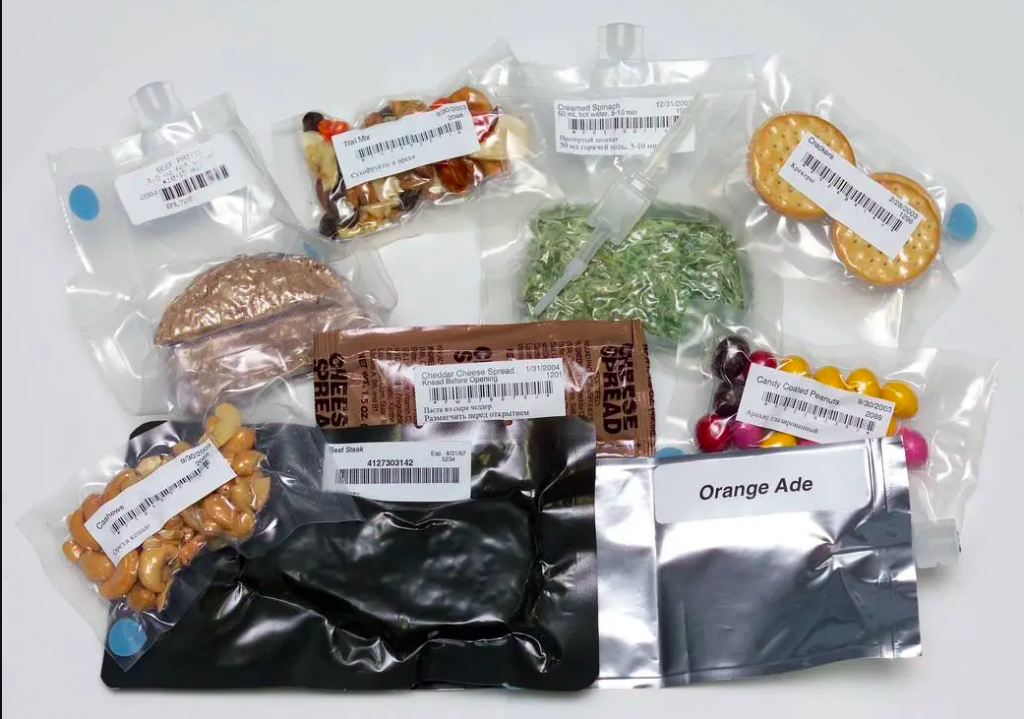
For the early shuttle food system when I was there, we were buying the thermostabilized food pouches from the military, because the military has the MREs [Meals Ready to Eat], and their entrées are in pouches for the same reason we wanted, which is to save weight. So we were buying those and using them in the shuttle program.
On the freeze-dried side, we were buying camping food, basically what you could buy at REI. the freeze-dried camping food. That’s what we did for the shuttle, and that was fine. But it meant that on the food science, we weren’t we weren’t doing any custom products, really. When a product went away, we would find another commercial product to replace it.
When we transitioned into space station missions, we thought we were going to get refrigerators and freezers for food on station. But it didn’t take long before the engineers came to the space station program and said, “Look, we’ve looked at how much power we’re going to get from these solar arrays, and you’re going to either have freezers for science or you’re going to have freezers for food, but you can’t have both.”
And so pretty quickly we were told that we were back to an all shelf-stable food system, no dedicated refrigerators or freezers for food. And so that meant we had to reevaluate and start customizing, because the MRE entrées in the camping food are super high in salt.
What was the significance of the high sodium content?
The military has good reason for having all the salt in there, because when the soldiers are in a desert condition, they’re going to be losing those electrolytes, sweating them out. So they need that salt. And the camping industry uses it because it helps preserve, but it also makes things taste really good. But high sodium for long-duration spaceflight, that was a negative. Crew members, when they’re on orbit, begin to lose muscle mass and bone mass. And in particular, a high-sodium diet can make bone loss worse. We knew we had to reduce the sodium in the diet. So that at that point in the mid ’90s, when we were prepping for the space station, that was when we first started doing custom foods, like our own freeze-dried formulations. And now pretty much all of the freeze-dried and thermostabilized food that they fly are custom formulations by NASA.
Thanksgivings are celebrated in space, birthdays are celebrated in space, just as two examples. Both of those days are often really rich with importance, psychologically, in terms of tradition, nostalgia, home, all of it. So how did you work with astronauts for, for example, Thanksgiving in space, or a birthday?
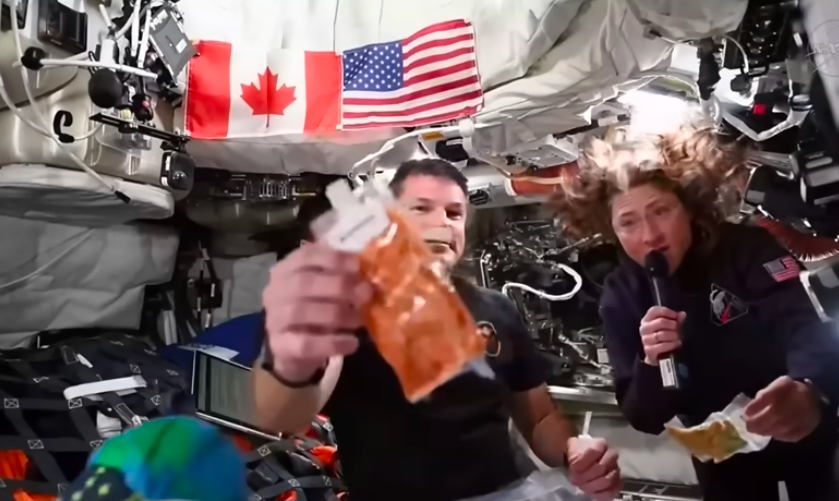
They’ll have any excuse for a special meal. They celebrate Thanksgiving on the Space Station. Even though it’s only an American holiday, they celebrate Thanksgiving as a crew. They celebrate Christmas, they celebrate Orthodox Christmas, so any excuse — birthdays, all of it, it’s a big deal.
The core menu that NASA sends to the space station is a standard menu. The food is stored pantry style, so all the meats are together, all the veggies are together. So there’s eight different categories. And even though the contents of those eight containers are the same every time, they eat them in whatever order they want. But they get to augment that with a certain amount of preference foods, where they choose the exact contents of the preference containers.
Technically, alcohol is banned.
Yes, technically.
Technically. Can you talk about how the astronauts got busted for having alcohol in space? It’s very interesting.
Well, it was always stated that NASA was opposed to alcohol on board because of safety issues. But the way I first learned about it being there — well, on Mir — was this: I can remember there was a photo that one of the astronauts took of the dining area in the Russian service module on the Mir space station, and in the lower left-hand corner, you could see the butt of alcohol bottles stacked on the shelf. You can tell exactly what it is.
So I can remember asking the Russian flight surgeons about it, you know, “So y’all allow alcohol?” And he said nyet, nyet, but we knew it was there. The crew members told us it was there.
But when it became obvious was when, as station got bigger, they had to start recycling water, including urine — everything — because they could no longer launch enough water to support the number of crew members that were on board. And so then alcohol, ethanol specifically, became a concern because it is a contaminant in the recycling system. When ethanol would get in the system, they couldn’t break it down. So it became a contaminant.
I can remember sitting in a meeting and they were tracking the air quality in the space station all the time. And when the Russian Progress would dock, you would see this big spike in ethanol and everybody knew what it was, but nobody really said anything. It was just kind of amusing.
Like, yep, we know what’s happening up there. The science isn’t lying.
We know.
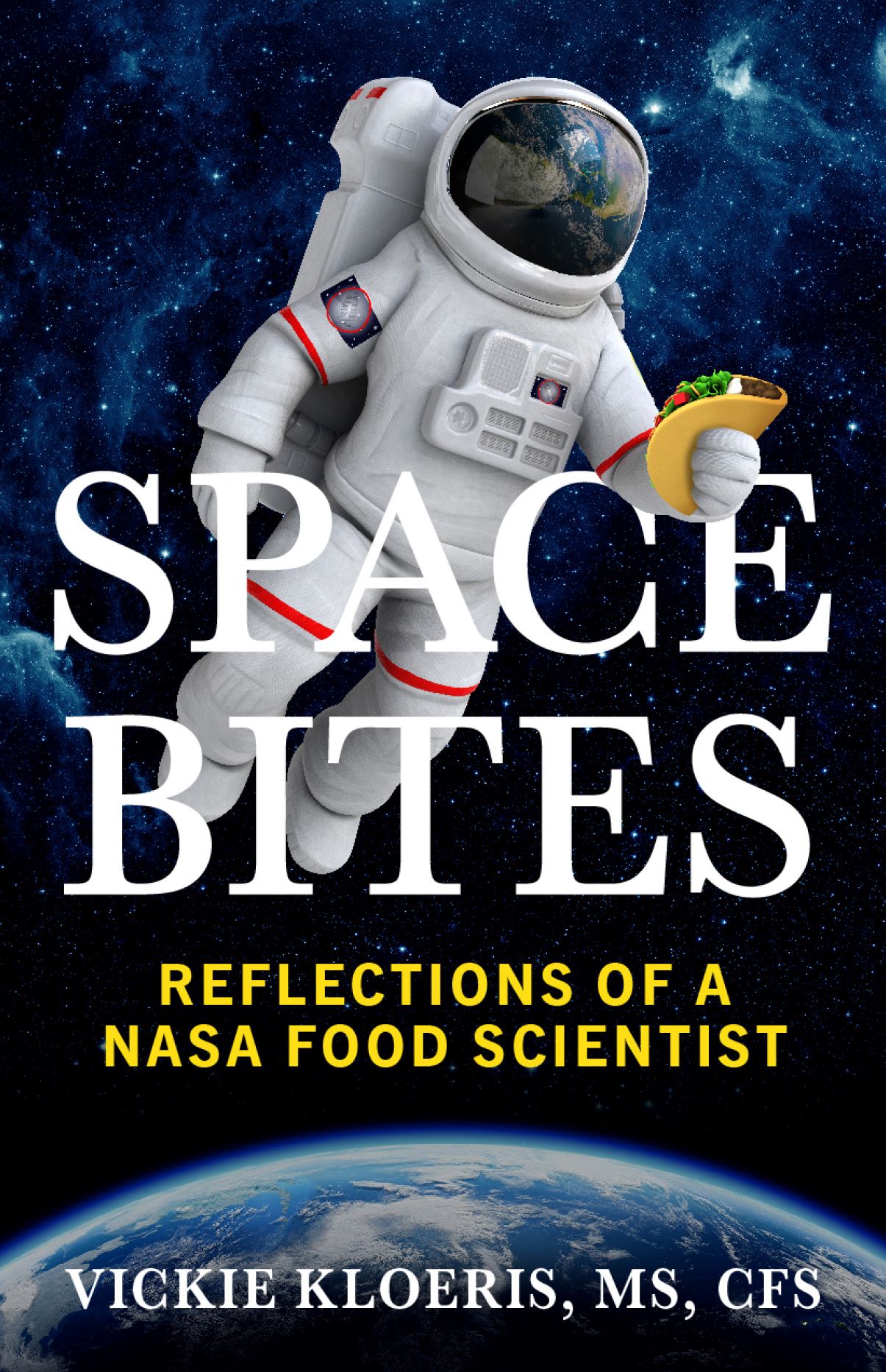
Can you, can you talk about the your memoir, Space Bites, and what prompted you to write it?
Several reasons actually combined together for me to write it. I never ever thought about writing a book until the fall of 2019, when my first boss and mentor at NASA passed away. He had written a children’s book about space food. And I thought it would be really nice to write a book and dedicate it to him. And then we get to spring of 2020 and COVID hits. And so I’m locked down, you know, not going anywhere, not doing much. And so I thought if I’m ever going to do this, now is the time. So I started writing my book and I probably did about 90 percent of it during COVID, during the lockdown.
I also wanted to make students aware of food science as a career path. Because I didn’t know about it; I stumbled onto it. And I still find that people know a lot about being a chef, about culinary. They know a lot about dietetics and being a dietician, but they don’t really know about food science, at least not that many. And there’s demand out there in the food industry for food scientists. And there are good paying jobs out there. And there are degree programs at different universities that I just wanted to make people aware of. It’s not that I was trying to promote space food science per se, because the number of opportunities to work in space food is obviously pretty limited, but I wanted to promote food science in general.
I also wanted to make the public more aware — because my concept of NASA, when I lived down the road from NASA growing up, was that NASA was only astronauts and engineers. And really, all kinds of careers and expertise are required to make a successful space mission. And so that’s part of what I wanted to write the book, to make the public aware that there’s a lot more to NASA than just astronauts and engineers.
Vickie Kloeris officially retired from NASA in 2018, but continued working for NASA in an interim capacity in 2021; served as board member, president, and immediate past-president of the IFT; and gives lectures and presentations nationwide, in addition to publishing her memoir.
You have been quite busy since retiring. Do you miss NASA and the work?
Oh, yeah. More than anything, I miss the people. I enjoyed the folks that I worked with, both in the food lab and in the other supporting areas. So I really miss working with the astronauts, working with all the shipping people, the program office.
You said that the most extraordinary experience of your career was volunteering as a test subject in a 91-day, closed loop environmental test to test advanced life-support capabilities like waste recycling and regenerative capabilities like growing vegetables in space. That was intense.
[Ed. note: the 91-day duration was to beat the previous record for a U.S. closed chamber test of 90 days, set in the early 1970s.]
That was interesting. Between ’95 and ’97, NASA did a series of closed loop tests where they were developing air and water recycling systems, ultimately for the space station. And so the first test was a 15-day test, then they did a 30-day test, and beyond.
Can you explain what a closed loop test means? It’s completely self-contained. Air, everything.
You’re in a chamber, and basically all the air and water is being recycled. Early on, it was just the air that was being recycled. It was three engineers and me. I was the science officer. So I was responsible for coordinating everything we needed for the science, and making sure the engineers were participating in all the experiments and reminding them what they were supposed to do, and all that kind of stuff.
And then you had to come out back into the real world and adjust.
Yeah. It was a little bit shocking. I mean, we were in there for Thanksgiving. We were in there for Halloween. We came out right before Christmas. I can remember first walking out of the chamber. One of the weird things was I could not focus at a distance, because I had been in this chamber for all this time, where my eyes had to focus no further than X. And so when I go out, it was like my eyes did really weird things. All of a sudden I was having to focus on far distances again.
On far distances.
That sensation went away pretty quickly, but it was just weird. And then I remember after our exit physical, my husband picked me up from the clinic and we were driving to lunch. And I told him, “Watch your speed. You’re gonna get pulled over.” Well, he was going really slow. He wasn’t exceeding the speed limit at all. But I had not been in a moving car for so long, so I perceived that we were going way faster than we were.
I always wrap up our interviews with a few lightening-round questions, just out of curiosity. So if you could finish the sentence: It’s not Thanksgiving dinner without what on the table?
I’ve grown up Southern, so it’s cornbread dressing. We at NASA always had a dressing as part of the menu. It’s freeze-dried, I believe. So we did try to have turkey, some of the traditional things. And then at Christmas time, we would send shelf-stable version of cranberry sauce and things like that, so that they could have some of the traditional foods.
What is the food that tastes like home to you?
To me? Well, boy, that’s hard. My mother was not a good cook. I hate to say it, but she was not. And I’m no great cook either. Just because I’m a food scientist does not mean I’m a great cook. Food scientists and chefs are two entirely different things. But for me, I’ve got a sweet tooth.
One of my favorite things, when all the food scientists and the dietician started doing our own thermostabilized products at NASA, we sat down in the lab and said, “Okay, where do we want to start?” And believe it or not, we started with desserts. At that time, we did not have a dessert that you could warm up in the food system. All our desserts were commercial, off-the-shelf cookies, candies, M&Ms, things like that. As a group, we said, “If I’m gonna be on orbit for four months or six months or whatever, I’m sure gonna want a dessert at some point that I can warm up.” And so, even though, from a nutritional perspective, maybe that wasn’t the most important thing to start with, everybody agreed from a psychological perspective, it was important to start with a warm dessert. And so one of the first things we did was a thermostabilized cherry-blueberry cobbler. And it ended up being my favorite of all. We have a real good shrimp cocktail, too, though — freeze-dried shrimp. That’s very popular.
Vickie, thank you so much for your time and the great interview. What a fascinating journey it’s been to come along with you as you shared some of your career and stories with us.
Vickie Kloeris’s memoir, Space Bites, is available for purchase. In it, she shares so much more about her background and career, the NASA food systems program, eating in space, anecdotes, and more.
Check out more of Unpeeled Journal’s profiles of women in food.