
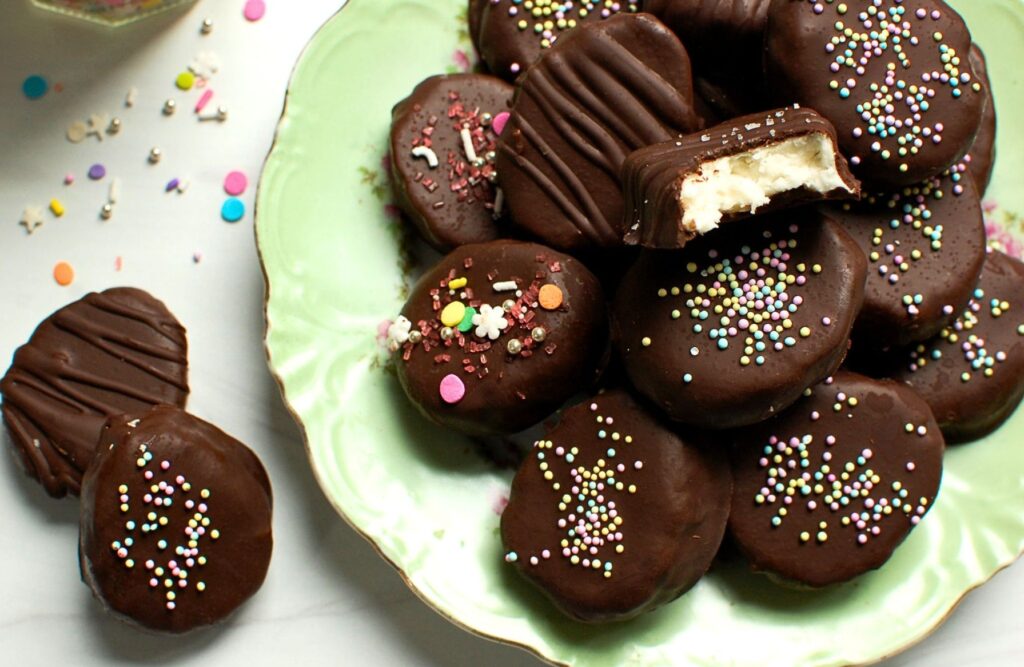
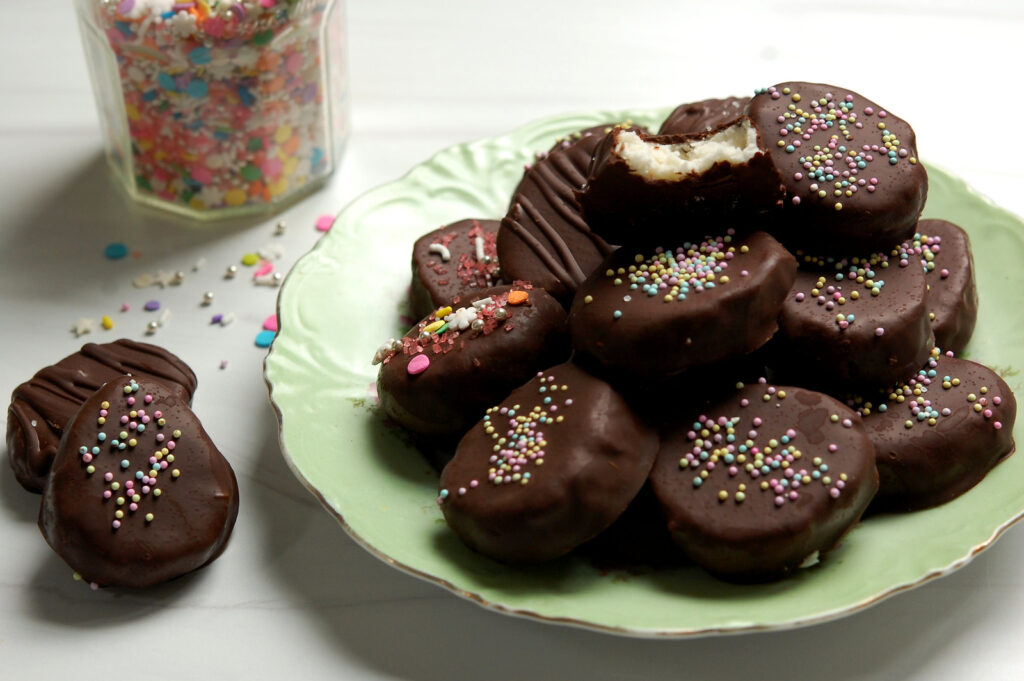
These homemade coconut cream eggs are a classic no-bake Easter candy made with a soft, creamy coconut filling and coated in rich chocolate. If you’ve ever had a coconut cream Easter egg, you’ll see that this homemade version is fresher, more flavorful, and easy to make at home. Perfect for Easter baskets, the dessert table, or gifting.
Jump To:
What Are Coconut Cream Eggs?
Coconut cream eggs are a traditional Easter candy made from a sweet coconut filling shaped into eggs, then dipped in chocolate. The filling is soft and creamy, with a chewy coconut texture and a rich dark chocolate coating that complements the sweetness. Chocolate-covered coconut cream Easter eggs are make-ahead friendly and a no-bake dessert.
Why This Recipe Works
This is a simple recipe for chocolate-covered coconut cream eggs, using only simple pantry ingredients like shredded coconut, cream cheese, and powdered sugar. As a professional pastry chef, I’ve tested this method to ensure the filling is smooth, easy to shape, and coated in a thin, glossy chocolate shell: no streaking, no cracking, and no “feet.”
A no-bake dessert is always a win, but these coconut cream Easter eggs are extra special. They’re fresher and more flavorful than store-bought versions or a Mounds copycat, with a creamy coconut filling and a glossy chocolate finish. Once you try them, you’ll never go back to store-bought.
Recipe Overview: What You Need to Know
- Culinary Skill Level: beginner
- Main Ingredients: shredded or desiccated sweetened coconut, butter, cream cheese, confectioners sugar, chocolate
- Flavors: Think of it as a copycat Mounds recipe, but better, fresher, and creamier. Sweet from powdered sugar and coconut heightened with vanilla; creamy from butter and cream cheese; balanced by the mild bitterness and depth of dark chocolate.
- Time: 15 minutes active time, plus 30 minutes chilling before and after
- Makes: 24 eggs
Highlights of Why They’re So Good
- Easy, No-Bake: Mix, chill, shape, and dip. This is a straightforward, easy recipe. No oven required.
- Classic and Nostalgic: Homemade takes on familiar Easter candy, richer and creamier
- Make-Ahead Friendly: Keeps for days and freezes well for up to 2 months
If you love chocolate-coated Easter treats, definitely get the sister recipe for Chocolate Peanut Butter Easter Eggs. All dressed up for Easter, they taste like Reese’s Cups, but even better. If you’re building your Easter dessert spread, check out our full Easter dessert roundup — there’s something for every kind of celebration.
Ingredients for Homemade Coconut Cream Eggs
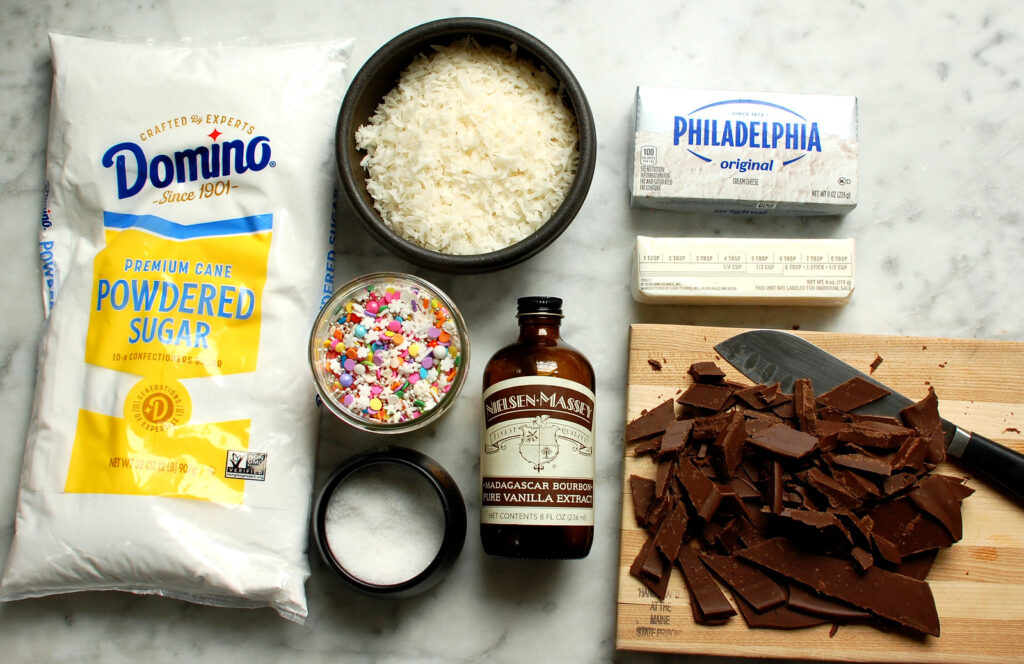
Here are the simple ingredients you need to make coconut cream eggs, with a few notes about each:
- Butter: Softened so the filling mixes together easily and stays creamy
- Cream cheese: Adds a little tang and also keeps the coconut mixture smooth and creamy
- Powdered sugar: Sweetens the filling (vs. granulated sugar, which would make it gritty)
- Sweetened shredded coconut: The main flavor and texture. Use sweetened to complement the tang of the cream cheese and bitterness of the chocolate
- Vanilla extract: Use pure vanilla extract for the best aroma
- Salt: A pinch helps balance the sweetness
- Dark chocolate: For the coating. Quality really shows here, so choose a high-quality baking chocolate and do not use chocolate chips, which contain emulsifiers that will make the melted texture too thick to coat. Sixty to 70% cacao (semisweet chocolate) is the sweet spot for this application.
- Vegetable oil: Helps thin the chocolate just a bit so it coats the eggs evenly and stays glossy
- Sprinkles, Maldon salt, or other decorations: Optional, but fun if you want a festive look
Craving coconut? The coconut cream filling is in the same spirit as Philadelphia’s beloved Irish potato candies, a sweet, no-bake coconut treat that’s been a regional favorite for generations. And this copycat recipe of the Tom Cruise White Chocolate Coconut Cake is a moist, perfect bundt just like the Doan’s Bakery version, but better.
Step-by-Step Instructions
Here are the steps to make these tasty little Easter eggs, along with a video showing how to dip them in chocolate correctly. Before you start, though, here are a few key tips:
Key Tips for Perfect Coconut Cream Easter Eggs
- Chill the filling before and after shaping so the eggs hold their form
- Use real baking chocolate, not chocolate chips, for a smooth coating
- Dip in small batches to keep the chocolate fluid and glossy
1. Make the Coconut Cream Filling
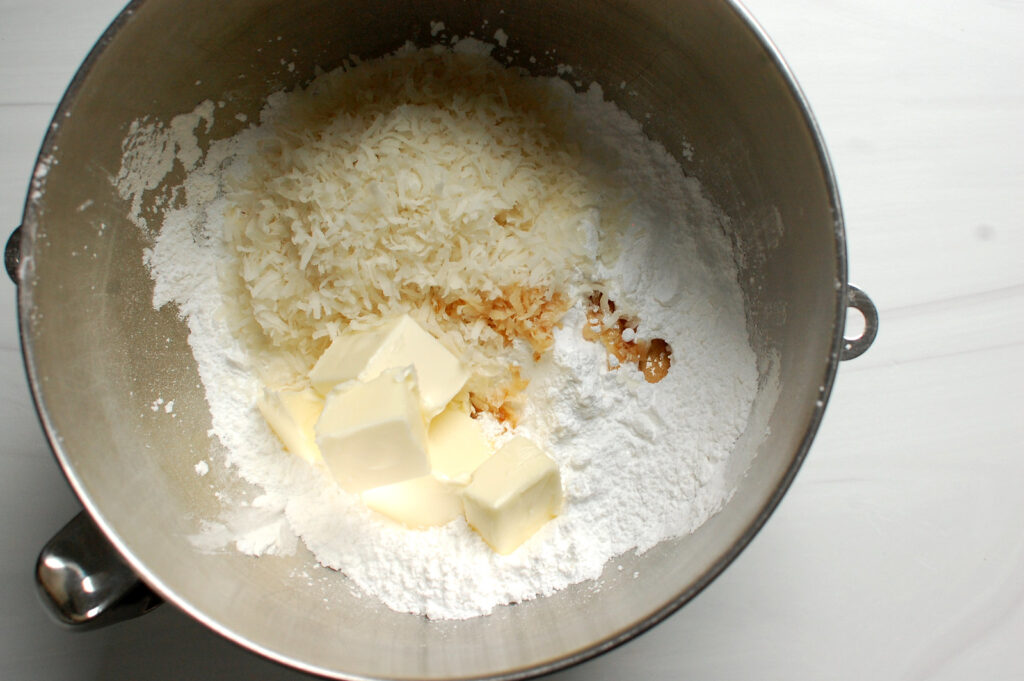
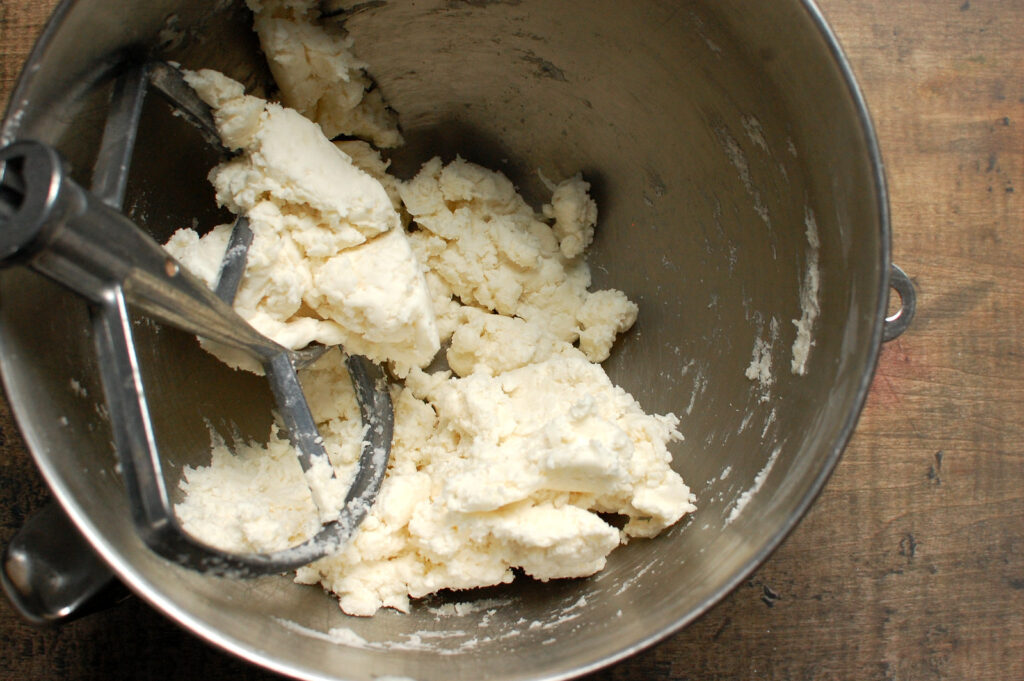
The coconut cream cheese dough is very easy to make, with only one step. Start by mixing the softened butter and cream cheese until smooth. Add the powdered sugar (if using a stand mixer, use the paddle attachment and start on low to prevent a powdered sugar “explosion), shredded coconut, vanilla extract, and a pinch of salt.
Mix until everything comes together into a thick dough, scraping the bowl with a spatula to make sure everything is fully incorporated. Cover and chill for 30 minutes to one hour. It’s important to chill the filling so it does not dry out.
2. Scoop and Shape the Coconut Cream Eggs
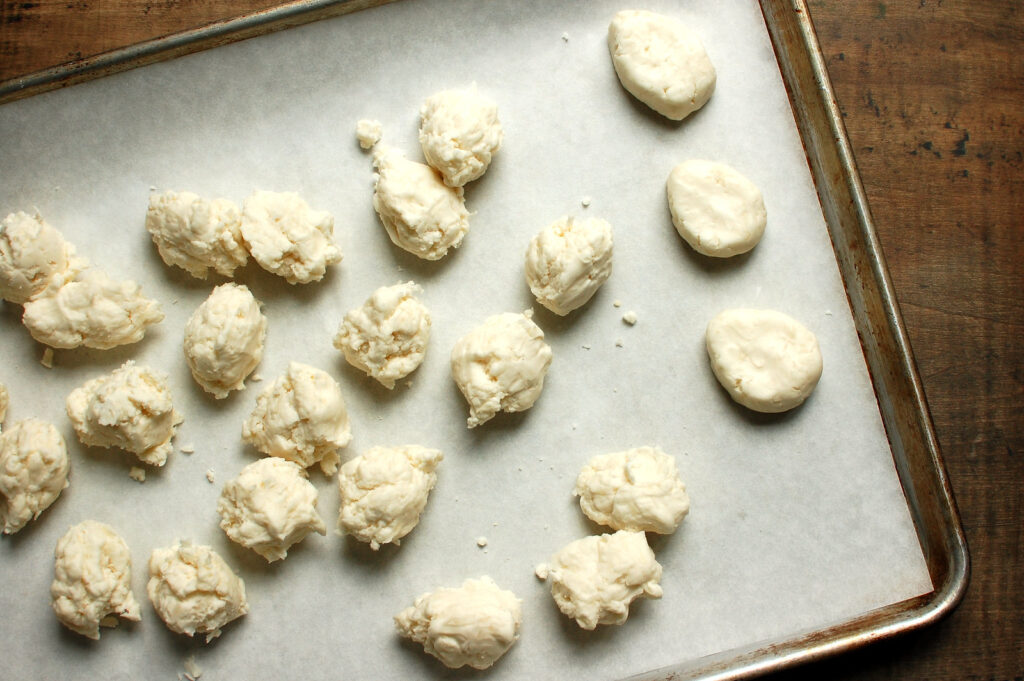
Scoop teaspoons of the chilled coconut mixture, and roll them into egg shapes with your hands. To shape it into eggs, I roll each scoop into a ball, then place it on a lined sheet pan. From there, use your fingers to slightly flatten and taper the shape into an egg. Repeat with the remaining buttercream.
Place the shaped eggs on a parchment-lined tray and chill again for at least 30 minutes so they firm up. Chilling is important for the eggs to hold their shape and make dipping in chocolate less messy. If your eggs are too soft to shape, it is likely because they are too warm. No baking needed.
3. Melt the Chocolate and Dip the Eggs
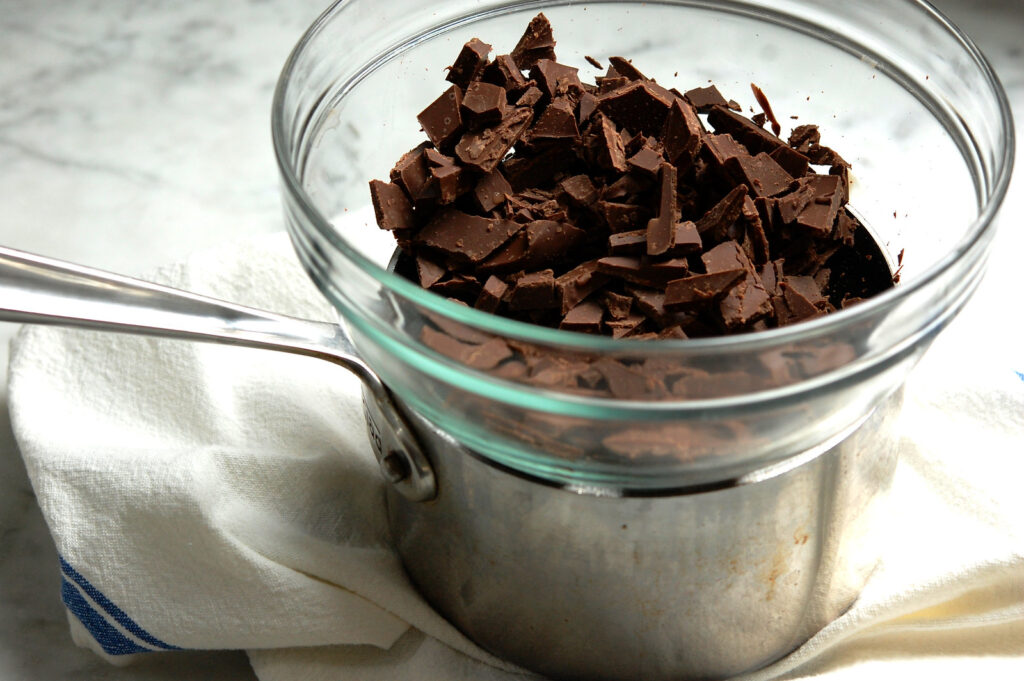
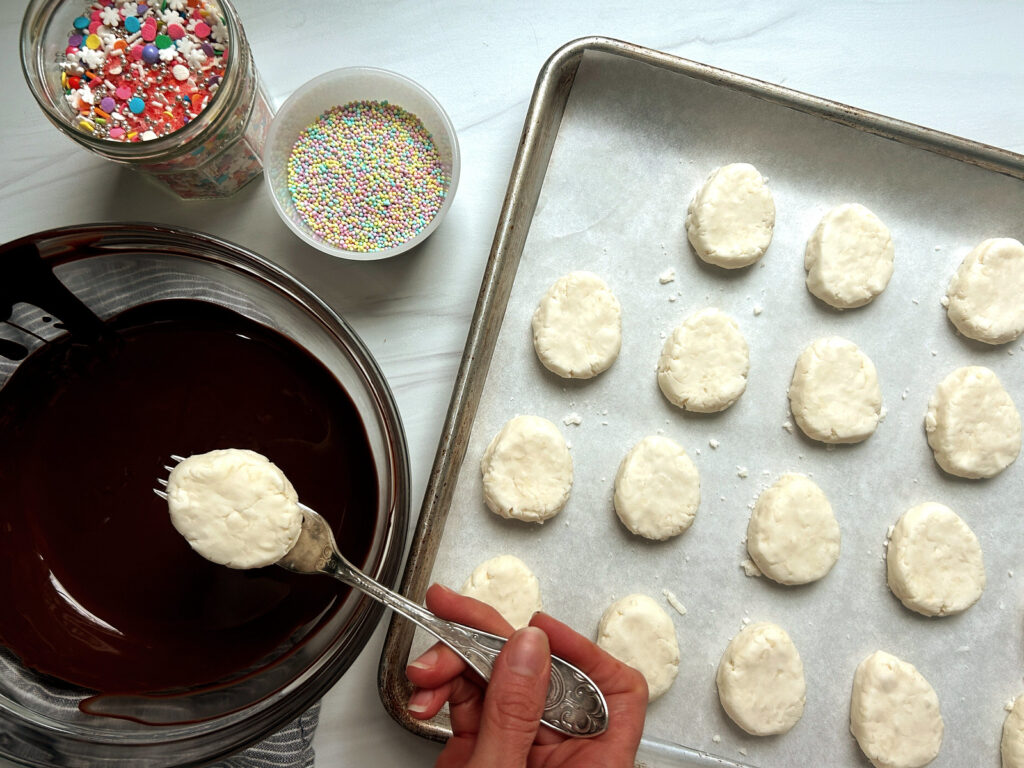
Melt the semisweet dark chocolate gently using a double boiler (simmer, don’t boil) or in short bursts in the microwave, stirring frequently to prevent scorching. Once melted, stir in the vegetable oil. This is a little pastry chef secret: it thins the viscosity just enough so the chocolate flows over the egg in a thin, elegant shell rather than a thick, clunky layer.
To dip the buttercream candies: Place a chilled egg-shaped buttercream on a fork. Dip it fully in the chocolate, turning to coat. Transfer to a parchment-lined baking sheet.
Pro Pastry Chef Tip: Before sliding the egg onto the parchment, tap the fork onto the side of the bowl to drain off the excess, and give the bottom of the fork a quick “swipe” against the rim of your bowl. This removes the excess chocolate from the egg that usually create “feet” (pooled chocolate) at the base of your candy instead of a clean egg shape. See the video, below, for exactly how to dip the coconut eggs.
Recipe Step Video: How to Coat Egg-Shaped Coconut Buttercreams in Chocolate
4. Decorate and Set
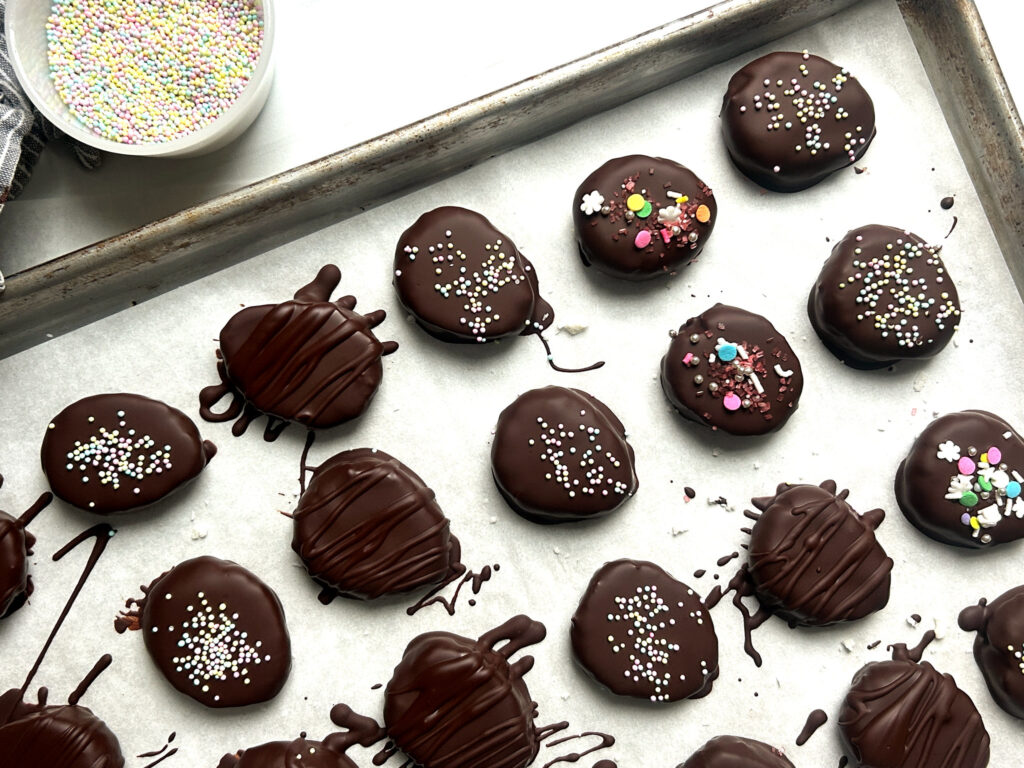
While the chocolate is still soft, sprinkle with decorations like colored sprinkles or a pinch of flaky Maldon salt. You can also make pretty chocolate streaks: To do this, let the chocolate-covered eggs harden fully. Then, dip a fork or spoon in melted chocolate and drizzle back and forth over the eggs.
Let the chocolate set completely at room temperature or in the fridge before serving. These finishing touches give the eggs a festive, special look for Easter dessert.
Make Ahead, Storage, Freezing, and Serving
Storage: These coconut cream eggs keep best when stored in an airtight container. At a cool room temperature, they will stay fresh for 1 to 2 days. Cream cheese will eventually spoil if left at room temperature for too many days. Store them in the fridge for up to 1 week.
Freezing: Place in a single layer on a parchment-lined tray until frozen, then transfer to an airtight container or freezer bag. They can be frozen for up to 2 months. Thaw them in the fridge in a single layer, uncovered, for a few hours before serving to avoid condensation on the chocolate.
Serving: Coconut cream eggs are best enjoyed slightly chilled from the fridge, so the chocolate has a nice snap and the coconut filling is creamy but firm. These are perfect for Easter baskets, dessert tables, or as a little homemade treat to share with friends and family.
Looking for more holiday inspiration? Check out our full collection of the Best Easter Dessert Recipes. Round out your Easter table with a slice of the Frog Commissary carrot cake — a true classic.
F.A.Q.s and Expert Tips for Coconut Cream Eggs
The main issue you may run into making these coconut cream eggs is dipping them in chocolate. Dipping the coconut cream eggs in chocolate requires two things: 1) the proper melted chocolate, and 2) the right technique.
All About the Chocolate Type and Melting Technique
Use the right chocolate: Use good-quality baking, a.k.a. couverture, chocolate, such as Valrhona, Guittard or Ghirardelli. You cannot use standard chocolate chips for this! Chocolate chips — the kind you’d use to make cookies — contain emulsifiers like lecithin, which thicken the chocolate. When melted, the chocolate will be too thick to use as a coating. Instead, use chopped dark (semisweet), milk, or white baking chocolate. Candy melts are the next best substitute, but are of lower quality than baking chocolate.
Use the right technique: First, the double boiler. Make sure your water beneath the bowl of chocolate is at a simmer, never a boil. Also make sure the water does not touch the bottom of the bowl. The steam should melt the chocolate, not the water. Keep a dry kitchen towel handy to wipe any moisture. If water gets into the bowl of chocolate, the chocolate will seize.
For a deep dive on the best way to melt chocolate for dipping, see my guide for how to make chocolate-covered pretzels over a double boiler.
Here are some additional helpful hints and answers to common questions.
Yes! You can shape and chill the finished eggs in the fridge for up to 1 week, or freeze them for up to 2 months. Thaw frozen eggs in the fridge to maintain their shape and texture.
Chocolate looks streaky or grainy when it falls out of temper. Chocolate seizes when it is exposed directly to water. Melt the chocolate gently over a double boiler or in short microwave bursts, stirring constantly. Make sure the water is simmering, not boiling. Avoid water contact; I always have a dry kitchen towel handy to wipe condensation from the bottom of the bowl. The vegetable oil also helps keep the chocolate smooth, and using high-quality chocolate ensures a smooth, glossy coating.
Chill the filling first to firm it up, then roll into eggs by hand. I usually shape them into balls, then tease the shape into an egg from there, and slightly flatten onto the baking sheet. Work in small batches to keep the mixture firm, and chill as needed if the dough softens too quickly. Make sure the keep the dough covered, so it does not dry out.
No, you cannot use standard chocolate chips for this; save them for cookies! Chocolate chips–the kind you’d use to make cookies–contain emulsifiers, that thicken the chocolate. When melted, the chocolate will be too thick to use as a coating. Instead, use chopped baking chocolate. Candy melts are the next best substitute, but are of lower quality than baking chocolate. Dark, milk, or white chocolate will work here.
While Mounds bars are delicious, these homemade coconut cream eggs use fresh cream cheese and high-quality dark chocolate for a creamier texture and richer flavor that truly tastes gourmet.
Keep the coconut buttercream filling covered so it doesn’t dry out — both before and after shaping — until you dip in chocolate. The powdered sugar contains a lot of cornstarch, and so a dry crust will develop if it’s exposed to air for too long. If the dough does get dry, remix or re-knead it until softened again.
Why You Should Trust This Recipe: These recipes were developed and tested from scratch by Lisa Ruland, a Culinary Institute of America graduate (baking & pastry valedictorian, with special coursework in chocolate and confections), Level 2 WSET-Certified Wine Professional (With Honors), and professional pastry chef and food writer/recipe developer who has worked for some of NYC’s top bakeries, and written for national food publications, including Bon Appétit, Saveur, Food52, and more. I am committed to providing accurate, trustworthy culinary guidance based on years of hands-on experience in professional and home kitchens. Learn more about Lisa’s background and expertise.
And for a savory coconut recipe, you’ll love Cilantro Coconut Rice (a Chipotle dupe). Did you make these coconut cream eggs? I’d love to hear what you think. Leave a comment all about it!

Chocolate-Covered Coconut Cream Eggs
Essential Equipment
- Small cookie scoop or teaspoon to scoop the coconut cream filling
- Double boiler (heat-proof mixing bowl + sauce pot) to melt the chocolate (can also use microwave)
- Dipping fork the "secret" to that professional, clean chocolate finish
Ingredients
- 4 tablespoons cream cheese, softened preferably Philadelphia brand
- 4 tablespoons unsalted butter, softened
- 16 ounces confectioner's sugar (a.k.a. powdered sugar)
- 4 ounces sweetened shredded coconut
- 1 teaspoons pure vanilla extract
- Pinch kosher salt (preferably Diamond Crystal)
- 8 ounces semisweet, or 60-57% cacao, baking chocolate (not chocolate chips) I prefer dark semisweet chocolate, but milk or white chocolate are fine, too
- 3/4 teaspoon neutral vegetable oil or coconut oil
- 1 teaspoon sprinkles or flaky sea salt (such as Maldon) to decorate
Instructions
- Mix the coconut cream egg filling. This is very easy to make: Combine the cream cheese, butter, powdered sugar, shredded coconut, vanilla, and salt in a stand mixer fitted with the paddle attachment. Mix on low, then medium, until smooth and fully mixed. Scrape the bowl with a spatula to make sure everything is evenly incorporated. Cover and chill for at least 30 minutes, preferably one hour. (Chilling the dough makes it easier to scoop and roll.)TIP: You can also stir the mixture together by hand using a sturdy spatula or wooden spoon. Make sure the mixer is on the lowest setting to start, to prevent the powdered sugar from "exploding" everywhere.
- Scoop and shape the filling into egg shapes. Use a tablespoon or small cookie scoop (do a heaping scoop) to scoop generous tablespoon-sized rounds of your coconut "dough." You should have about 24 total. Roll or knead into balls with your hands, then flatten each ball slightly onto a parchment-lined sheet pan, using your fingers to narrow the flattened rounds into an egg shape at the top. Chill, covered, for 30 minutes. CHEF PRO TIP: Chilling is very important for the eggs to hold their shape and make dipping in chocolate cleaner.
- Melt the chocolate. Chop the chocolate into small, chocolate-chip-sized pieces. Use a heatproof or microwave-safe mixing bowl to gently melt the dark chocolate using a double boiler (simmer, don't boil) or in short bursts in the microwave, stirring frequently to prevent scorching. Once melted, stir in the 3/4 teaspoon of vegetable oil. HOW TO DO A DOUBLE BOILER CORRECTLY: Heat an inch or two of water to a gentle simmer–never a boil–in a small sauce pot. Place the heatproof bowl filled with chopped chocolate on top. Make sure no steam escapes, and make sure the water is not touching the bottom of the bowl; the goal is for the steam to heat the chocolate, not the water itself. Stir frequently, and use a clean kitchen towel to wipe condensation from the bowl and protect your hands from the heat. Water cannot touch the melted chocolate or the chocolate will seize.WHY VEGETABLE OIL?: This is a little pastry chef secret. Vegetable oil thins the viscosity just enough so the chocolate flows over the egg in a thin, elegant shell rather than a thick, clunky layer, and also helps prevent the chocolate from becoming grainy or streaky when dried.
- Coat the coconut cream Easter eggs in chocolate and decorate. Working one at a time, use a fork to dip each chilled egg into the melted chocolate, gently turning to coat. Lift the egg from the chocolate with the fork. Tap the fork on the edge of the bowl a few times to tap off the excess chocolate (see below video), then transfer to the parchment. Sprinkle with decorations and let dry. You can also make pretty chocolate streaks: To do this, let the chocolate-covered eggs harden fully. Then, dip a fork or spoon in melted chocolate and drizzle back and forth over the eggs to make extra-chocolatey chocolate-covered coconut cream eggs.CHEF PRO TIP: Before sliding the egg onto the parchment, tap the fork onto the side of the bowl, and give the bottom of the fork a quick "swipe" against the rim of your bowl. This removes the excess drops of chocolate from the egg that usually create "feet" (pooled chocolate) at the base of your candy.
Video
Notes
Nutrition
Disclaimer: Nutrition information is provided for courtesy purposes only, and is an estimate not verified by medical or nutrition experts. Read the full nutrition disclaimer.










5 comments
Tarheel '96
I love these! I tried these after seeing them in your newsletter this past week. I wish I could send a picture. I did dark chocolate with white chocolate streaks and a few sprinkles. I’ve already eaten a few, but will freeze the rest for Easter.
JenMD
Got a head start on Easter with these and they were a blast with the kids! Filling is absolutely delicious and creamy. I definitely ate some with a spoon haha.
M.R.
I got to try these the other day and I will never eat Mounds again. These are very good and I love the coconut filling and chocolate combo. Next time I may try white chocolate, or maybe 1/2 and 1/2 swirl!
Lisa Ruland
Thanks! So glad you like them.
Lisa
I love these eggs so much, from making them to eating them. I hope you do, too!