
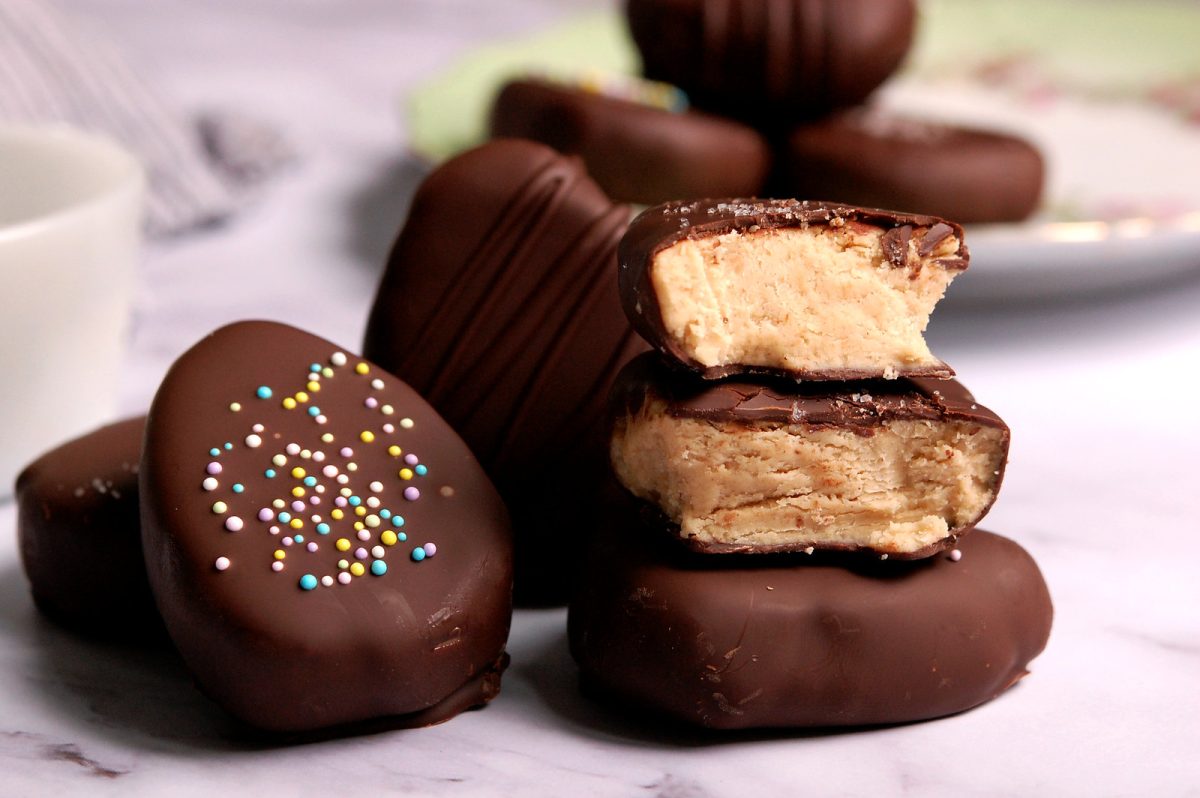
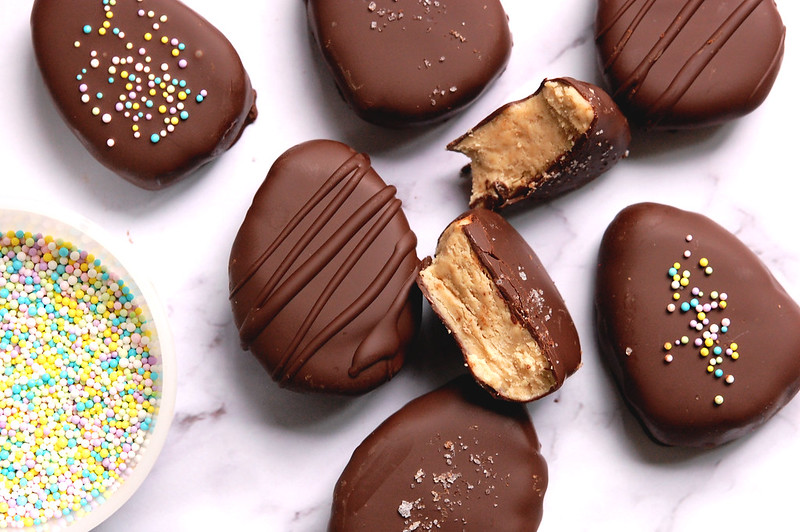
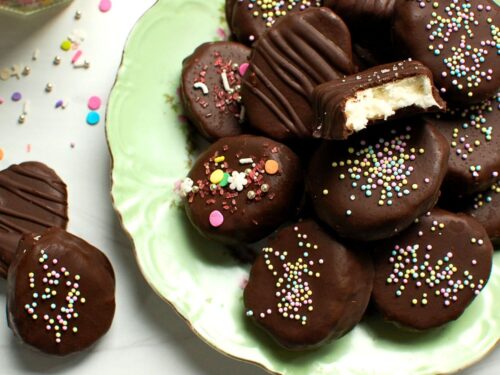
This recipe for chocolate peanut butter eggs makes a sweet, no-bake Easter candy that’s just like Reese’s, but even better homemade. These are so much fun, and easy to make. Top with sprinkles or a drizzle of chocolate, and enjoy!
Jump To:
Why This Recipe for Chocolate PB Easter Eggs Works
Here’s a secret: I don’t love chocolate. (I know. I’m a weirdo like that.) But I do make an exception for Reese’s Cups, especially the special holiday ones — Easter eggs in particular. The perfect combination of that soft, sweet peanut butter filling and milk chocolate coating is one of my absolute favorite treat. And much like other no-bake chocolate peanut butter candies like buckeye balls, the homemade version is even better. Kinda like a good homemade peanut butter cookie.
These chocolate-coated peanut butter Easter egg candies bring all the joy of the store-bought kind, but they’re even better. Here’s why:
- These candies look fun and festive. A quick dip in melted chocolate and some sprinkles, sea salt flakes, or drizzle of chocolate for decoration make these look fit for the occasion. Plus, it’s always fun to dip something in chocolate, like with these chocolate-covered pretzels.
- The great texture. Soft, melt-in-your-mouth sugar, butter, and peanut butter filling gets coated in a shell of dark or milk chocolate that hardens around it. Biting into one of these is satisfying and indulgent, but in a way that feels joyful — and a little like childhood.
- Versatility. Peanut butter eggs stay fresh for several days, but can also be made in advance and frozen for several weeks.
Want even more Easter desserts? Get my roundup of best Easter dessert recipes.

Ingredients You’ll Need
These peanut butter eggs require only simple ingredients you may already have in your baking pantry:
For the peanut butter filling, you’ll need:
- Powdered sugar: for sweetness and to form the dough
- Peanut butter: do not use natural; I prefer Skippy or Jif
- Melted butter: for richness and to make the dough soft
- Vanilla extract: adds sweet fragrance
- Salt: to complement the flavor of the sugar and peanut butter
For the chocolate coating and decoration, you’ll need:
- Milk or dark chocolate: your preference; Reese’s uses milk chocolate for their eggs, but dark chocolate feels and looks a bit more decadent. Use baking chocolate, not chocolate chips, which have too many emulsifiers and will be too thick.
- Vegetable oil: to keep the chocolate smooth and streak free, and give it a nice sheen
- Flaky sea salt or colored sprinkles: as decoration for the finished eggs (optional)
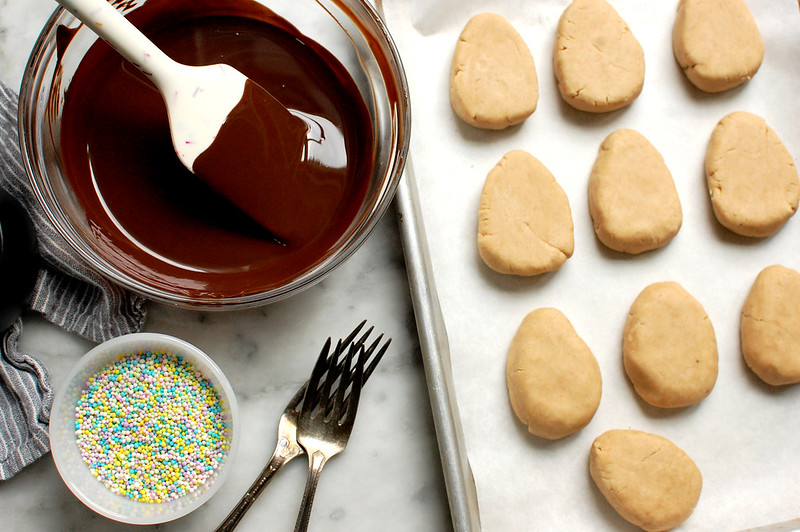
Step-by-step instructions for how to make, shape, and dip the eggs
- Make the dough. Combine the confectioners’ sugar, peanut butter, melted butter, vanilla, and salt in a mixing bowl. Stir until it is fully combined into a soft dough.
- Shape the dough into tablespoon-sized eggs. Place them on a parchment-lined sheet pan and chill fully, for at least one hour, covered. It is essential that you chill the peanut butter eggs or else they will fall apart or lose their shape when they get dipped in the hot chocolate.
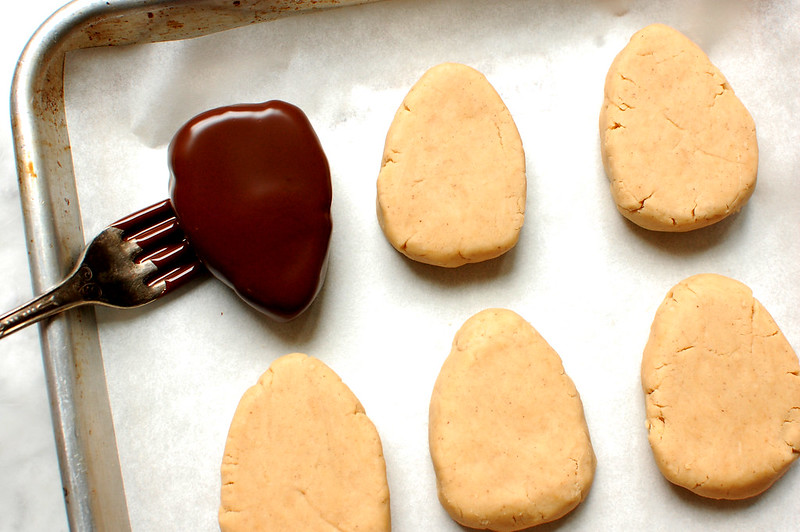
- Melt dark chocolate and stir in the oil. Place each peanut butter egg on a fork and gently dip the peanut butter eggs into the chocolate, fully submerging them to coat. Let the excess drip off and transfer each back onto the sheet pan.
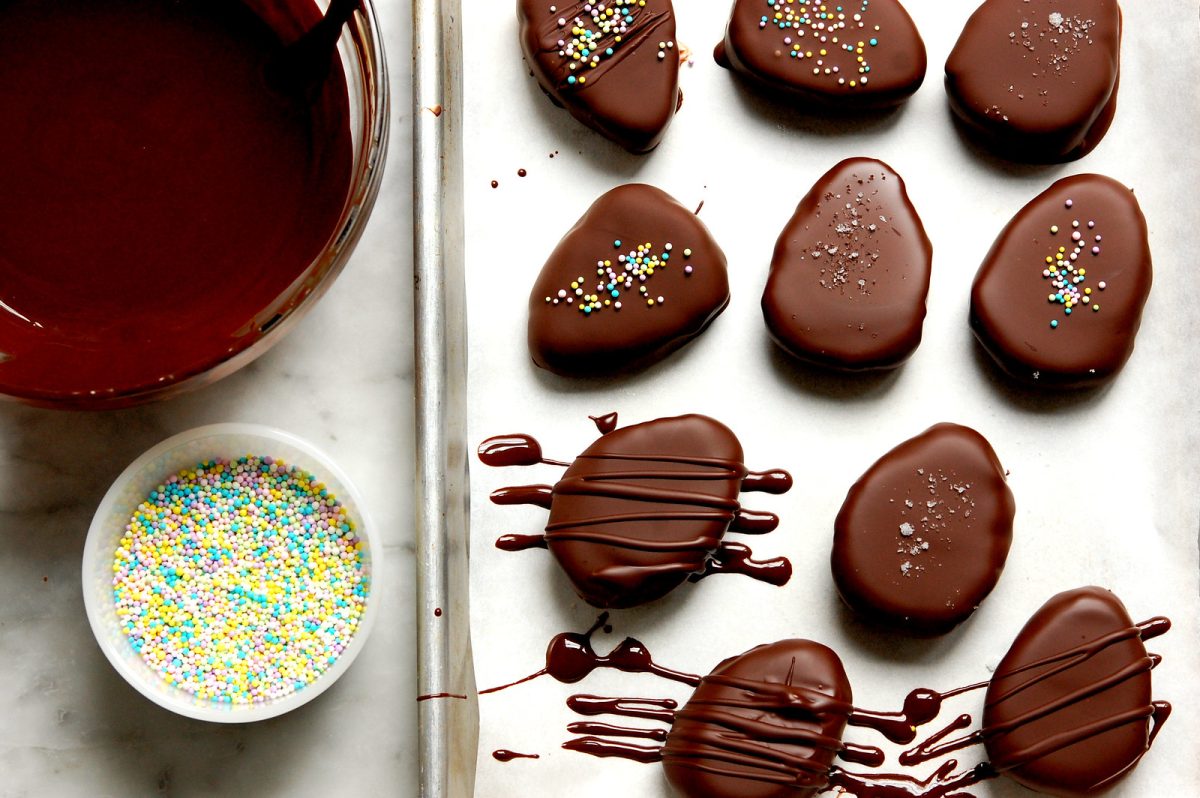
- Decorate: If sprinkling with sprinkles or sea salt, do so right away, before the chocolate sets up. You can also streak the peanut butter eggs with leftover chocolate once they’ve fully hardened.
- Let dry and enjoy.
Helpful Tips and Troubleshooting Expertise
Here are some helpful notes and tips for chocolate peanut butter Easter egg excellence (egg-cellence?):
Don’t use chocolate chips. Use real chocolate.
Be sure to use a bar of baking chocolate — a.k.a. “real chocolate” — and not chocolate chips. Chocolate chips contain lots of emulsifiers, and will be too thick when melted to form a good coating. Likewise, avoid candy melts as well. For dark chocolate, choose a bar that says anywhere from 56% to 72% cacao. Milk chocolate will say so on the bar.
How do I know if the chocolate is a good temperature?
The chocolate should be thin and move quickly if you let it drip off a spoon: think maple syrup, not molasses. The oil helps loosen the chocolate, but mainly the viscosity will be because the chocolate is at a warm-enough temperature — hence needing the peanut butter eggs to be well chilled before dipping them.
If the chocolate starts to become too cool and thicken up, just place it back on your double boiler and stir until its thinned out again, or microwave in 10-second increments.
What if the peanut butter dough is too soft? What if it’s crumbly?
It’s funny how different something can turn out depending on which brand you use, or even the humidity and temperature of the air.
If your peanut butter dough is too soft, make sure it is sufficiently chilled before dipping in chocolate, and see if that helps firm it up. If it’s still too soft, add an additional tablespoon or two of powdered sugar.
If the dough seems too dry or crumbly, it might be too cool. Work it with your hands a bit more to see if it holds together. If not, add an additional tablespoon of peanut butter, or a little vegetable oil, teaspoon at a time. Less is more.
How to store peanut butter Easter eggs
These tasty, no-bake sweet treats will keep at room temperature in an air-tight container for up to five days. My preference, however, is to keep them stored in the refrigerator, where you know the chocolate will not get tacky or overheat, then serve them at room temperature.
These chocolate pb candies also freeze very well! Just thaw at room temperature for a couple hours before serving.
Prefer a coconut filling? Our chocolate-covered coconut cream Easter eggs use the same no-bake method and look just as beautiful on an Easter candy tray.
Love these Easter peanut butter eggs? You’ll also like these other Easter-worthy desserts:
- Copycat “Tom Cruise” White Chocolate Coconut Bundt Cake
- The Best Carrot Cake
- Key Lime Pie
- Southern Hummingbird Cake

Easter Peanut Butter Eggs
Ingredients
For the Peanut Butter Bough
- 2 cups confectioners' sugar
- 1/2 cup peanut butter (not natural; see notes)
- 5 tablespoons melted butter
- 1 teaspoon vanilla extract
- 1/2 teaspoon Kosher salt
For the Chocolate Coating and to Finish
- 8 ounces chopped millk- or dark chocolate (not chocolate chips; see notes)
- 3/4 teaspoons vegetable oil
- Flaky sea salt, such as Maldon, or candy sprinkles, to decorate
Instructions
Make the Peanut Butter Dough and Chill
- Make the dough by combining the confectioners' sugar, peanut butter, melted butter, vanilla, and salt in a mixing bowl or bowl of an electric mixer fitted with the paddle attachment. Stir until it is fully combined into a soft dough. PRO TIP: If using a stand mixer, do this on the lowest setting to start, so you don't have a confectioners' sugar explosion!
- Using a small cookie scoop or tablespoon, scoop the peanut butter dough into generously rounded scoops, or slightly larger if you'd like a bigger treat. It should be about 1 1/2 tablespoons of dough per scoop. Place the peanut butter dough balls onto a baking sheet lined with parchment paper or wax paper. Working one at a time, use your hands to shape each scoop of dough into a slightly-flattened oval or egg shape. Taper the shape a little narrow at the top for the most realistic egg shape. They should be just over 1/2" high, or thereabouts. Place each one back on the baking sheet as you go. PRO TIP: If the dough is crumbly, it might be too cool. Knead each dough ball with your hands a bit more to see if it holds together. If not, add an additional tablespoon or two of peanut butter to the entire batch of dough, or a little vegetable oil, teaspoon at a time. Less is more.
- Cover and chill fully for at least 45 minutes in the refrigerator. It is essential to fully chill the peanut butter eggs, or else they will fall apart or lose their shape when they get dipped in the hot, melted chocolate.
Coat in Chocolate and Decorate
- In a heat-proof bowl, melt the chocolate over a double boiler or in the microwave in 20-second increments, stirring frequently. Use a spatula to stir in the oil and mix until fully emulsified. Let the chocolate cool for a few minutes. It should have a goldilocks consistency: not watery thin (too hot), but not thick like molasses (too cool). Think somewhere between honey and maple syrup.PRO TIP: The bowl needs to be deep enough to fully submerge the peanut butter eggs, so if it's too shallow, you may want to transfer the chocolate to a smaller, deeper bowl once it is melted. How to do a double boiler: Place a heat-proof bowl over a pot of gently simmering water. Keep the water at a low simmer and make sure there's space between the top of the water and the bottom of the bowl; you want the steam to heat the chocolate, not the hot water.
- Working one at a time, place a chilled peanut butter egg on a fork and gently dip the peanut butter eggs into the chocolate, fully submerging to coat. Let the excess drip off for a couple of seconds, and transfer the chocolate egg back onto the sheet pan to harden. If you are sprinkling the tops with sprinkles or flaky sea salt, do so now, before the chocolate sets up. You can also use a spoonfuls of chocolate to streak the peanut butter eggs with leftover melted chocolate once they've set up. Let dry, uncovered, at room temperature or in the fridge (this is faster!) and enjoy.PRO TIP: IF your chocolate starts to get too cool while you work, just pop it back on top of the double boiler for a few seconds, stirring, or in the microwave in 10-second increments to rewarm.
Notes
Which peanut butter to use for the peanut butter eggs
Do not use natural peanut butter, which separates and is often too grainy. Instead, use a smooth peanut butter spread like Skippy or Jif.Don't use chocolate chips. Use real chocolate.
Be sure to use a bar of baking chocolate -- a.k.a. "real chocolate" -- and not chocolate chips. Chocolate chips contain lots of emulsifiers, and will be too thick when melted to form a good coating. Likewise, avoid candy melts as well. For dark chocolate, choose a bar that says anywhere from 56% to 72% cacao. Milk chocolate will say so on the bar.How do I know if the chocolate is a good temperature?
The chocolate should be thin and move quickly if you let it drip off a spoon: think maple syrup, not molasses. The oil helps loosen the chocolate, but mainly the viscosity will be because the chocolate is at a warm-enough temperature -- hence needing the peanut butter eggs to be well chilled before dipping them. If the chocolate starts to become too cool and thicken up, just place it back on your double boiler and stir until its thinned out again, or microwave in 10-second increments.What if the peanut butter dough is too soft? What if it's crumbly?
It's funny how different something can turn out depending on which brand you use, or even the humidity and temperature of the air. If your peanut butter dough is too soft, make sure it is sufficiently chilled before dipping in chocolate, and see if that helps firm it up. If it's still too soft, add an additional tablespoon or two of powdered sugar. If the dough seems too dry or crumbly, it might be too cool. Work it with your hands a bit more to see if it holds together. If not, add an additional tablespoon of peanut butter, or a little vegetable oil, teaspoon at a time. Less is more.How to store thesepeanut butter Easter eggs
These tasty, no-bake sweet treats will keep at room temperature in an air-tight container for up to five days. My preference, however, is to keep them stored in the refrigerator, where you know the chocolate will not get tacky or overheat, then serve them at room temperature. They will keep for about a week in the refrigerator. These also freeze very well! Just thaw at room temperature, uncovered, for a couple hours before serving.Nutrition
Disclaimer: Nutrition information is provided for courtesy purposes only, and is an estimate not verified by medical or nutrition experts. Read the full nutrition disclaimer.






4 comments
FRH
These are legitimately delicious. Thank you for the good directions and I will make these every year from now on.
Annabelle
I made these for Easter and they came out great!! Thank you for the good directions. These were a hit!
Jen
Delicious!!!
Ali
Easy to make and so good! I agree, better than Reeces. liked them with the dark chocolate