
Treat yourself like royalty.
This authentic English scones recipe, the royal recipe enjoyed by the King of England at Buckingham Palace, is delicious. This recipe bakes up a batch of buttery, tender, just-sweet-enough scones. Serve with jam and clotted cream or butter, along with a cup of tea. Below, learn how to make scones, what to serve with them, and check out a step-by-step video.

The King’s Own English Scones Recipe
The only thing better than a good cup of tea is a good cup of tea paired with a perfect scone. And if you are going to bake scones, why not bake the very best? In case you are not invited to royal tea at the palace when you are next in London, you now have this very official, very royal, best English scones recipe.
These are British scones, which are different from an American scone. Traditional British scones use less butter, and have a round shape.

Jump To:
How We Know the Palace’s English Scone Recipe
In May 2020, perhaps because we all needed a bright spring boost to our Covid lockdowns, the Palace released the recipe for the official English tea scones enjoyed by the royal family and its guests. They even did an instagram video about it. According to the palace:
Every year at Garden Parties across The Royal Residences, over 27,000 cups of tea, 20,000 sandwiches and 20,000 slices of cakes are consumed! The Royal Pastry Chefs are happy to share their recipe for fruit scones, which traditionally would be served at Buckingham Palace every summer.
How to Make English Scones
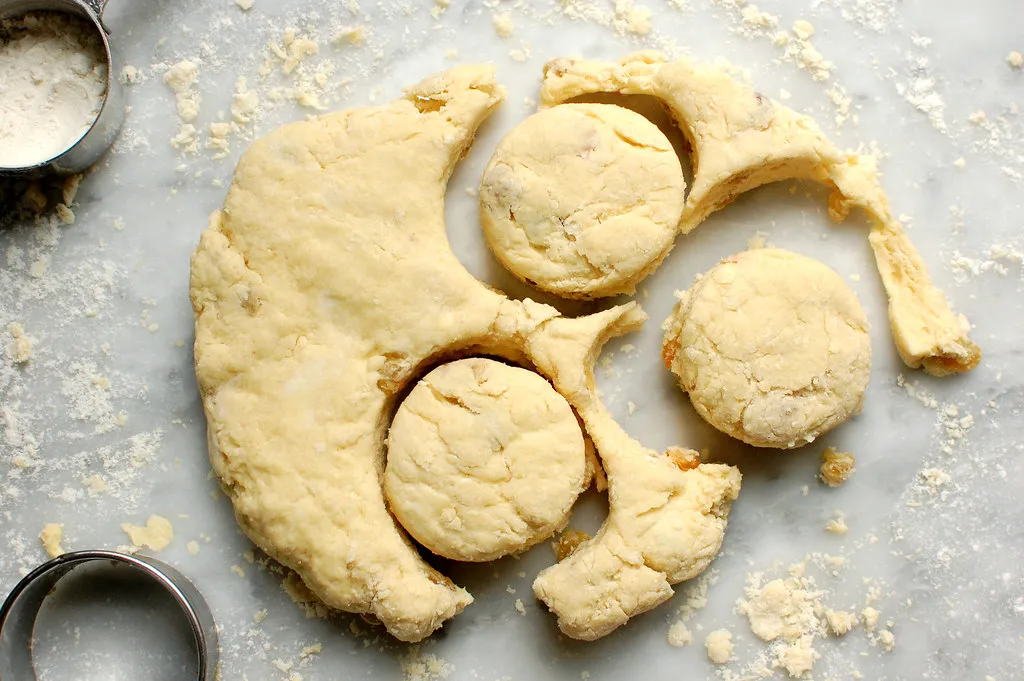
The Buckingham Palace royal scones recipe is surprisingly basic. To make this classic buttermilk English tea scone, you will need basic baking ingredients you likely already have on hand, and simple equipment. Round cutters are the only “specialized” tool you will need, easily purchased online or at any good kitchen shop.
Step-by-Step Video
Here’s a helpful video that takes you through how to make this English scones recipe. After that, you’ll see the ingredients and written steps.
Scone Recipe Ingredients
The recipe makes simple buttermilk scone with butter and leavening, folded with sultanas. “Sultanas” are British for golden raisins, FYI. These best scones are just as good without raisins, in case fruit scones are not to your taste. You could also divide the recipe into both types. (And feel free to substitute the sultanas for blueberries or chocolate chips, though that is less traditional.)
To make these scones, you will need the following ingredients:
- All-purpose flour
- Baking powder
- Salt
- Butter
- Sugar
- Large eggs
- Buttermilk
- Sultanas or golden raisins (optional)

Instructions for making English scones
More thorough instructions are in the recipe card, but here is the general outline:
-
Mix the dry ingredients (flour, baking powder, and pinch of salt) with the cold, cubed butter and sugar in a large bowl. Work the butter into the dough a bit, until the texture resembles large peas in sand.
-
Whisk two large eggs and the buttermilk together in a small mixing bowl. Stir the liquids into the buttery crumb flour mixture. Add the raisins, if using, and mix until evenly distributed and smooth.
-
Flatten the scone batter dough to a 1” thickness and cover. Wrap and let rest for 30 to 45 minutes in the refrigerator.
-
Turn the scone dough onto a lightly-floured surface. Cut to the desired shape using a round biscuit cutter. I prefer a 2-inch cutter, which is the standard width for tea scones. Cover and rest the scones for another 20 minutes in the fridge.
-
Preheat the oven to 400°F. Egg wash the top of the scones.
-
Bake on a baking sheet lightly greased or lined with parchment paper for around 12 to 15 minutes, until light golden brown. Transfer the baked scones to a wire rack to cool.
-
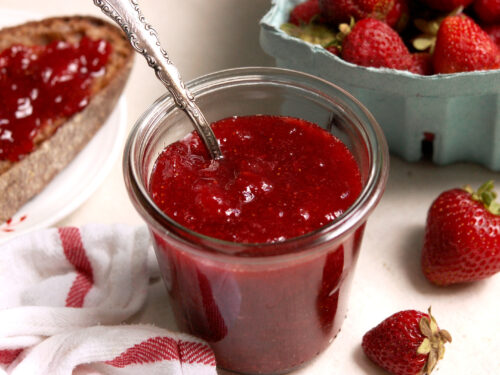
Serve your English tea scones very fresh, warm or at room temperature, with clotted cream and homemade strawberry preserves: three ingredients, 20 minutes, and infinitely better than anything from a jar.

Baking Tips for Making the King’s English Scone Recipe
There are good scones, and there are great scones. A scone fit for royalty (and thus, us) should be:
- Tender, not tough or bready
- Moist, not dry or crumbly
- Not too sweet, and
- Hold together well and not fall apart when you spread jam and clotted cream on top

What’s the secret to making good scones?
To check all these boxes, you need a good recipe (check!) and the right technique. Here are the secrets to making good scones — what to do, and what not to do, technique-wise.
- DO NOT over-mix the scone dough. Kneading the dough too much will make it tough and bready because it develops gluten. As soon as the scone dough looks smooth, stop.
- DO check your bake. The scone bottoms will look light golden brown and feel hollow when tapped. Because of their small size, scones over-bake and become dry easily, so be sure to get it right.
- If using the golden raisins, soak them in warm water for at least 20 minutes, then drain before adding to the dough. This prevents them from absorbing moisture from the scone dough.
- The prep time is not much. The total time adds up, though, because it is imperative to rest the dough to relax the gluten. This will keep the baked scones nice and tender.

What to eat with English scones
Most importantly, enjoy your royal best English scones with, what else? A lovely hot cuppa English tea. Serve with fresh jam such as homemade strawberry preserves, and some clotted cream.
If you’re pulling together an afternoon tea, you should also get the recipes for English cucumber sandwiches and smoked salmon sandwiches. Afternoon tea never felt so special.

You will also love these British-inspired recipes:
This recipe was originally published in April 2023, and updated April 2025.

Traditional English Scones (Official Buckingham Palace Recipe)
Ingredients
- 3 1/2 cups all-purpose flour (500g)
- 2 tablespoons plus 1 teaspoon baking powder (24g)
- Pinch of salt
- 7 tablespoons cold, unsalted butter, cut into small pieces (94g)
- 1/2 cup sugar (86g)
- 3 eggs, divided
- 3/4 cup buttermilk, less 1 tablespoon (175ml)
- 2/3 cup sultanas or golden raisins, optional (100g)
Instructions
- If using, soak the raisins or sultanas in hot water for 20 to 30 minutes. Drain before adding to the recipe.PRO TIP: Why soak the raisins? One, soaking softens the dried fruit, which tastes better in the finished recipe than a hard, tough little raisin. Second, it helps keep the scone dough moist. Raisins (sultanas) naturally want to rehydrate. By letting them soften I water, the hard raisins pull moisture from water, not the scone dough.
- Mix the flour, baking powder, pinch of salt, and sugar together in a large mixing bowl. Add the butter and work it into the dry ingredients with your hands until crumbly, like the texture of large peas in sand.
- In a separate small mixing bowl, whisk two eggs and the buttermilk together. Stir the egg mixture into the butter and flour. Add the raisins, if using, and mix until evenly distributed. Continue to gently knead the dough by hand just until smooth. PRO TIP: Do not overmix or knead the scones, as this could make the scones a bit tough and bready, instead of tender.
- Remove the dough from the bowl onto a clean countertop lightly dusted with flour. Lightly dust the top of the scones with flour. Flatten the dough to a 1” thickness and cover. Rest for 30 to 45 minutes in the refrigerator. Resting the dough allows the gluten to relax. This helps achieve a tender, flaky scone. PRO TIP: You could simply use the palm of your hand to flatten the dough. But I suggest a rolling pin for a more even result. Roll from the center out, and rotate the dough as you go to prevent sticking.
- Remove the scone dough from the refrigerator and cut to the desired shape using a round biscuit cutter. Place the scones onto a baking sheet greased or lined with parchment paper. Chill for an additional 20 minutes, covered.(Note: I use standard 2-inch and 2 1/4-inch round cutters. The original recipe did not specify, but this is standard. If you use a 2-inch cutter, I suggest making the height a little shorter.)
- Preheat the oven to 400°F (205°C). Whisk the third egg and gently egg wash the top of the scones with a pastry brush.PRO TIP: If you do not have a pastry brush, just use your fingers.
- Bake on baking sheets for around 12 to 15 minutes, give or take depending on your cutter size, or until light golden brown. Leave at least 1 1/2" of space between each scone. Cool on a wire rack before serving warm or at room temperature with jam and clotted cream.PRO TIP: These will bake best if you bake them one sheet at a time, or at least rotate the baking sheets top to bottom, front to back halfway. If you have a convection setting on your oven, adjust the temperature to 375°F (190°C) and bake for about 10 to 12 minutes.
Video
Notes
A quicker method
This best English scones recipe was adapted very carefully from the official Buckingham Palace recipe for tea scones. That said, if you would like to simplify things a bit, my effort-saving trick here is to roll the scones out and cut them with the biscuit cutter at the same time, instead of two separate chillings. Place the scones on prepared baking sheets, cover, then let them rest in the fridge for a full hour to hour and a half. Then just egg wash them and pop them in the oven.Making the scones in advance
These English scones can be rolled, cut, and frozen in advance in an airtight container, such as a freezer bag. Just freeze the scones on a baking sheet first before putting the scones in the airtight container into the freezer, so they keep their shape and don't smush. You can bake frozen scones exactly as you would chilled scones, directly from frozen. They may just take an additional minute to bake.Notes on Adapting the Royal English Tea Scones Recipe
The original recipe, as written, was very vague on some small points, and definitely presumes a certain level of baking experience. So I have added a bit more detail, and converted this English scone recipe to American-friendly volume measurements from metric. But other than adding a smidge more buttermilk because the original recipe seemed a little dry, the recipe and technique is exactly the same, and you'll be able to enjoy a lovely cream tea. Additionally, I am fairly certain that the original recipe was written for a convection oven, which would be normal in a professional kitchen. The temperature, as written, was way too low for a standard oven for the amount of time listed. So I have adjusted the temperature and time for a conventional oven, not convection.Nutrition
Disclaimer: Nutrition information is provided for courtesy purposes only, and is an estimate not verified by medical or nutrition experts. Read the full nutrition disclaimer.








104 comments
ZDen
Hi,
Just a quick note… the best tea scone recipes I’ve made used room temperature butter. Cold butter is more for American biscuits.
Also, it’s standard practice for professional pastry chefs to use a scale for dry measurements.
I did all of that following the original recipe … non-convection oven and the scones turned out beautifully. I do appreciate your version leading me to the original., so thank you.
CAROL
Hi what fan assisted oven temperature should I use please?
Unpeeled
Hi, Carol! If you’re using a convection oven, lower the oven temperature by 25 degrees Fahrenheit. The baking time will also likely be slightly lower, so just keep an eye on it. They’ll be done when they’re golden brown (emphasize golden more than brown).
Kim
Will these freeze well?
Unpeeled
Absolutely. You actually have two options: You can bake, cool, and then freeze the baked scones. You can also go as far as mixing and cutting the scones, and then freeze the raw scones. Then, you can just egg wash and pop them in the oven right from frozen. They will just take an additional minute or two to bake. Both methods work; the frozen raw method will make the scones taste ever so slightly fresher. (And who doesn’t love a warm, fresh-baked scone?) To freeze them raw, space them out on a cookie sheet, and let them freeze like that. Once frozen, you can toss them all in a freezer bag or container together. Hope this helps!
Susan
Hi,
Can you make this recipe up to the point of resting it in the refrigerator and let it rest overnight before continuing ?
Unpeeled
Hi, Susan! Yes, you can do that as long as you keep the dough covered with plastic wrap so that it does not dry out. Gluten will slowly form over time, making the scones a little more chewy than flaky, so I would recommend not letting them be in the fridge longer than about 10-12 hours. Alternatively, you could cut the scones into rounds, place them on a baking sheet wrapped in plastic wrap and freeze them. All you’d have to do the next day is the egg wash and bake from frozen. This will add a few more minutes of baking time, but the result will be the same.
Sylvie
Turned out great!
Joy B.
Lovely, lovely, lovely. Turned out great and I felt like the Queen 😉
Lisa
Good morning ? Lisa!
Can I add fresh blueberries in place of dried fruit?
The dried fruit is yummy, but since I have fresh blueberries,I thought of using those instead.
Thank you !
Lisa
Unpeeled
Hello! That sounds absolutely delicious. I say go for it!
Penelope
Fantastic! Scones have risen up well and very light. Taste good as well.
Anna G.
Buttery and good. Soaking the raisins in hot water is a game changer for me.
RUth
If you do not soak the raisins they draw the moisture form your scones. So yes, it is great that you soaked the raisins.
Unpeeled
An essential small detail, always!
J.R.
Delicious! It takes a little while of kneading to make the dough perfectly smooth. I was worried this would make them tough but it didn’t.