
Fresh spring ramp season lasts about three weeks. This silky, rich easy ramp pasta recipe — silky egg carbonara sauce, pancetta, and two full bunches of sautéed wild ramps — is the best way to enjoy them. Ready in under 30 minutes, with tips for buying, cleaning, and cooking ramps.

Jump To:
There are the usual signs of spring: cherry blossoms! Tulips! Birds! April showers! Pollen! And then there is an even better sign of spring: Ramps. And this ramp pasta carbonara recipe is what you should be doing with them.
Why This Ramp Pasta Recipe Works
This recipe works because it is:
- Quick and easy: Ready to serve in 25 to 30 minutes and comes together in just a few straightforward steps
- Teaches you techniques for prepping and cooking ramps and making silky carbonara
- Tastes restaurant-level good: fragrant, fresh ramps and savory, silky carbonara sauce enhance one another to make an over-the-top good pasta
On the spectrum of mild (chives) to sharp and pungent (red onion), ramps fall in mid-mild allium territory, after chives but before scallions. The lovely fragrance and softness of cooked ramps make them a perfect complement to silky, creamy, saltier pastas, which enhance the ramp flavor and aroma instead of burying it amid a bunch of other flavors.
That’s why carbonara-style ramp pasta is the best way to eat ramps. The sauce — just eggs, grated Italian cheeses, pancetta, pasta water — is rich and savory without being heavy.
What Are Ramps?
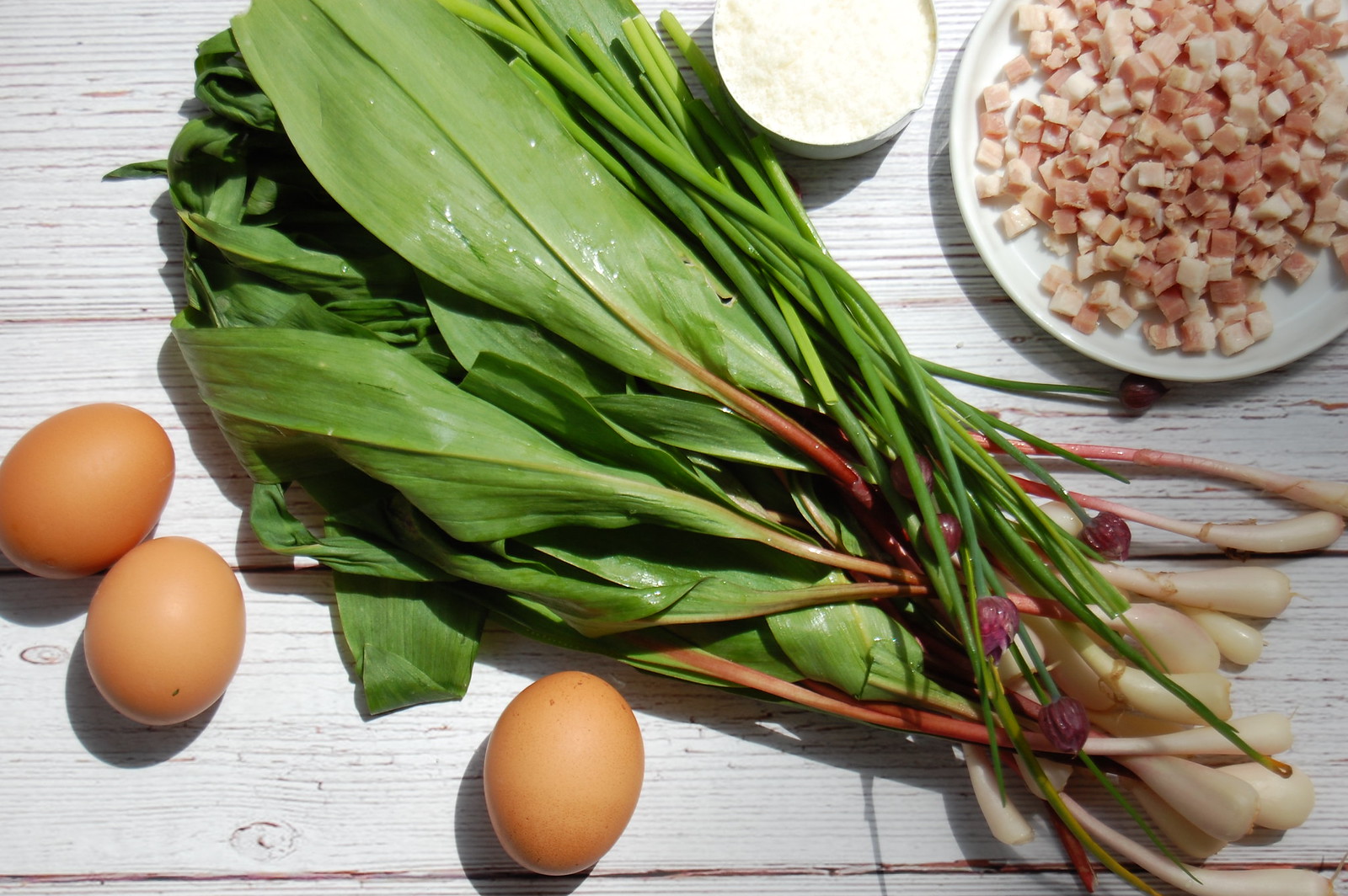
Ramps are a wild spring allium native to the forests of eastern North America that appear mostly in April and early May. They look somewhat like a flat, double-leafed scallion, with slender white-and-pink bulbs at the base and broad green leaves at the top. Ramps taste somewhere at the nexus of leeks, chives, with maybe a hint of garlic, and are mellowed with cooking.
Sometimes called wild leeks, ramps have a short growing season (just a few weeks). Southern Appalachia gets them first, sometimes as early as late February. The mid-Atlantic and Midwest peak in April. New England and Canada may not see them until late April or May. I usually buy mine at the Dupont Circle farmers market in D.C. in mid- to late April, or in the N.Y.C. Union Square Greenmarket in early May.
Ramps usually are foraged and harvested in the wild. This makes them a little bit elusive — and very exciting to get a hold of while they last. Look for bright, perky, unwilted leaves with no yellowing or slime.
Also check out how to store fresh ramps — they’re delicate and don’t keep long without some attention.
One ramp sustainability note worth mentioning: Ramp populations in some regions have been stressed by over-harvesting. If you’re buying from a farmers market vendor, it’s reasonable to ask how they source them. Responsible foragers harvest selectively and leave root systems intact.
Ingredients: What Goes Into This Ramp Pasta Recipe
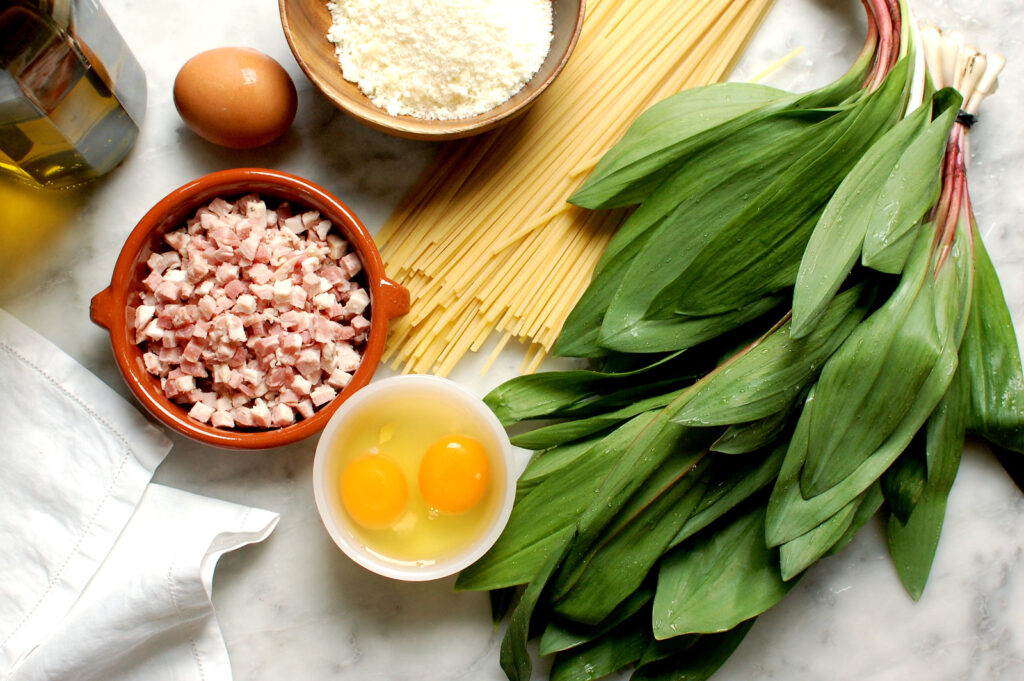
You can make this ramp pasta recipe in under 30 minutes with just a few basic ingredients plus the ramps. You will need (full quantities in the recipe card below):
- Fresh ramps: two bunches. Use both the bulbs and leaves.
- Diced pancetta: Pancetta is unsmoked Italian cured pork belly and generally easy to find. Guanciale — cured pork jowl, and the traditional carbonara meat — is an excellent upgrade if you can find it. Avoid smoked bacon; the smoke overpowers the other flavors.
- Eggs: two yolks and one whole egg. The yolks enrich the sauce and help it emulsify. Don’t worry; they cook with the heat of the pasta.
- Equal parts (50/50) grated pecorino-Romano and Parmigiano-Reggiano cheeses: Pecorino contributes salt and sharpness; Parmigiano adds depth and a nuttier undertone.
- Fresh chives: Two tablespoons minced, plus more for garnish. These enhance the ramp flavor and make a lovely garnish.
- Spaghetti or linguine: Long, thin pasta is the right shape for carbonara. It picks up the sauce efficiently and keeps the dish cohesive. Rigatoni works, too, in a pinch but the thickness isn’t my favorite here.
- Olive oil, kosher salt, and freshly cracked black pepper: the recipe’s key support staff
Ingredient Substitutions, Additions, and Notes
How to Substitute Ramps: This is, granted, a ramp pasta recipe. But say you can only get one bunch instead of two, or yours accidentally wilt before you can use them and you have your heart set on making this. Here’s what to do: Substitute the white and light green parts of a bunch of scallions, sliced thin, plus two cloves of garlic. Add a few large handfuls of baby spinach at the very end to approximate the greens and add color. The dish will be less distinctly spring, but still very good.
Gluten-Free: Check out my guide to the best brands of gluten-free pasta, each tested and vetted
Additions: A small handful of frozen peas stirred in at the end adds sweetness and color. Lemon zest over the finished dish brightens everything. Neither is traditional, but both will taste lovely.
Which Pasta to Use: Carbonara is traditionally made with spaghetti, which gets folded into a silky, rich sauce made from egg yolks, cheese, and guanciale or pancetta — though a non-smoky bacon will work fine.
A note on the cheeses: I call for two cheeses here, equal portions of salty pecorino-Romano and sharp aged Parmigiano-Reggiano. Use the real things, and use both if you can because the combination is more complex than either alone. If you only have one, the carbonara will still be good, just different.
How to Make Ramp Pasta Carbonara, Step by Step
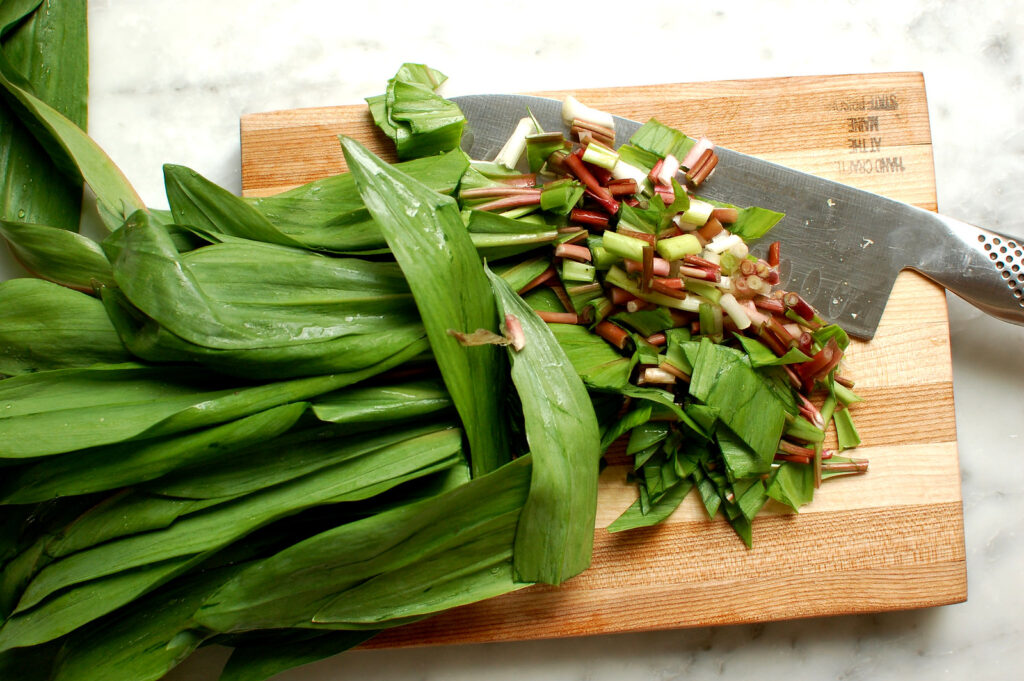
Because pasta carbonara only has a few ingredients, this spaghetti and ramp pasta recipe lives or dies by proper technique. You’ll need a large pot for the pasta, a wide skillet for the pancetta and ramps, and a mixing bowl for the egg sauce. You’ll assemble in that order: pasta > into the skillet > into the egg and cheese sauce.
Read through once before you start and be organized; the last two steps move quickly. The prep time is only about 5 minutes. The cook time is about 15 minutes, making this a perfect, quick dinner.
An important cooking note: The most common technique mistake is overcooking the eggs in the pasta, which happens by dumping the egg and cheese mixture into the hot pan with the pasta, pancetta, ramps, and chives. This results in spaghetti coated with a thousand tiny bits of grainy scrambled egg. It will still taste ok, but does not look appetizing. This method will prevent that from happening.
For another technique-driven Italian pasta, treat yourself to this authentic northern Italian white Bolognese sauce, or ragù bianco.
Here are the ramp pasta recipe steps:


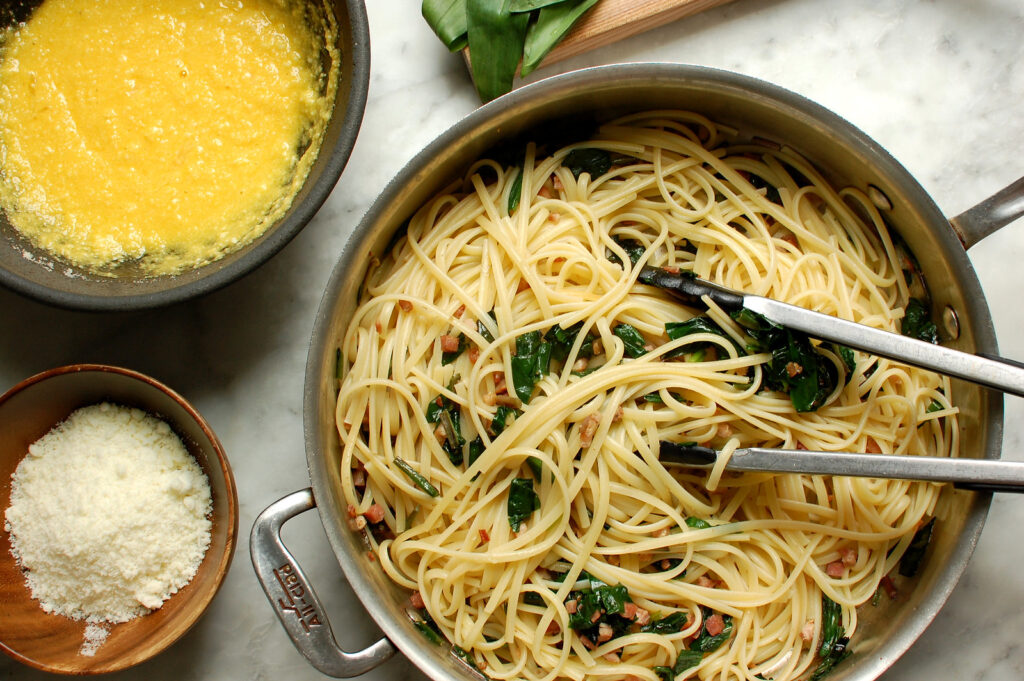
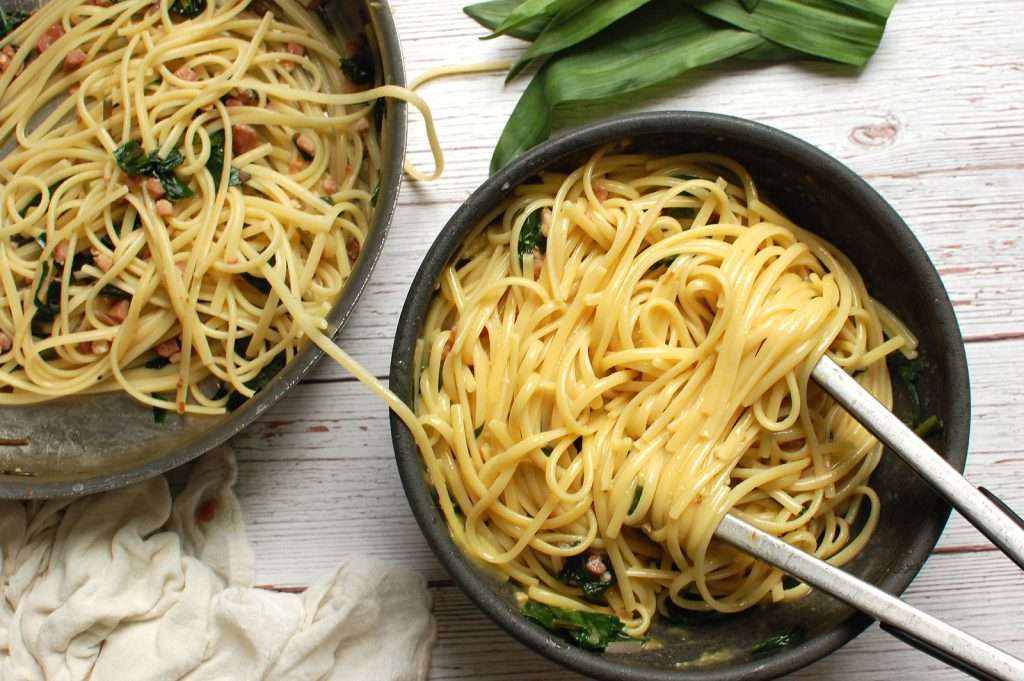
- Prepare the ramps: Rinse the ramps well (they grow in gritty soil and can trap dirt) and pat dry. Trim and discard the root bottoms. Thinly slice the bulbs and stems; roughly tear or chop the leaves. Keep them separate.
- Prepare the carbonara sauce: In a large mixing bowl, whisk together the egg yolks, whole egg, both cheeses, minced chives, a pinch of kosher salt, and freshly-cracked black pepper. The mixture should be thick and pale yellow. Set aside.
- Cook the pasta: Cook in a pot of well-salted water until barely al dente. I suggest a long pasta like spaghetti or linguine. Reserve a cup of pasta water (you won’t need this much), and drain.
- Cook the pancetta and ramps: While the pasta cooks, set a wide skillet over medium-low heat. Add the diced pancetta and cook, stirring occasionally, until the fat renders and the meat is just cooked through and beginning to brown, about 5 to 7 minutes. Add the olive oil, then the sliced ramp bulbs and stems. Cook for 2 to 3 minutes, until the bulbs are translucent and starting to soften. Add the ramp leaves and cook for one minute more or just until wilted. Remove from heat.
- Add the hot, drained pasta to the ramp and pancetta skillet. Transfer the pasta into the wide skillet with the cooked bacon and ramps, and give it all a good toss with a bit of pasta water to fully coat.
- Add the ramp and pancetta pasta to the mixing bowl with the egg sauce. This is the step where most carbonara fails but you will not. A hot pan plus eggs equals scrambled eggs. But adding the pasta to the sauce — and not the sauce to the skillet of pasta — prevents this.
- Finish the pasta: Toss continuously for a minute or so, until the sauce coats every pasta strand. If it seizes up or looks tight, add a tablespoon of pasta water at a time and keep tossing.
- Taste for seasoning and serve: Serve immediately in warm bowls, finished with extra grated cheese, cracked pepper, and a pinch of fresh chives.
Here’s a good carbonara pro tip: Temper the eggs by whisking in a tablespoon of hot pasta water before adding the spaghetti. Just a few good ingredients and a few steps are all you need to make the best pasta you’ll have all spring.
For another creamy pasta dish perfect for spring, I suggest this Smoked Salmon Pasta recipe and Marcella Hazan’s Pasta With Pancetta and Peas.
How to Store and Reheat Ramp Pasta
Carbonara is at its best the moment it’s made. The sauce continues to tighten as it sits, and reheating requires some patience.
Leftovers keep in the refrigerator in an airtight container for up to two days. I also have developed a foolproof carbonara reheating method after lots of trial and error: To reheat, add the pasta to a mixing bowl set over a pot of simmering water to form a double boiler. Add a splash of water and stir gently until warmed through. Do not microwave or reheat directly in a skillet; direct heat will scramble the eggs in the sauce. This dish does not freeze well.
F.A.Q.s and Expert Tips
Ramps are delicate. Want to store them so they stay bright and green and don’t go all wilted or slimy? 1) First, dampen a clean kitchen towel or a few paper towels. It should be damp and cool, but not wet. 2) Lay the ramps on the towel, and gently roll them up in the towel. Wrap the towel loosely in plastic wrap, or put it in a large freezer bag. 3) Refrigerate. If you store your fresh spring ramps like this, and they should keep for about a week. The tips may wilt, but that is ok. Just cook them anyway, or trim them off.
A member of the allium family, ramps taste like very gentle cross between scallions and chives, with a tiny note of garlic. They have a lovely flavor that is best left uncomplicated to let the natural flavor shine.
Ramps grow in sandy soil and can be a bit gritty. To clean them, trim the root bulb off and discard; that’s usually where the dirt gathers the most. Then, submerge the ramps in a large bowl of cold water and swish them gently. Let the dirt settle to the bottom, then lift the ramps out. Repeat as needed no sand remains at the bottom of the bowl. Pat them dry.
The heat was too high when you added the eggs. This is the most common carbonara mistake. The fix: take the pan completely off the heat, then add that mixture TO the sauce to the egg mixture bowl (not the other way around because the pan is too hot), and toss quickly and continuously. A splash of pasta water helps loosen things if they start to tighten. If it’s already scrambled, it’s not ideal, but it will still taste good. And don’t worry: the carry-over heat from the hot pasta is enough to cook the eggs to a safe temperature.
Ramp season generally runs roughly from late March through early May. If you’re trying to plan for them, check with your local farmers market a few weeks in advance.

Love spring vegetables like wild ramps? You might also like:
Ramp Pasta (Spring Ramp Carbonara)
Essential Equipment
- Tongs
- 12-inch skillet
- Large mixing bowl
Ingredients
- 2 bunches fresh ramps
- 3 ounces diced pancetta
- 2 egg yolks
- 1 whole egg
- 1/4 cup freshly-grated pecorino-Romano cheese
- 1/4 cup freshly-grated Parmigiano-Reggiano cheese
- 2 tablespoons minced chives, plus more to garnish
- 1 tablespoon good olive oil
- 12 ounces spaghetti or other long pasta
- Salt and freshly-cracked black pepper
Instructions
- Prep the ramps. Rinse the ramps well (they grow in gritty soil and can trap dirt at the base of the bulb). Pat them dry. Trim and discard the root tips. Roughly chop the leaves into large pieces, then thinly slice the red stems and the white bulbs, keeping them separate; they go into the pan at different times. Set aside.
- Make the egg sauce. In a large mixing bowl, combine the egg yolks, egg, pecorino-Romano, Parmesan, minced chives, and big pinch of kosher salt and fresh pepper. Whisk together with a fork until fully combined. Set aside.PRO TIP: A 50/50 blend of pecorino-Romano and Parmigiano-Reggiano mixed with egg is standard for a true carbonara. No cream or butter necessary.
- Cook the pasta. Bring a large pot of generously-salted water to a boil. Add the spaghetti and cook until just under al dente, about one minute less than the package suggests. Remove from heat. Scoop out at least one full cup of pasta water and set it aside for later (you won't use all of it). Drain into a colander.
- While the pasta is cooking, cook the pancetta and ramps. In a large skillet, cook the pancetta over medium-low heat, stirring frequently, until the fat starts to render. Add the olive oil, ramp stems, and bulbs and continue to cook for two to three minutes more, until the pancetta is cooked through and just browned, and the ramp bulbs are translucent. Add the ramp leaves and sauté for one more minute, just until they are wilted and cooked through. Remove from heat but keep very warm. (You may have to turn the burner back on and reheat it just before the spaghetti is added.)
- Finish the pasta in the skillet. Add the spaghetti into the skillet, along with two or three generous spoonfuls of reserved pasta water. Toss everything together over medium heat until the spaghetti is al dente and coated with the pancetta fat and ramps, and the pan liquid is mostly absorbed.
- Add the pasta to the carbonara sauce, but off the heat. Remove the skillet from heat. Pour the spaghetti, pancetta, and ramps into the mixing bowl with the egg sauce. Toss continuously and emphatically for one to two minutes, until the sauce becomes glossy and cohesive and coats every strand. If the sauce looks tight or dry, add pasta water a tablespoon at a time and keep tossing. Taste for seasoning. PRO TIP: Add the pasta to the sauce, not the other way around. If you add the egg mixture to the hot skillet, you will overcook the egg and end up with little scrambled egg bits. This is the most common — and frustrating — mistake with carbonara. This method keeps the sauce creamy, but still heated through. If you want extra insurance, temper the egg sauce with a tablespoon of hot pasta water before adding the pasta.
- Serve immediately in warm bowls, finished with extra grated cheese, cracked pepper, and fresh chives.
Notes
Nutrition
Disclaimer: Nutrition information is provided for courtesy purposes only, and is an estimate not verified by medical or nutrition experts. Read the full nutrition disclaimer.







15 comments
GardenGreene82
What a wonderful way to enhance a carbonara recipe. The ramp flavor did come through nicely. I made ramp pesto once but found it too “harsh.” This was just right. Thank you very much.
Jessie
Just got ramps at the farmers market this morning and will be making this! I once made carbonara with scallions and it was great, so I know this will be even better.
fhenriquez
Easy, flavorful pasta!
G.Y.
Very very good! I actually made this without ramps and this was the best technique for a glossy carbonara sauce I have tried. It was perfect.
Charlotte
I tried this recipe with chives, very good. We will have quite a lot of wild garlic in our garden in April. I’m sure that will be delicious as well, what do you think?
Unpeeled
That’s a wonderful substitution. And I think wild garlic sounds absolutely delicious as well. Can’t wait to hear how it tastes if you make it this spring!
Heather Y.
This was fantastic. I was able to get ramps for the first time this year at the farmers market and cooked this just like you said. The sauce was silky and delicious, and I love the mild flavor of the ramps. Thanks for this recipe and I love your blog.
Mary Rodman
I think this was the last week for ramps at my farmers market but I got some and made this with them and it was delicious. I look forward to making this again with chives.
Linda Nygaard
No ramps available. I plan to substitute chives (because there are a lot in the herb garden now) and add fresh baby spinach for more color.
Thanks for sharing your recipes & tips. I am looking forward to making them.
Unpeeled
Good plan 🙂 Thanks for writing and let me know how it turns out!
Faun
So funny because I have tried carbonara before and made “scrambled eggs.” But this came out great. I didn’t have ramps but I just used a lot of chives and loved how it tastes.
Unpeeled
Great! Yeah, ramps can be a little hard to find, but I am glad you like the substitute just with chives, which also taste so good.
Jess A.
Perfect. Six stars but I can only give it 5.