
Clean up your kitchen environment.
It’s time to use way less plastic, for our bodies and the earth. Here are some easy ways to use less plastic when you cook and eat — for a cleaner, greener self and kitchen.

Pervasive Plastic
In many ways, plastic has served an amazing and vital role in our world since its invention in 1907. Modern medicine is even using it to make body parts. Yet it’s also true that our planet is being choked by plastics and lack of sufficient recycling.
Plastic is everywhere: bags, beverage bottles, toothbrushes, car parts, food containers and wrappers, flooring, medicine bottles, you name it. And most of it is single-use plastic, meaning that the majority of all plastic exists as un-recycled waste.
“A total of 95% of the plastic used in packaging is disposed of after one use,” notes an MIT Technology Review article. It continues:
To date, humans have created around 11 billion metric tons of plastic. This amount surpasses the biomass of all animals, both terrestrial and marine, according to a 2020 study published in Nature.
Currently, about 430 million tons of plastic is produced yearly . . . . One-third of this total takes the form of single-use plastics, which humans interact with for seconds or minutes before discarding.

Jump To:
Why We Should Use Less Plastic
Plastic is so abundant, so pervasive, and so poorly recycled, in fact, that it has wormed its way into the most unexpected places. Plastic is in our bodies, it’s in the soil, it’s in the oceans, and even the air. And, of course, plastic is in our kitchens.
Here’s one example. According to research by the National Institutes of Health, “[O]n average, a liter of bottled water included about 240,000 tiny pieces of plastic.”
All this plastic spells bad news for the environment (see, e.g., the Great Pacific Garbage Patch). But more and more research shows that all this plastic also may be harming our bodies and our health.
Ingesting plastic may have real health repercussions. A recent study in the Journal of the American Medical Association, for example, concluded that “patients with carotid artery plaque in which MNPs [microplastics and nanoplastics] were detected had a higher risk of a composite of myocardial infarction, stroke, or death from any cause at 34 months of follow-up than those in whom MNPs were not detected.”
Many people who want to cut back on the single-use plastics may be tempted to simply reuse takeout or food containers. But that’s problematic as well, since nano- and microplastics may continue to shed into our bodies.
The solution, therefore, does not lie in using, then reusing, largely un-recyclable, single-use plastics. These may only shed plastic particles into our bodies, and degrade with every use.
The solution? Stop using so much plastic in the first place.
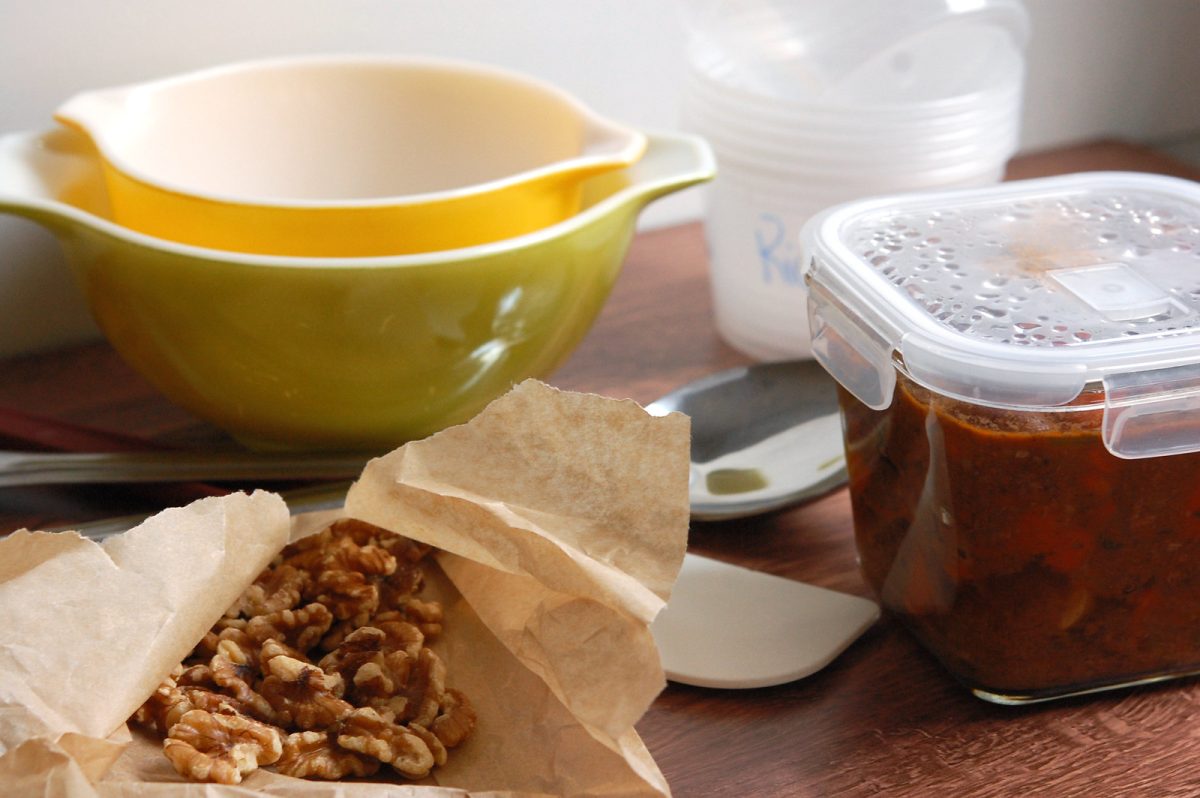
How to Use Less Plastic in Food and Cooking
There is so much you can do to reduce your use of plastics at home, particularly in the kitchen, where plastic abounds. Here are five easy ways to level up and bring plastic use down.
1. Use less plastic by swapping out plastic deli storage containers for glass.

The problem: Plastic deli containers, and other takeout containers, make convenient storage containers for leftovers and other foods. But they’re not a great idea. Evidence shows that even the initial use of these containers when you dig into that hot takeout sheds plastic into your body. Then it keeps on shedding plastic particles every time you reuse that container. No thanks!
The fix: Invest in glass storage containers. Storage in glass is safe and effective, and can be put in the microwave and even (if you get the right brand) the freezer.
What to buy: I am a big fan of this Glasslock storage container set, and have recently swapped all of my plastic deli quart containers for these glass quart containers. All are listed as microwave, oven (to 400 degrees F), dishwasher, and freezer safe. Just remove the lid before reheating.
2. Quit plastic wrap and baggies. Use these instead.

The problem: It may seem second nature to grab a baggie for sandwiches and snacks, or cover a platter of food with plastic wrap. The problem is that these plastics are neither recyclable, nor recommended for reuse due to the latest evidence about plastic particle sloughing.
The fix: Easy solutions abound here. Instead of covering a plate of food with plastic wrap, invert another plate on top like a lid, or wrap it with wax paper or aluminum foil. You can also store your food in a glass storage container until you’re ready to plate it. For snacks, choose anything from small glass containers to wax paper or parchment or silicone snack bags.
What to buy: Wax paper, aluminum foil, parchment snack bags, reusable silicone snack and sandwich bags. You can also invest in reusable, washable beeswax wrap.
3. Consider your food shop.
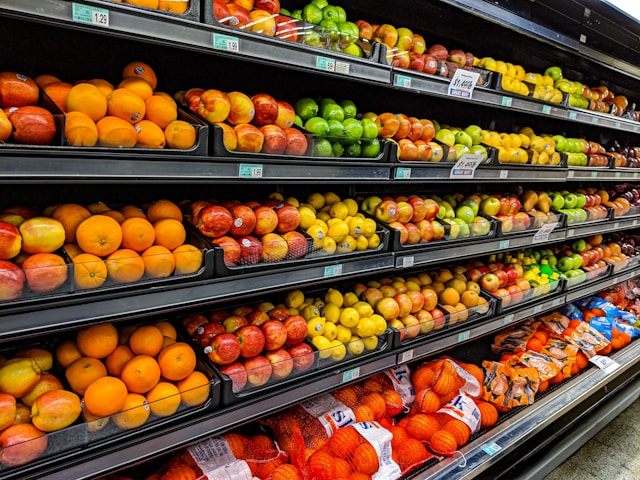
The problem: Strolling the aisles of the supermarket can feel like an observational study of every type of plastic food container ever made: plastic produce bags, berry clamshells, bagged or boxed spinach, shrink-wrapped squash and cucumbers — and that’s just the produce aisle.
The fix: To the extent you can afford, buy brands that use glass or non-plastic containers, and invest in washable linen produce bags so you don’t have to use plastic. Choose cardboard milk cartons instead of plastic jugs. Also check out the produce aisle to see if there’s, say, a bunch of spinach or herbs ready to be gathered loose from the shelves, instead of jumping right to version already prepackaged in a plastic container.
What to buy: Washable linen produce bags, glass and BPA-free canned goods instead of plastic brands, bulk foods poured into your reusable bags instead of plastic or pre-packaged items.
4. Use less plastic by swapping your kitchen tools.
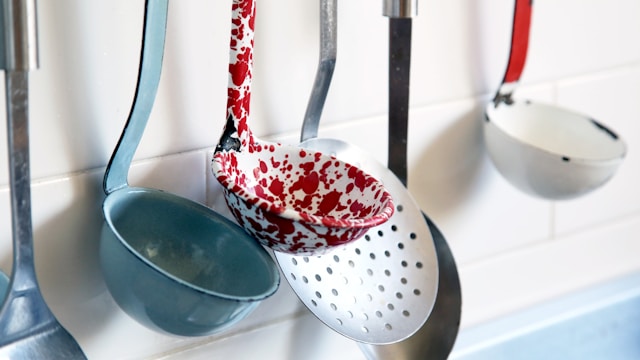
The problem: Plastic can slough off of your kitchen pots, pans, utensils, and other tools, and go right into your food. Eating from plastic plates or utensils can do the same. The Atlantic recently published a fairly frightening piece about the use of black plastic in kitchen utensils if you really want a shock; turns out a lot of black plastic is made from electronics recycling (shock-faced emoji!), which often contains carcinogenic flame retardants in addition to the usual plastic ingredient stew.
The fix: Unless you want plastic as a secret ingredient in Tuesday dinner, reduce plastic usage by choosing kitchen tools and utensils made from wood, metal, silicone, rubber, and the like.
What to buy:
- Stainless steel pots and pans: Cuisinart makes a good-quality, affordable set; All-Clad is the gold (well, stainless steel) standard
- A good metal colander: Avoid the mesh kind; they get hard to clean.
- Wooden cutting boards and spoons: This big John Boos block will last a lifetime, but a simple bamboo cutting board set will work.
- Stainless steel or enamel tools: A lot of chefs use these simple Winco metal spoons when cooking. It’s called a fish turner, but this ubiquitous workhorse is essential for cooking anything from fried eggs to stir fries.
- Silicone or rubber spatulas like this.
5. Filter your water. And don’t drink from plastic.

The problem: Plastic is in tap water. Drinking from plastic water bottles sloughs plastic directly into your body. (Researchers recently found that a liter of bottled water included around 240,000 microscopic pieces of plastic.) And those takeout coffee lids? More plastic.
The fix: Use less plastic by using reusable glass or stainless steel beverage containers, and invest in a good, NSF-approved water filter.
What to Buy:
- Zoshirushi and Yeti make excellent insulated tumblers for tea and coffee
- I’m a fan of this chic glass and silicone water bottle
- Kleen Kanteen is a standard bearer of stainless-steel water bottles
Bonus: Did you know that Starbucks gives a discount and bonus points if you use your own reusable cup?
6. Stay Cool.
The problem: Reheating in plastic containers or with plastic wrap, or storing hot food in plastic, can leech plastic particles into your food.
The fix: Do not microwave or reheat food that’s touching plastic. Take advantage of all the storage solutions and practical alternatives listed above.
How to Reduce Plastic Usage in the Kitchen and in Food
Plastic is everywhere. But we can take easy steps to use less plastic in our everyday lives, starting in the kitchen and with our food. Reduce single-use plastic. You’ll improve the environment, and your health.











8 comments
Ella
Thankyou for the very informative article. It is so upsetting we are all exposed to so much plastic. We need to be aware and eliminate the use of plastic in our lives.
Thx for the tips on how to do that
Ricki
Thx for the excellent article on plastic. Very informative!!
Ty
Very informative and thought provoking.
When considering which glass containers to purchase, consider ones where the lids are sold extra or are interchangeable between sizes. Buy a few extra lids when you purchase a new type of container because lids break or get lost and having extra means you will always have a lid for your containers. I also find that glass containers work better for leftovers, as you can see what is in the container, and what you see gets eaten. I started adding some glass containers a few years ago, and now rarely use plastic containers…a win for everyone.
Lisa Ruland
Excellent notes and tips. Thanks! I’ve been so happy with the switch to glass.
Maria louise Ceccarelli
recycle your GLASS Jars for storage of left 0vers.
Thanks Lisa for getting the word out! L
Lisa Ruland
Thanks, Louise! Much appreciated.
Joanne
Thanks for so many delicious recipes and all the helpful hints to remove plastic from our food and body
Lisa Ruland
Thanks, Joanne!