
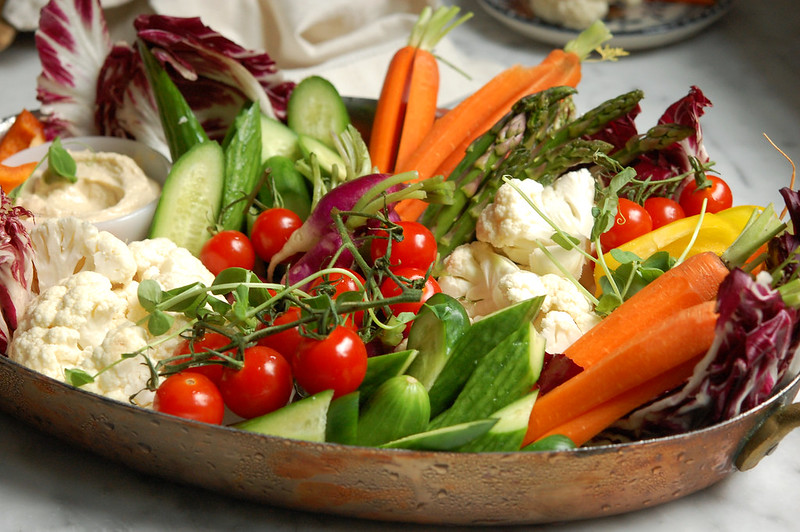
Eat your veggies! Here’s how to make the ultimate crudité platter — one that looks gorgeous, bountiful, and will wow at your next party. Grab some fresh vegetables, a favorite dip, and learn how to arrange vegetables into a healthful, easy, no-cook appetizer.
Jump To:
The Prettiest Crudité Platter
I recently had the pleasure of dropping into La Mercerie for lunch, an airy little French bistro tucked on a quiet corner in SoHo, New York City. La Mercerie is a favorite of mine not only for its honest, elegant French cooking, but for its overall loveliness.
I’m not just talking about the design of the restaurant — which just happens to be among the prettiest rooms in New York. (It is designed by, and even attached to, the showroom of restaurant design leaders Roman and Williams.) I am talking about the loveliness of the food itself, which arrives beautifully plated in a way I’d call special, but not fussy.
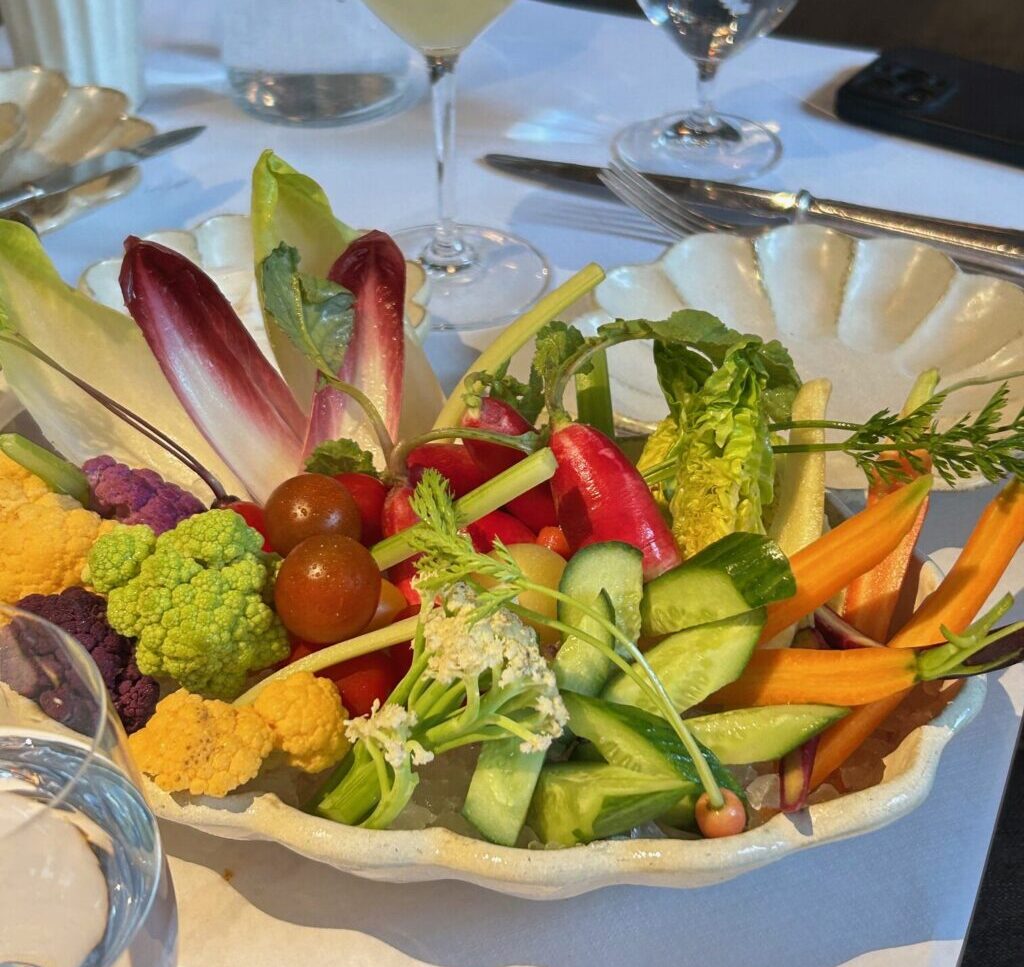
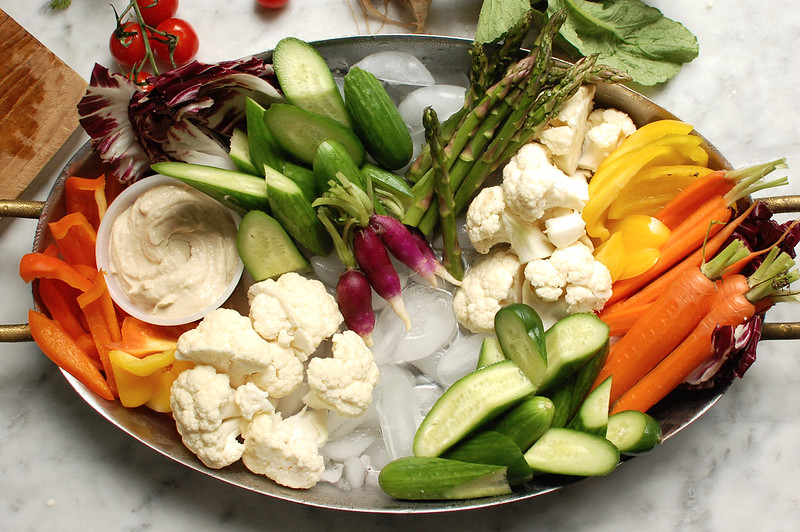
This holds true of their crudité platter. I did not order La Mercerie’s $18 assiette de crudités platter, but the neighboring table did. It was so beautiful I actually asked to take a photo. La Mercerie’s crudités arrived gorgeously arranged in a wide bowl on a bed of crushed ice to keep the vegetables crisp and fresh. And it inspired this “recipe,” if we can call a vegetable platter how-to a recipe.
I have some more simple, raw vegetable recipes you may also love, like this Southern Tomato Sandwich recipe. And I definitely recommend checking out this Asian cucumber salad recipe, and recipes for Italian artichoke spread and zucchini ribbon salad with parmesan and mint.
How to Arrange a Crudité Platter Like a Pro
Now, we’ve all seen the sad, serviceable vegetable tray: the crudité platter, probably pre-made at the supermarket two days ago, that turns up at parties and conference rooms. The one with one flattened mounds of baby carrots, celery sticks, cherry tomatoes, maybe some cauliflower or cukes, and a dip in the middle. Healthful, perhaps. Inspiring, no.
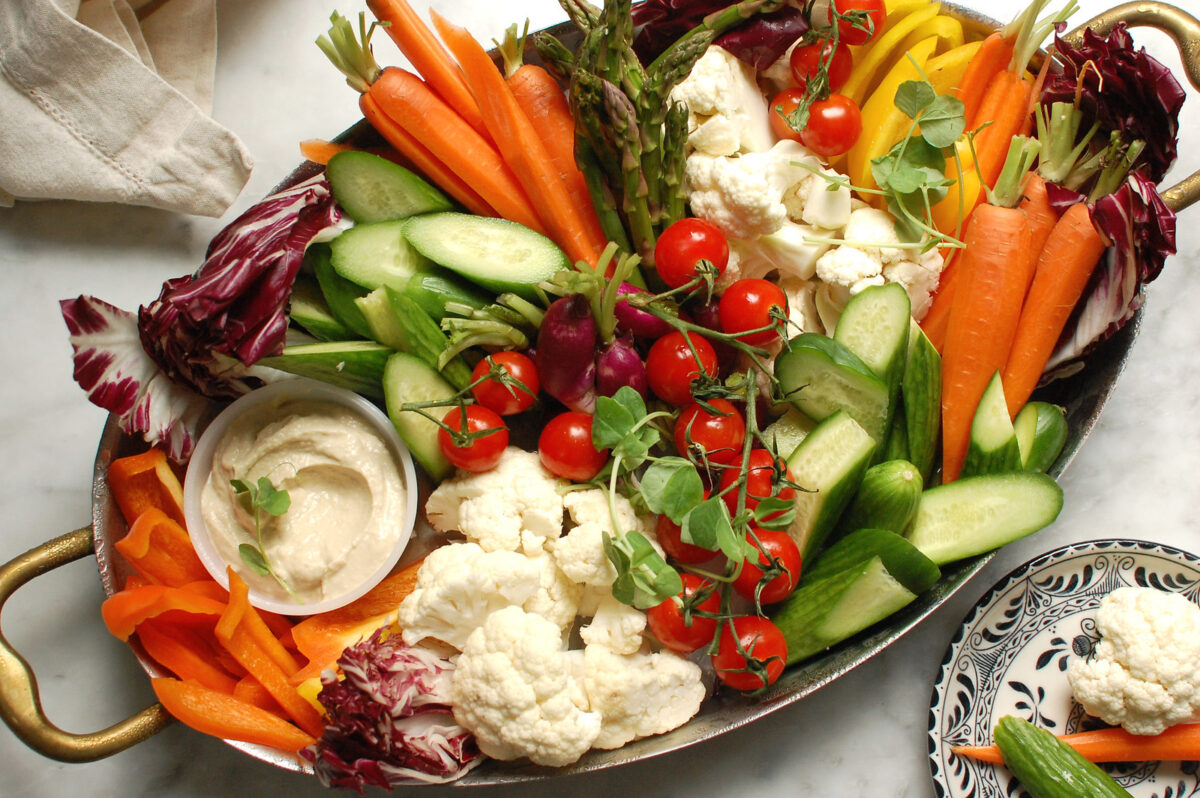
But there is a better way to arrange vegetables for a crudité platter, inspired by La Mercerie. It’s mainly the same vegetables, but with a few tips, tricks, and enhancements to take your veggie tray from blah to beautiful. Below, I tell you exactly what to do, from which vegetables to use, what shape serving tray, a secret base layer, and how to arrange the vegetables in the most attractive way.
What’s on a Crudité Platter?
Crudité (pronounced “crew-duh-TAY”) is French for raw vegetables, often served with a dip. In other words, it is fancier way of saying vegetable tray; it’s essentially the same thing. Fresh, crisp, and nourishing, crudités make a classy, light, no-cook appetizer or snack.
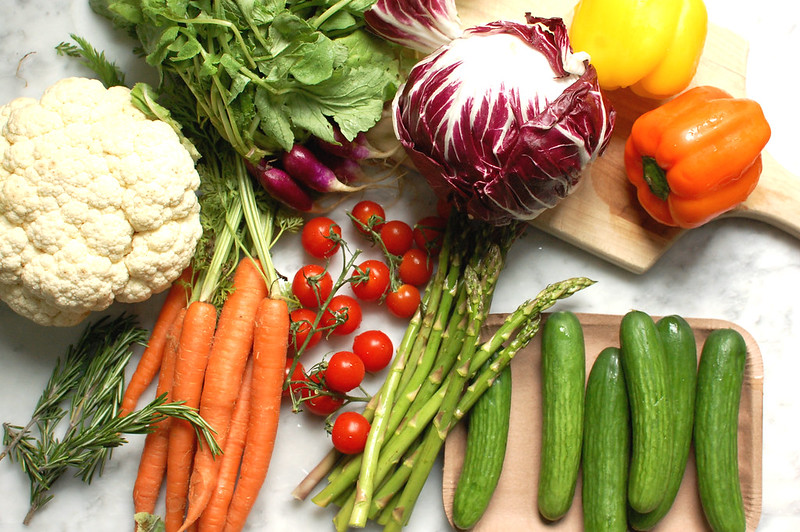
The raw vegetables you most often see on a crudité platter include: carrots, celery, bell peppers, grape or cherry tomatoes, cucumbers, and possibly cauliflower or broccoli florets. Olives may make an appearance as well.
While crudité strictly means a tray of raw vegetables, a crudité platter can also include additions such as a dip or two (I recommend a bowl of smoked salmon cream cheese spread or herby Greek goddess), and non-vegetable additions like nuts, feta cheese, cured meats like prosciutto, and crackers, though that takes it more into the realm of cheese and charcuterie. (Have you seen these recipes for a Greek Mezze Platter and Fall Charcuterie Board?)
My rule of thumb: Be flexible and get as creative as you like. Have fun! As long as the vegetables are center stage, you’re in good shape.
Here are the ingredients you’ll need for a crudité platter:
- Crudité or raw vegetables: I like carrots, celery bell peppers, small breakfast radishes, asparagus, on-the-vine grape tomatoes, something cruciferous like cauliflower or romanesco, and thin-skinned cucumbers like Persian or English hothouse varieties. I also want you to get some endive or radicchio, for color and bulk. Use a variety, and think about seasonality. Below, we will talk about how to cut your raw vegetables for impact.
- Garnishes: This is not necessary, but if you have a sprig or two of rosemary or parsley or dill, great. A couple fronts of celery leaves or carrot top greens will work, as would something like a few pea shoots.
- A dip: Just one or two dips will do, such as hummus or this Greek goddess dip, tzatziki, or your favorite spread
- Crushed ice for the base: This helps keep the vegetables fresh and crisp, and helps add height
- Other optional ingredients: All you really need is vegetables, but a small bowl or olives or nuts would work well. You could also add a fresh cheese like feta.
Here are the plates and utensils you will need to arrange your platter of crudites for maximum impact:
- Crushed ice for the base. This helps keep the vegetables crisp and cold.
- A tray, wide bowl, or casserole dish with sides at least one inch tall. This is the secret to building height and volume
- A bowl or bowls for dips and small items like olives, as needed.

Tips, techniques, and steps to arrange the best crudité platter:
This is really just a process of building inward, and in sections. Here’s what you should do:
Cut the vegetables, but nicely. Here’s how:
- Carrots: Never use baby carrots. Use regular carrots, sliced in half lengthwise, then again across if they are very long.
- Celery: Thin sticks, please.
- Cucumbers: I am a big fan of the roll cut, also called an oblique cut. Cut the cucumber on a long, dramatic diagonal, then rotate the cuke 90 degrees with each cut to give it a more interesting shape.
- Grape tomatoes: on the vine look best
- Asparagus: Use the top third. Save the bottom parts for roasting or in omelets or an easy asparagus salad.
- Bell peppers: Standard wedges are fine. Don’t make them too thin or they will be flimsy and not hold the dip.
- Brassicas (cauliflower, broccoli): I am not a fan of broccoli in crudité platters because it tastes harsh and sheds those little green balls everywhere, but cauliflower works. Cut into florets.
- Endive or radicchio: Cut into tall wedges of leaves.
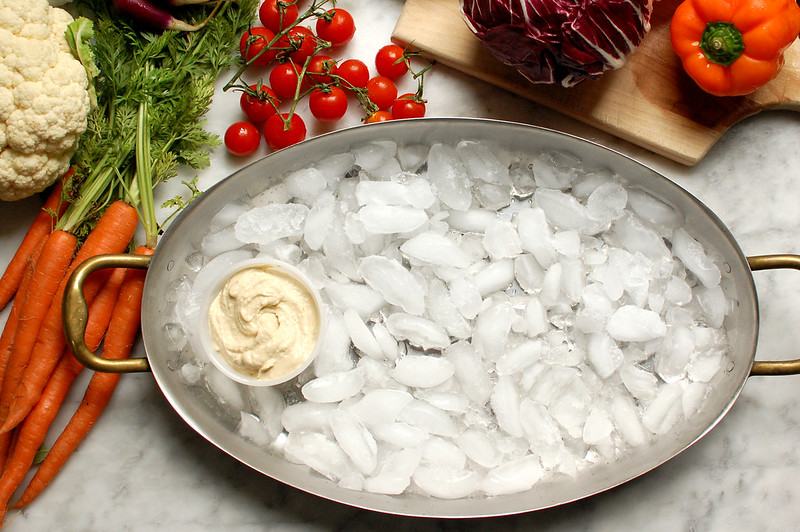
It’s time to start arranging. First, pour a thin layer or crushed ice on the bottom of your serving tray or bowl. My favorite vessel? A handled casserole.
Next, if you are using a dip or dips (or olives), nestle the bowl(s) into the ice, but never at the center. Placing the dip off to one side gives it a better look. I don’t know why; it just does.
Now, place a few endive or radicchio leaves upright in alternate corners of the platter. They should look tall. Now begin to nestle at an upright angle the other vegetables. Finish with the tomatoes. If garnishing, now is the time to add a couple of generous sprigs of herbs wherever seems best.
Crudité Storage, Advance Prep, and Serving Tips
You can wash and cut all of the vegetables up two two days in advance. Keep them chilled in the refrigerator in an airtight container. The one vegetable I recommend not cutting early, however, is the radicchio or endive. The edges could brown. You can also make or prepare your dips in advance.
Because of the ice, the crudité platter is best arranged shortly before serving, which will also keep the vegetables from looking dry.
Serve your crudité platter as a light snack before a meal, or as part of a larger appetizer spread along with cheeses, chips, dips, and charcuterie. This vegetable tray also makes a great weekday snack to have available in the refrigerator.
If you like this recipe for a crudité platter, be sure to check out:
- A Greek Mezze Platter
- Fried Green Tomatoes
- Italian Summer Minestrone Soup
- Tomato, Cucumber, and Halloumi Salad
Crudité Platter (Raw Vegetable Tray)
Ingredients
- 5 to 6 types Assorted raw vegetables: such as English cucumber, carrots, bell peppers, celery, asparagus, breakfast radishes, cauliflower florets, and grape tomatoes. You want the equivalent of about 2 to 3 quarts of assorted cut vegetables, total
- 1 pint Dip(s) of choice, such as Greek goddess dip, hummus, or tzatziki (links follow)
- 2 sprigs Greens, to garnish: celery or carrot top fronds, pea shoots, fresh rosemary, fresh parsley, or the like
- Extra accents (optional): olives, nuts, feta cheese
- 4 cups Crushed ice
Instructions
Cut the Vegetables. Prepare the Dip(s) and Things.
- See the notes, below, on how to choose and cut the vegetables the best way, like a roll cut for cucumbers, and long sticks for carrots.
- Prepare your favorite dip or two (store bought is fine) and spoon into bowls. I like this Greek goddess dip recipe, as well as tzatziki and edamame hummus. If using feta cheese or olives, get those ready as well.
Arrange the Crudité Platter and Serve
- Find a wide serving platter with sides at least one inch high. The sides are key to building height; I actually like to use a handled casserole pan, such as the one in the photo. Pour a thin layer or crushed ice on the bottom of your serving tray.Next, if you are using dip(s) (or feta or olives), nestle the bowl(s) into the ice, but never centered. Placing the dip off to one side gives it a better look. I don't know why; it just does!
- Now, place a few endive or radicchio leaves, or whatever is tallest, as upright as possible in alternate corners of the platter. Now begin to nestle the other vegetables at an upright angle. Finish by draping the crudité platter with the tomatoes. If garnishing, now is the time to add a couple of generous sprigs of herbs wherever seems best.
- Serve immediately.
Notes
- Never use baby carrots. Use regular carrots, sliced in half lengthwise, then again across if they are very long. They look more elegant, and taste better.
- Celery: Thin sticks, please.
- Cucumbers: I am a big fan of the roll cut, also called an oblique cut. Cut the cucumber on a long, dramatic diagonal, then rotate the cuke 90 degrees with each cut to give it a more interesting shape.
- Grape tomatoes: on the vine look best
- Asparagus: Use the top third. Save the bottom parts for roasting or in omelets or an easy asparagus salad.
- Bell peppers: Standard wedges are fine. Don’t make them too thin or they will be flimsy and not hold the dip.
- Brassicas (cauliflower, broccoli): I am not a fan of broccoli in crudité platters because it tastes harsh and sheds those little green balls everywhere, but cauliflower works. Cut into florets.
- Endive or radicchio: Cut into tall wedges of leaves.
Nutrition
Disclaimer: Nutrition information is provided for courtesy purposes only, and is an estimate not verified by medical or nutrition experts. Read the full nutrition disclaimer.






3 comments
Jackie
Beautiful!! I can’t wait to make it especially with all the fresh veges of summer Thankyou
Emma
Beautiful!! I can’t wait to make it especially with all the fresh veges of summer Thankyou
Mrs. K
This is beautiful! Thank you for these good tips.