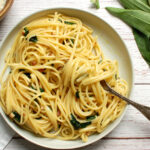
Ramp Pasta Carbonara
This ramp pasta recipe makes spaghetti carbonara even better. Here, spaghetti tossed with sautéed spring ramps and pancetta gets folded with an authentic carbonara sauce of Parmesan, pecorino-Romano, and eggs for a silky, easy spring dinner that's ready in less than 30 minutes.
Servings: 4 people
Calories: 563kcal
Essential Equipment
- Tongs
- 12-inch skillet
- Large mixing bowl
Ingredients
- 2 bunches fresh ramps
- 3 ounces diced pancetta
- 2 egg yolks
- 1 whole egg
- 1/4 cup freshly-grated pecorino-Romano cheese
- 1/4 cup freshly-grated Parmigiano-Reggiano cheese
- 2 tablespoons minced chives, plus more to garnish
- 1 tablespoon good olive oil
- 12 ounces spaghetti or other long pasta
- Salt and freshly-cracked black pepper
Instructions
- Prep the ramps. Rinse the ramps well (they grow in gritty soil and can trap dirt at the base of the bulb). Pat them dry. Trim and discard the root tips. Roughly chop the leaves into large pieces, then thinly slice the red stems and the white bulbs, keeping them separate; they go into the pan at different times. Set aside.
- Make the egg sauce. In a large mixing bowl, combine the egg yolks, egg, pecorino-Romano, Parmesan, minced chives, and big pinch of kosher salt and fresh pepper. Whisk together with a fork until fully combined. Set aside.PRO TIP: A 50/50 blend of pecorino-Romano and Parmigiano-Reggiano mixed with egg is standard for a true carbonara. No cream or butter necessary.
- Cook the pasta. Bring a large pot of generously-salted water to a boil. Add the spaghetti and cook until just under al dente, about one minute less than the package suggests. Remove from heat. Scoop out at least one full cup of pasta water and set it aside for later (you won't use all of it). Drain into a colander.
- While the pasta is cooking, cook the pancetta and ramps. In a large skillet, cook the pancetta over medium-low heat, stirring frequently, until the fat starts to render. Add the olive oil, ramp stems, and bulbs and continue to cook for two to three minutes more, until the pancetta is cooked through and just browned, and the ramp bulbs are translucent. Add the ramp leaves and sauté for one more minute, just until they are wilted and cooked through. Remove from heat but keep very warm. (You may have to turn the burner back on and reheat it just before the spaghetti is added.)
- Finish the pasta in the skillet. Add the spaghetti into the skillet, along with two or three generous spoonfuls of reserved pasta water. Toss everything together over medium heat until the spaghetti is al dente and coated with the pancetta fat and ramps, and the pan liquid is mostly absorbed.
- Add the pasta to the carbonara sauce, but off the heat. Remove the skillet from heat. Pour the spaghetti, pancetta, and ramps into the mixing bowl with the egg sauce. Toss continuously and emphatically for one to two minutes, until the sauce becomes glossy and cohesive and coats every strand. If the sauce looks tight or dry, add pasta water a tablespoon at a time and keep tossing. Taste for seasoning. PRO TIP: Add the pasta to the sauce, not the other way around. If you add the egg mixture to the hot skillet, you will overcook the egg and end up with little scrambled egg bits. This is the most common -- and frustrating -- mistake with carbonara. This method keeps the sauce creamy, but still heated through. If you want extra insurance, temper the egg sauce with a tablespoon of hot pasta water before adding the pasta.
- Serve immediately in warm bowls, finished with extra grated cheese, cracked pepper, and fresh chives.
Notes
Notes on Choosing Ramps
Each bunch contains roughly 8 to 12 ramp stems. Buy two full bunches; the leaves wilt down a lot, and you want enough ramp flavor for the entire dish. Look for bright green, unwilted leaves and firm bulbs.
The Grated Cheeses
Use both pecorino-Romano and Parmigiano to get the right flavor. This 50/50 blend is the true way to make a carbonara.
How to Prevent the Most Common Carbonara Mistake
Adding the egg mixture to a hot pan is a bad move. This scrambles the eggs and produces a grainy sauce. Take the skillet completely off the heat, then transfer the pasta to the mixing bowl of egg and cheese mixture. The residual heat from the pasta is sufficient to cook and set the sauce without overcooking.
Substituting the Ramps
This is a ramp recipe, but if you're short a bunch, use the white and light green parts of a scallion bunch, sliced thin, in place of the bulbs, and a generous half cup of minced chives or a few large handfuls of baby spinach in place of the leaves. The dish will be milder but still very good.
Storage and Reheating Directions
Carbonara is at its best the moment it's made. That said, leftovers keep in the refrigerator in an airtight container for up to two days. To reheat, add the pasta to a mixing bowl set over a pot of simmering water to form a double boiler. Add a splash of water and stir gently until warmed through. Do not microwave; direct heat will scramble the eggs in the sauce. This dish does not freeze well.
Nutrition
Calories: 563kcal | Carbohydrates: 73g | Protein: 21g | Fat: 20g | Saturated Fat: 7g | Polyunsaturated Fat: 3g | Monounsaturated Fat: 9g | Trans Fat: 0.03g | Cholesterol: 163mg | Sodium: 341mg | Potassium: 272mg | Fiber: 4g | Sugar: 4g | Vitamin A: 1298IU | Vitamin C: 8mg | Calcium: 213mg | Iron: 3mg
Disclaimer: Nutrition information is provided for courtesy purposes only, and is an estimate not verified by medical or nutrition experts. Read the full nutrition disclaimer.
